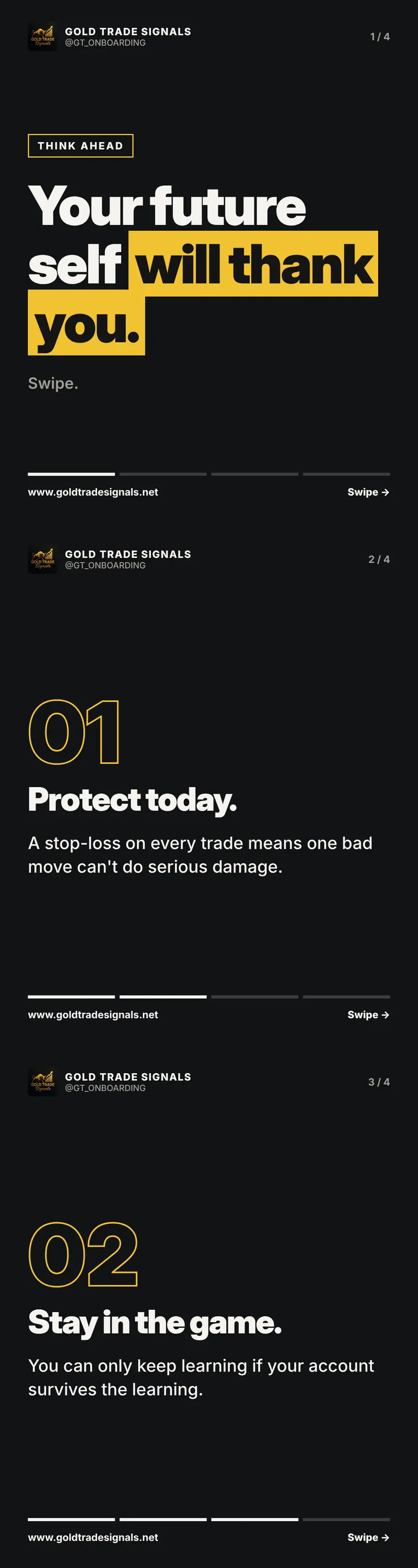
Setting a stop-loss takes a few seconds and feels like admitting you might be wrong. It is also the single habit most likely to keep you trading next year. Think of it as a message from today's trader to the one you will be in six months: this one is protected, carry on.
Protect today
A stop-loss is an instruction to close your trade automatically if price reaches a level you chose in advance. With one in place, you know the worst case before you enter. Gold can move a long way in minutes on a news release, and a stop-loss is what turns that from a threat into a planned, limited loss.
Without a stop-loss, the worst case is undefined. One bad move can wipe out weeks of careful work, and the temptation to give it room while the loss grows is strong. Every trade idea we share has a stop-loss attached because we would not trade without one ourselves, and we do not want members to either.
Stay in the game
Trading is a skill, and skills take time. You will have losing trades while you learn, and that is fine as long as each loss is small enough to shrug off. The account is your tuition fund. You can only keep learning if the account survives the learning, and the stop-loss is what makes survival automatic rather than lucky.
Look at it from the other direction. The trader you will be in a year has read more charts, sat through more live sessions and seen more news days than you have today. That trader can only exist if today's version does not blow up. Protect the account now and future you gets to collect the experience.
Key takeaways
- A stop-loss defines your worst case before you enter.
- Small, planned losses are the cost of learning.
- An account that survives is the only one that improves.
Common questions
Why is a stop-loss so important for beginners?
It caps each loss at an amount you chose in advance, so a single bad trade cannot end your trading while you are still learning.
Should every gold trade have a stop-loss?
Yes. Gold moves quickly, especially around news, and a stop-loss is the only reliable way to limit the damage from a sudden move.
Trade ideas with the levels already worked out
Join the free community and receive XAU/USD trade ideas with entry, stop-loss and take-profit, live training on Tuesdays and Thursdays, and support whenever you are stuck.
Join free on TelegramOpen the calculatorsRisk warning: This article is educational content, not personal investment advice. Gold is a leveraged, volatile instrument and you can lose some or all of your capital. Gold Trade Signals is not FCA regulated. Read the full risk warning.
More from Trading Around Your Life
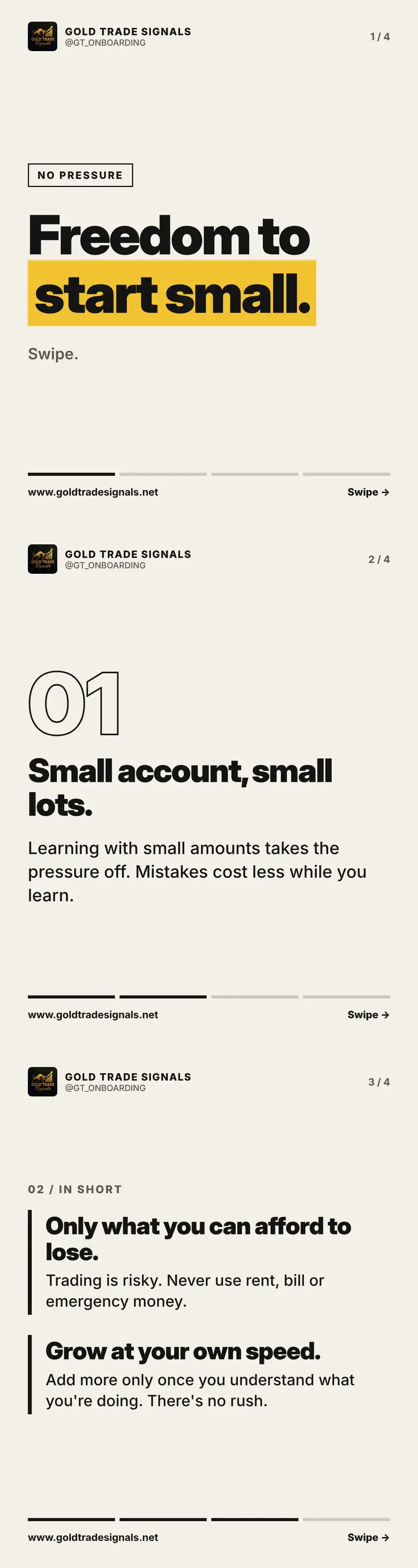
The freedom to start small when you learn to trade
Nobody needs to go all in. Learn with a small account and small lots, only use money you can afford to lose, and grow at your own speed. Why it works.
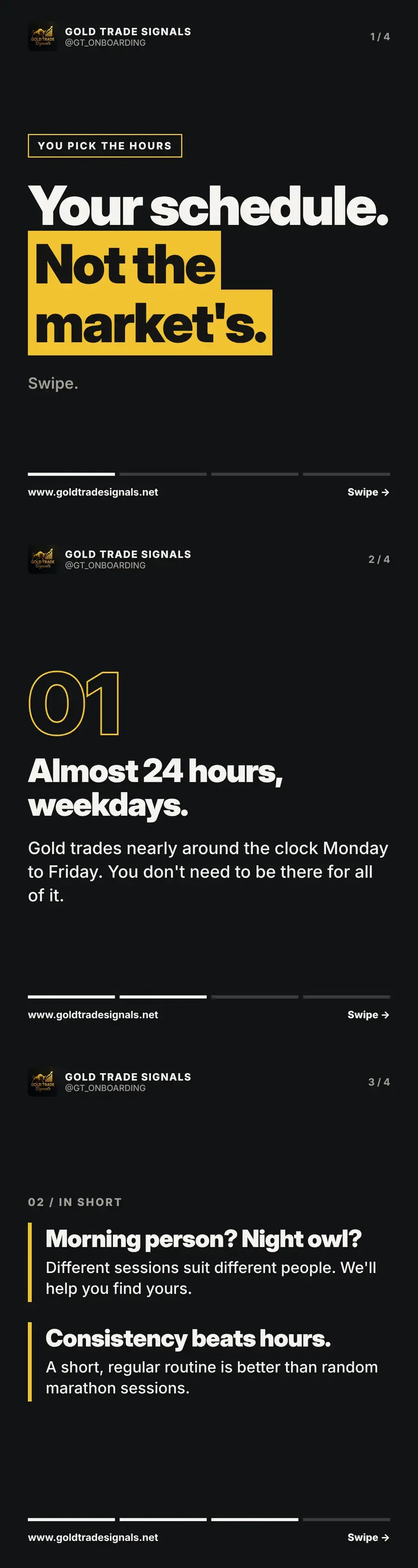
Your schedule, not the market's: pick your trading hours
Gold trades almost 24 hours on weekdays, so you do not need to watch all of it. Learn how to pick the hours that suit your life and why consistency wins.

The real luxury is time, not a car: trading built around that
Dinner without checking charts. Weekends without the market. Why we built Gold Trade Signals around clear ideas with SL and TP set upfront.