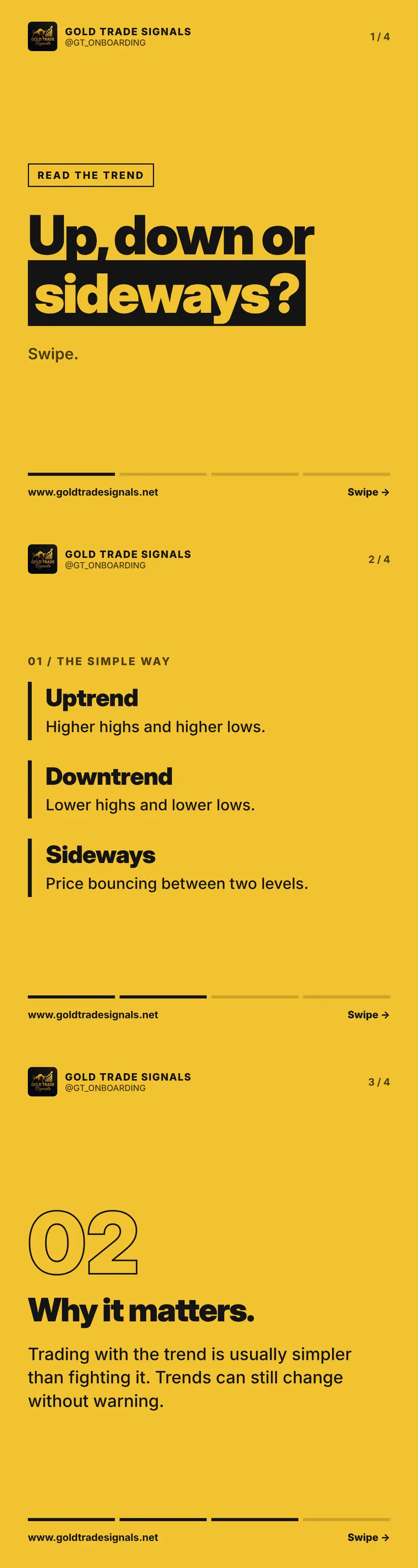
Open a gold chart and the first question is always the same: which way is this going? You do not need indicators to answer it. The pattern of highs and lows on the chart tells the story, and once you can read it, every other decision gets clearer.
The simple way to read a trend
An uptrend is a series of higher highs and higher lows. Each time price pulls back, it stops above the previous low, and each time it pushes on, it goes beyond the previous high. Think of it as a staircase climbing from bottom left to top right. On gold, these moves can run for days or weeks.
A downtrend is the mirror image: lower highs and lower lows. Each bounce fails below the last peak, and each drop goes further than the one before. A sideways market, often called a range, is when neither side is winning. Price bounces between a ceiling and a floor, and highs and lows stay at roughly the same levels.
Why the trend matters
Trading with the trend is usually simpler than fighting it. If gold is making higher highs and higher lows, looking for buying opportunities on pullbacks puts the market's momentum on your side. Trying to pick the exact top of a strong move is one of the most common ways beginners lose money.
Trends can still change without warning. A news release, a central bank comment or a shift in the dollar can break a clean staircase in minutes. That is why a stop-loss belongs on every trade, whichever direction you are trading. The trend tells you where the odds may lean, not what will happen next.
Practising on the gold chart
Pick a timeframe, mark the last three swing highs and three swing lows, and ask one question: are they stepping up, stepping down, or staying level? Do this daily and trend reading becomes second nature. We walk through live gold charts in our training sessions every Tuesday and Thursday if you want to practise alongside us.
Key takeaways
- Uptrend: higher highs and higher lows. Downtrend: the opposite.
- Sideways means price bouncing between a ceiling and a floor.
- Trade with the trend, but keep a stop-loss because trends change.
Common questions
How do you know if gold is in an uptrend?
Look at the recent swing points. If each high is above the previous high and each low is above the previous low, gold is in an uptrend on that timeframe.
What is a sideways market in gold trading?
A sideways market, or range, is when price moves between two levels without making new highs or new lows. Neither buyers nor sellers are in control.
Trade ideas with the levels already worked out
Join the free community and receive XAU/USD trade ideas with entry, stop-loss and take-profit, live training on Tuesdays and Thursdays, and support whenever you are stuck.
Join free on TelegramOpen the calculatorsRisk warning: This article is educational content, not personal investment advice. Gold is a leveraged, volatile instrument and you can lose some or all of your capital. Gold Trade Signals is not FCA regulated. Read the full risk warning.
More from Trading Basics
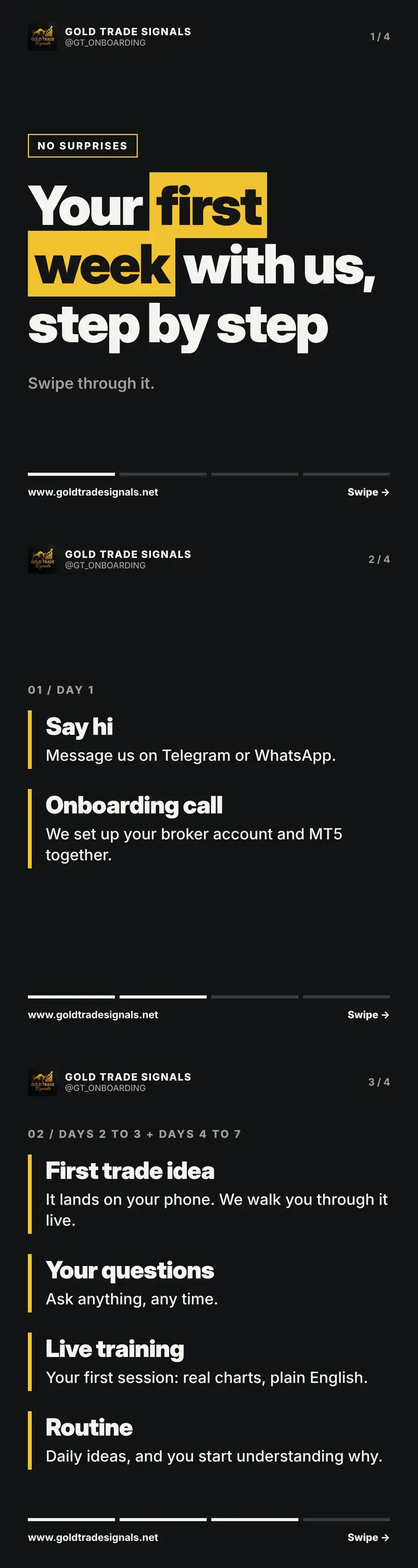
Your first week with Gold Trade Signals, day by day
Curious what your first week looks like? From the onboarding call to your first trade idea and live training session, here is the week in plain English.
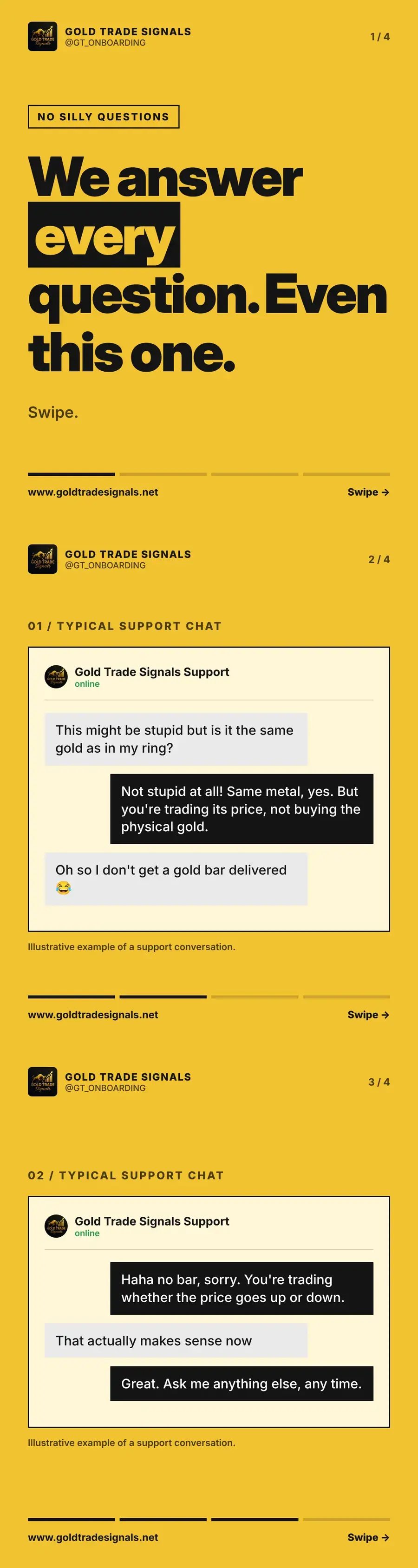
No question is too small: what our support chat is really like
Is the gold you trade the same as the gold in your ring? We answer every question, even that one. Here is what support should feel like for a new trader.
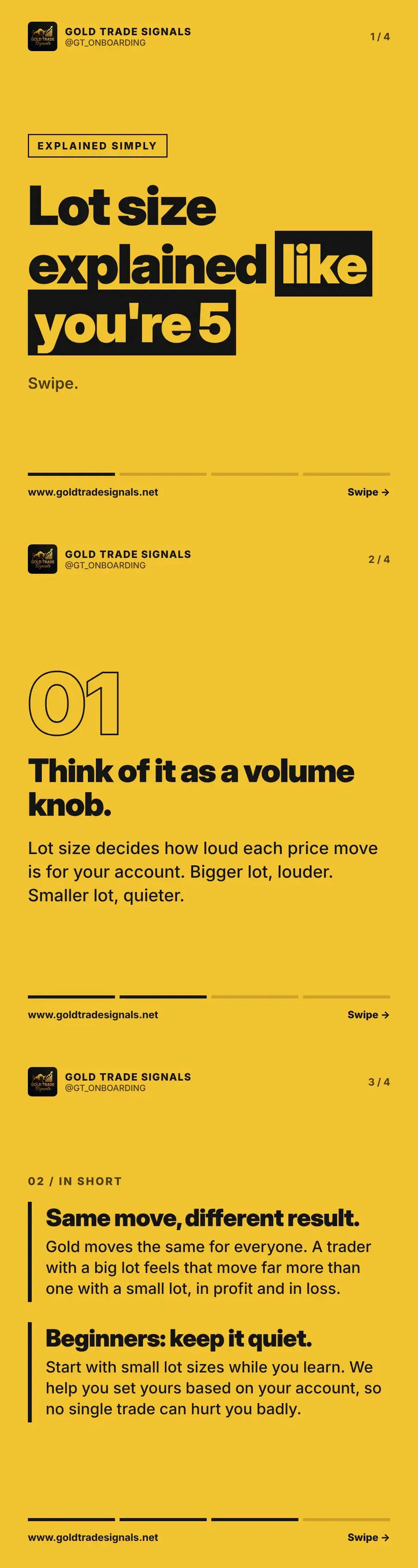
Lot size explained simply: the volume knob for your account
Lot size decides how much each move in gold affects your account. We explain it with a volume knob analogy and show why beginners should keep it small.