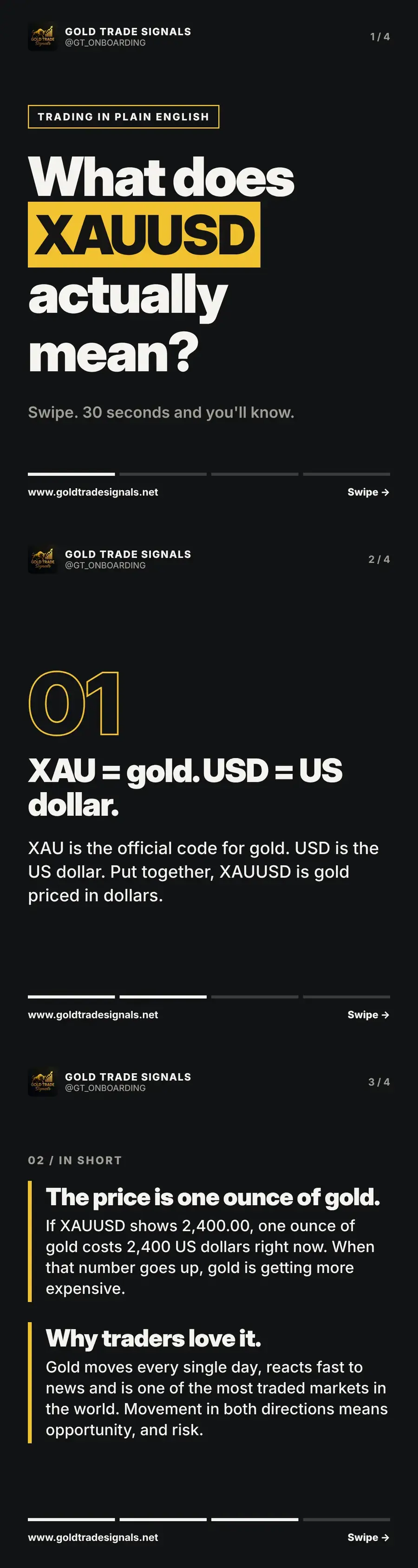
What does XAUUSD mean? Gold priced in US dollars explained
XAU is the code for gold and USD is the US dollar. Learn what XAUUSD means, how to read the price on your screen and why so many traders focus on gold.
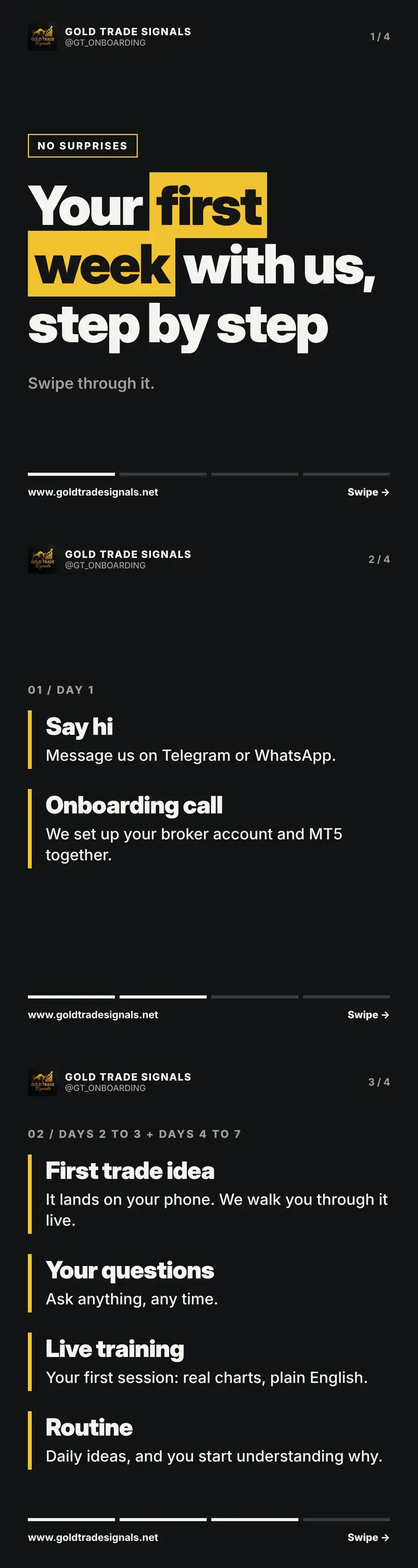
Your first week with Gold Trade Signals, day by day
Curious what your first week looks like? From the onboarding call to your first trade idea and live training session, here is the week in plain English.
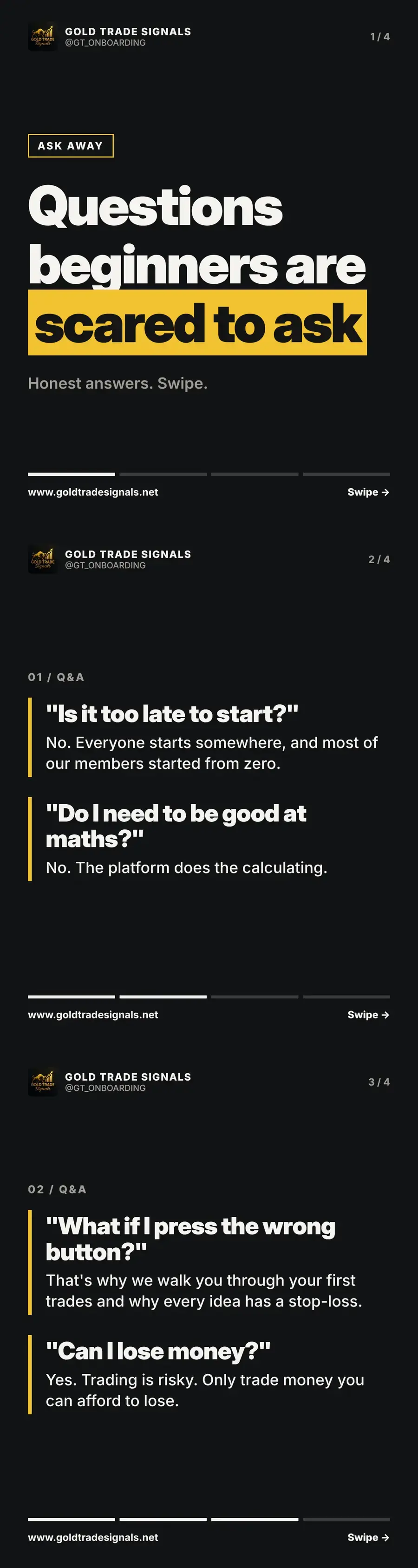
Trading questions beginners are too scared to ask
Is it too late to start? Do you need maths? Can you lose money? Honest answers to the trading questions beginners feel too embarrassed to ask out loud.
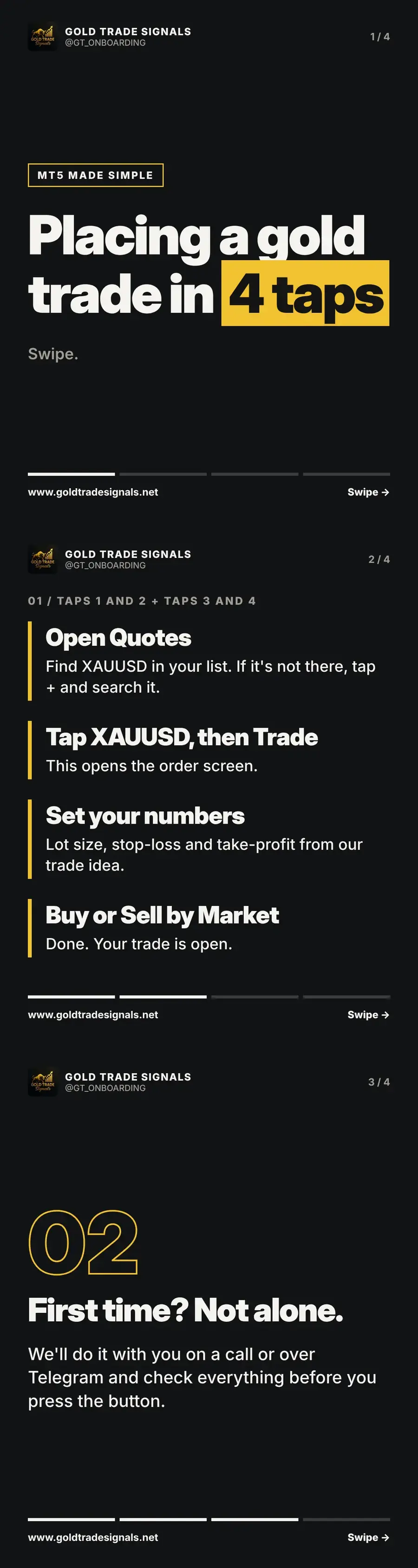
How to place a gold trade on MT5 in four taps
Placing a gold trade on MT5 takes about four taps: find XAUUSD, open the order screen, set your numbers and execute. Your first time, we do it with you.
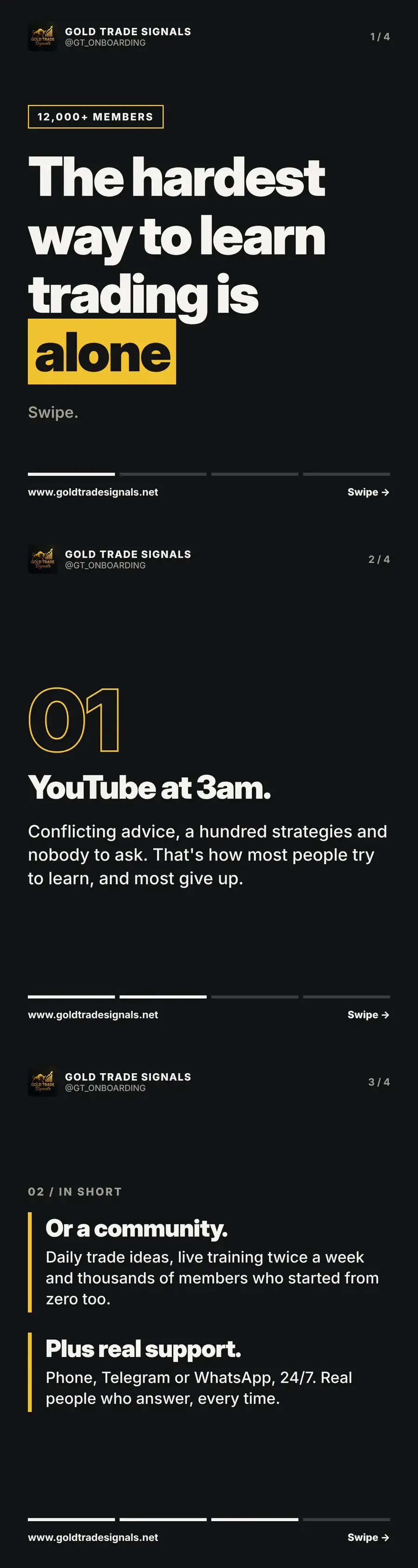
Why learning to trade alone is the hardest way to do it
YouTube at 3am, conflicting advice and nobody to ask: that is how most people try to learn trading, and most give up. Here is the alternative that works.
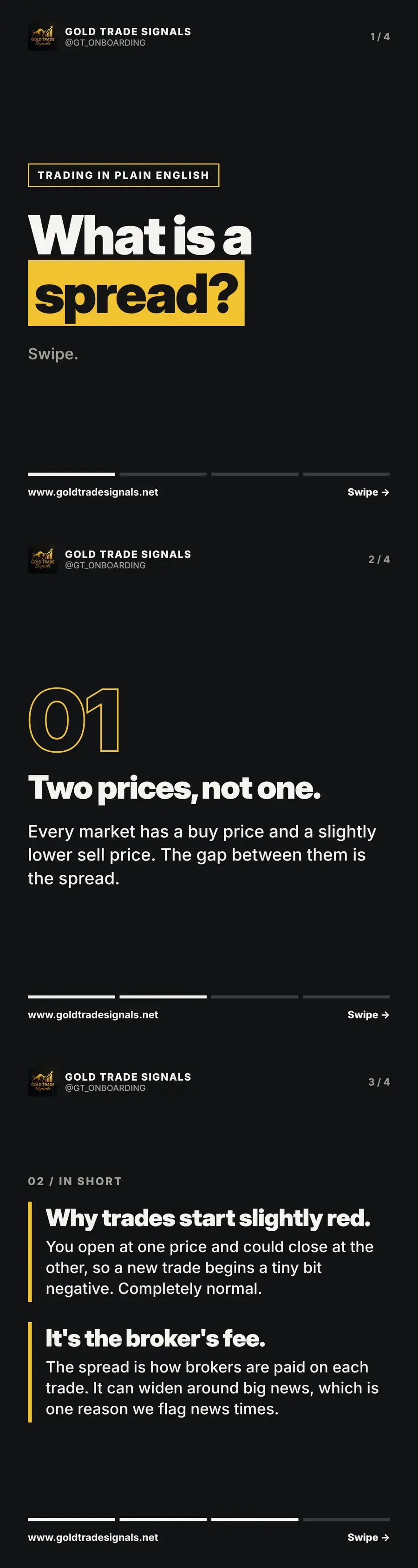
What is a spread? The small cost on every trade explained
Every market has a buy price and a sell price, and the gap is the spread. Learn why trades start slightly in the red and how brokers earn from it.
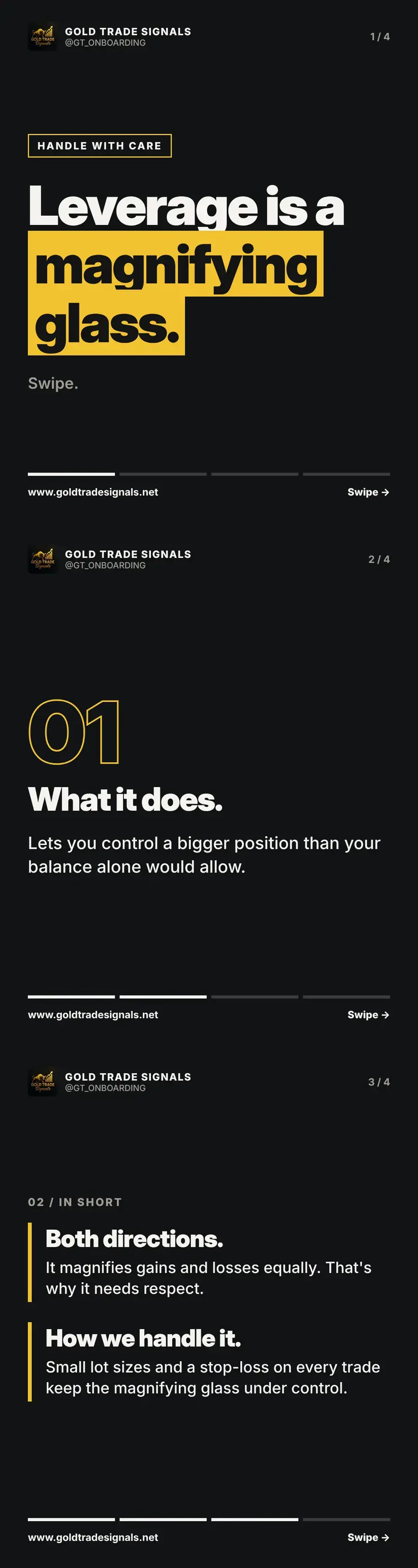
Leverage explained: why it works like a magnifying glass
Leverage lets you control a bigger position than your balance allows, and it magnifies gains and losses equally. Learn how we keep it under control.
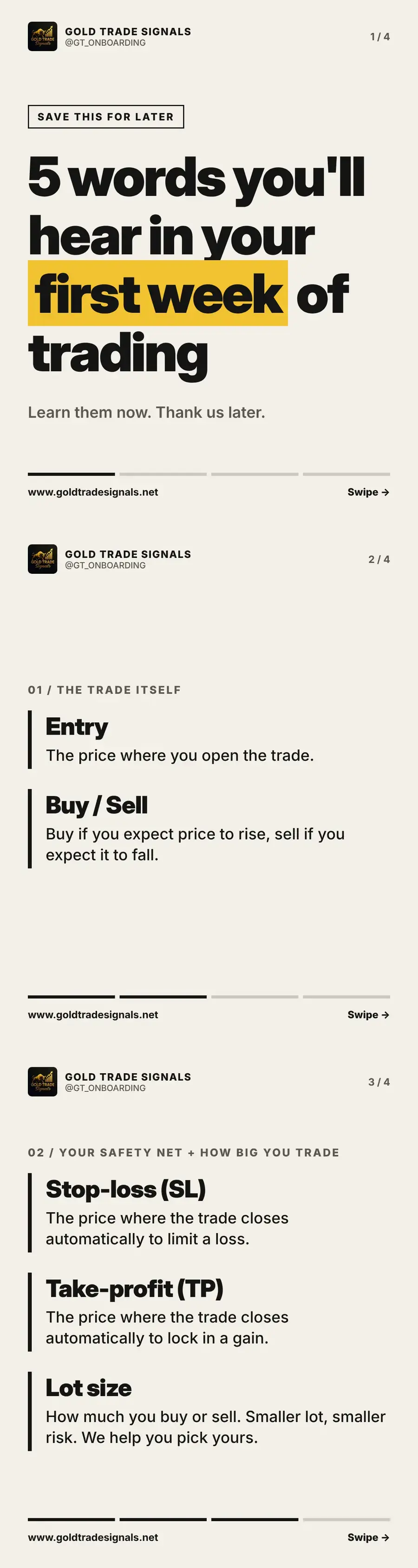
Five trading words you will hear in your first week
Entry, buy and sell, stop-loss, take-profit and lot size: the five words every new gold trader hears in week one, explained in plain English.
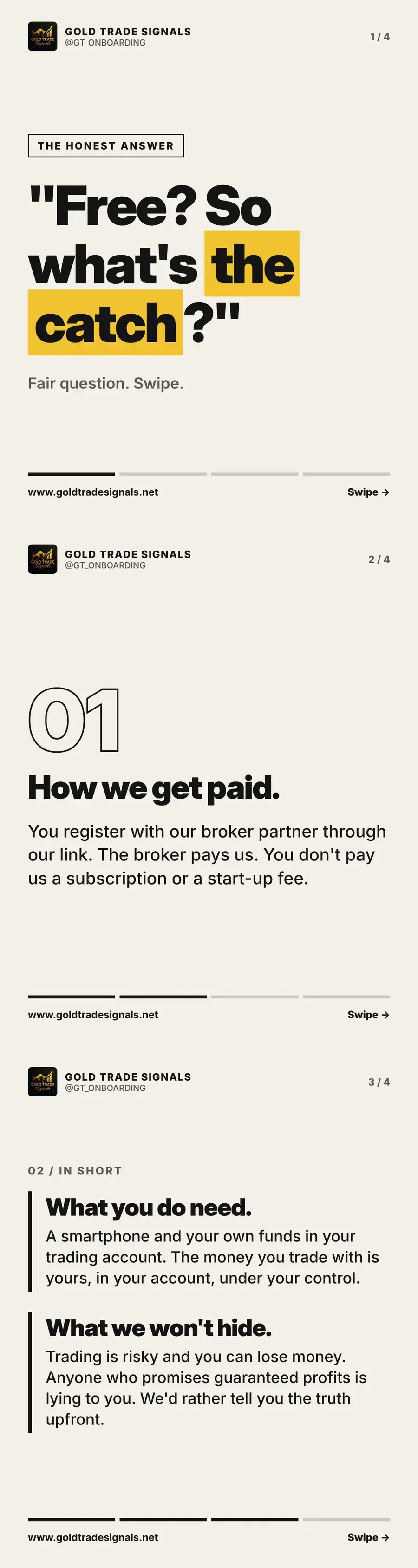
Free gold trade ideas: so what is the catch?
Our gold trade ideas are free because our broker partner pays us when you register through our link. Here is what you need, and the risks we will not hide.
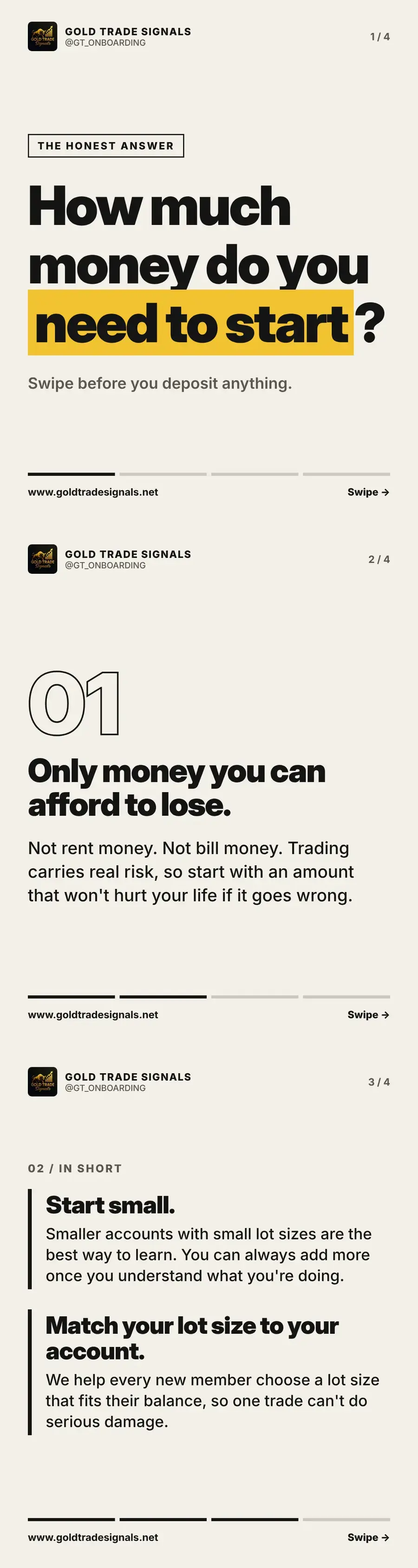
How much money do you need to start trading gold?
Only trade money you can afford to lose, start small and match your lot size to your balance. The honest answer to how much you need to start trading gold.
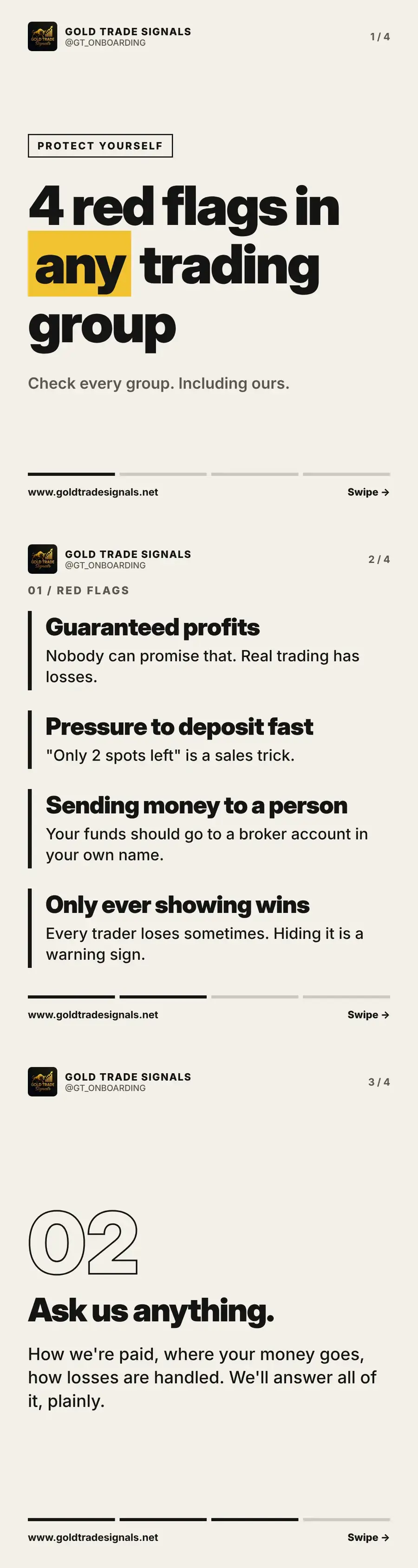
Four red flags to check in any trading group
Promises you cannot lose, deposit pressure, money sent to a person, and only showing wins: four red flags to check in any trading group, ours included.
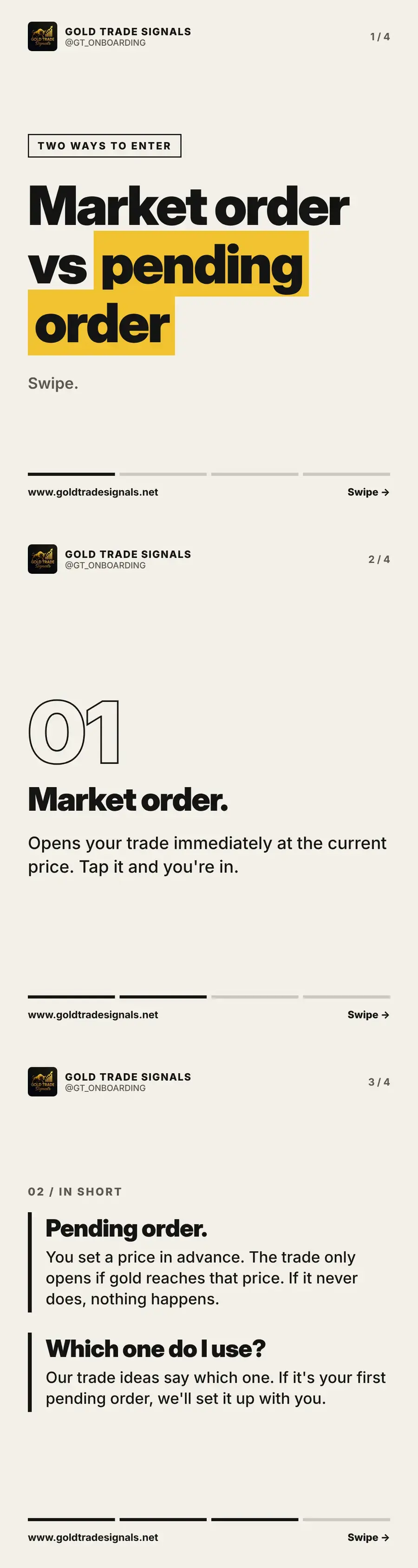
Market order vs pending order: two ways to enter a trade
A market order opens your trade now at the current price. A pending order waits for a price you set. Learn the difference and which one our ideas use.
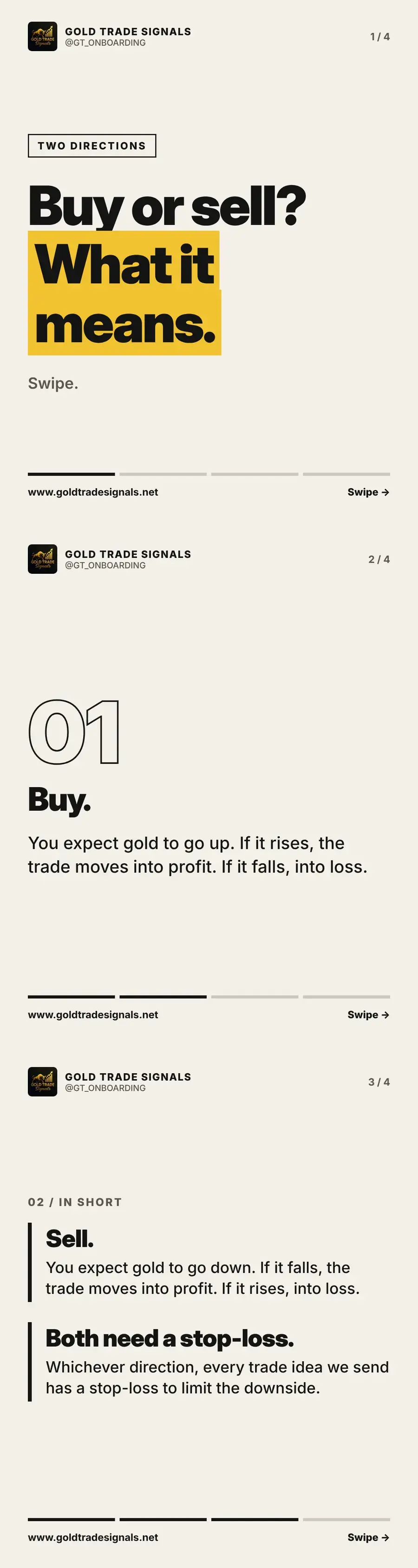
Buy or sell? What each one means when trading gold
You can trade gold in both directions. Buying means you expect the price to rise, selling means you expect it to fall, and every trade needs a stop-loss.
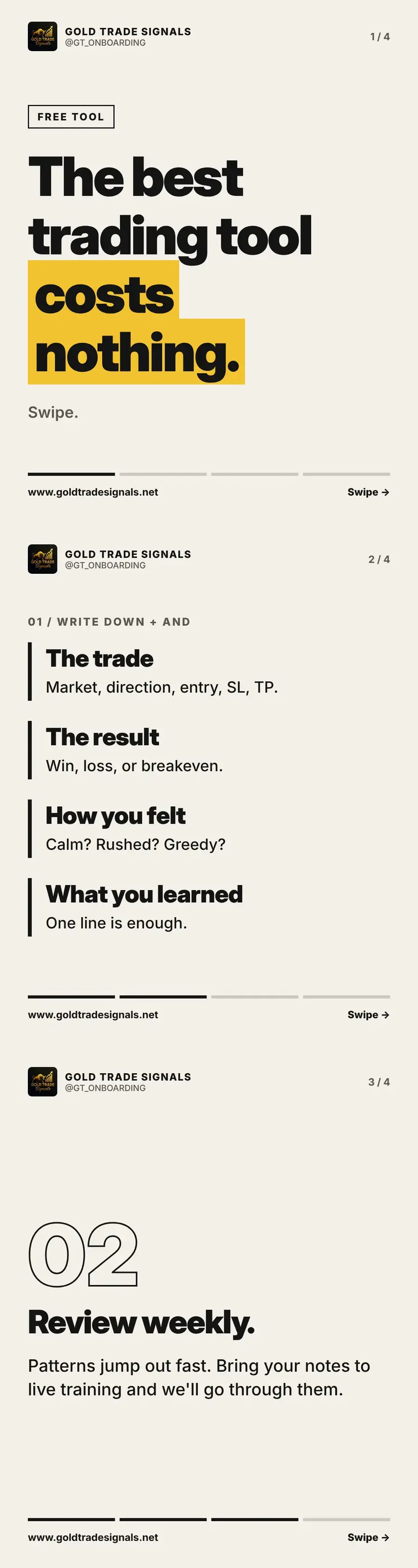
Why a trading journal is the best free tool you have
The cheapest trading tool there is: a notebook. What to write down after every trade, how to review it weekly, and why it teaches you faster than anything.
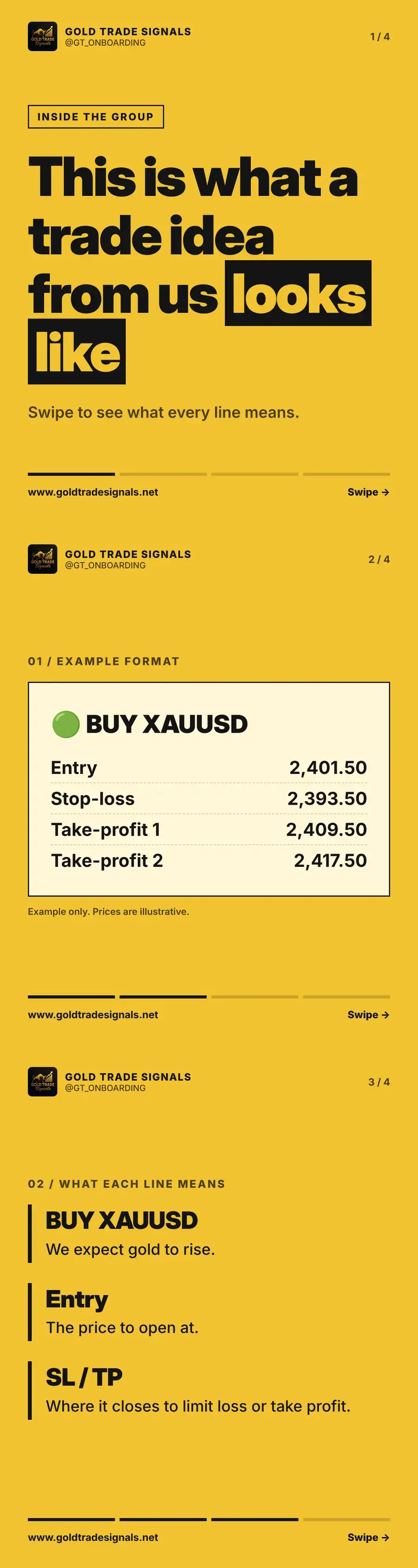
What a gold trade idea from us looks like, line by line
See exactly what a Gold Trade Signals trade idea looks like and what each line means: direction, entry, stop-loss and take-profit, explained for beginners.
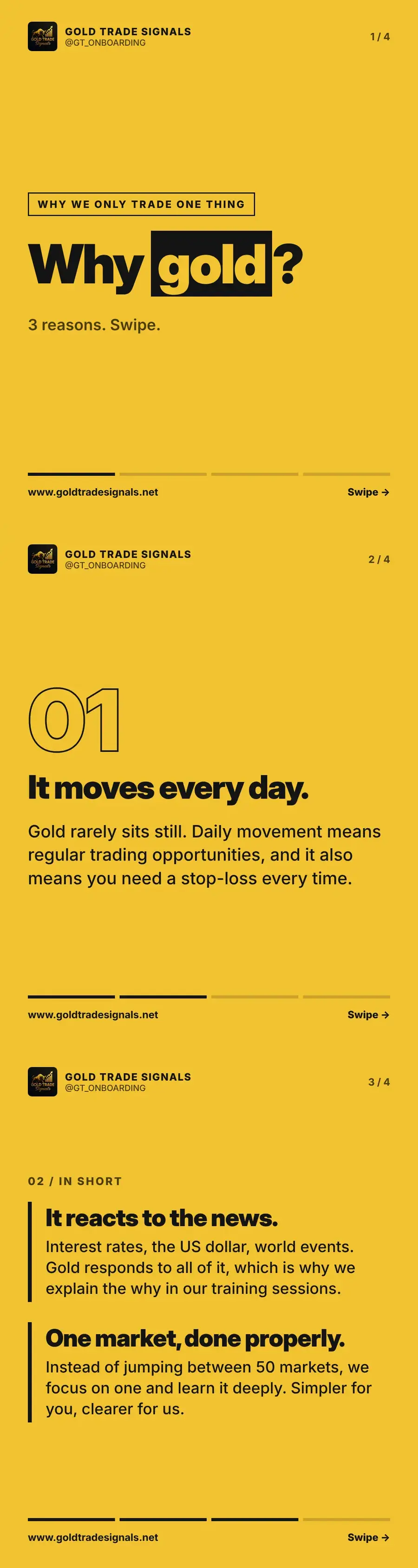
Why we only trade gold: three reasons we focus on one market
Why focus on gold out of everything you could trade? We explain three reasons: daily movement, reaction to news, and learning one market deeply.
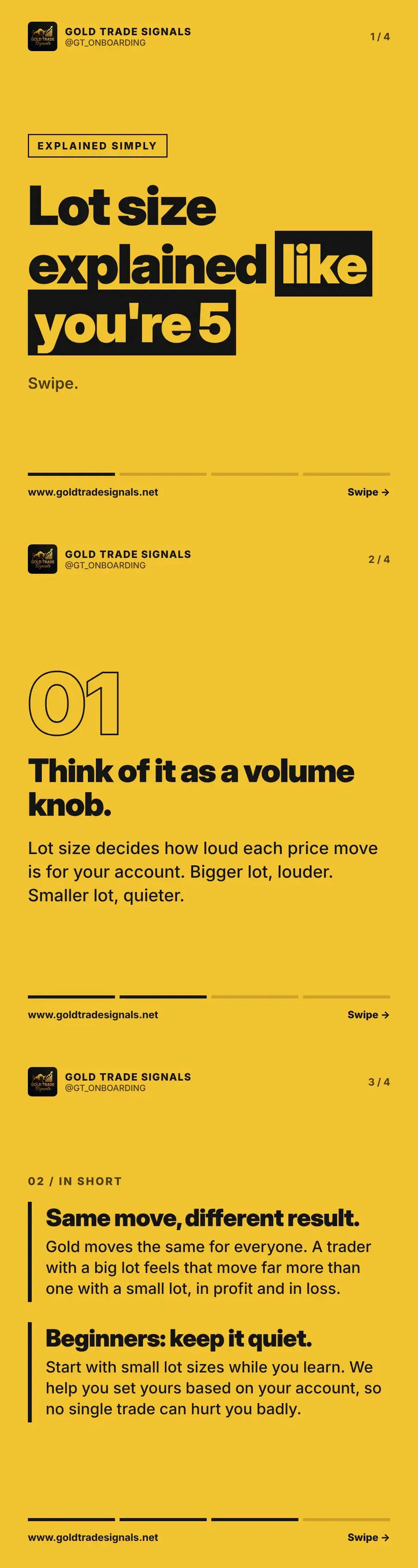
Lot size explained simply: the volume knob for your account
Lot size decides how much each move in gold affects your account. We explain it with a volume knob analogy and show why beginners should keep it small.
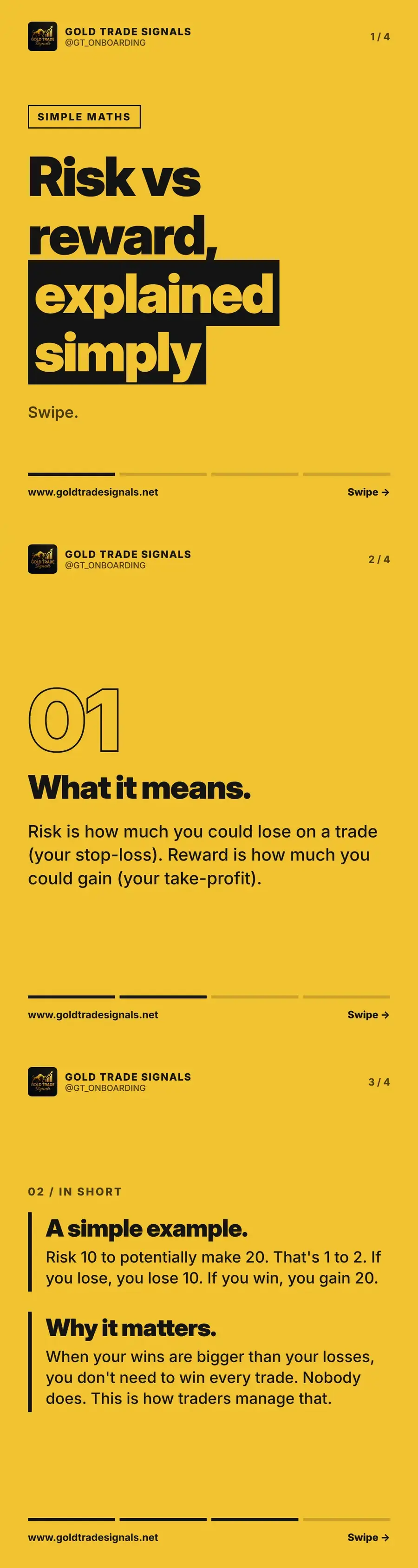
Risk to reward explained: why loss size beats win count
Risk to reward, explained with simple numbers. Learn what risk and reward mean on a gold trade and why bigger wins than losses change everything.
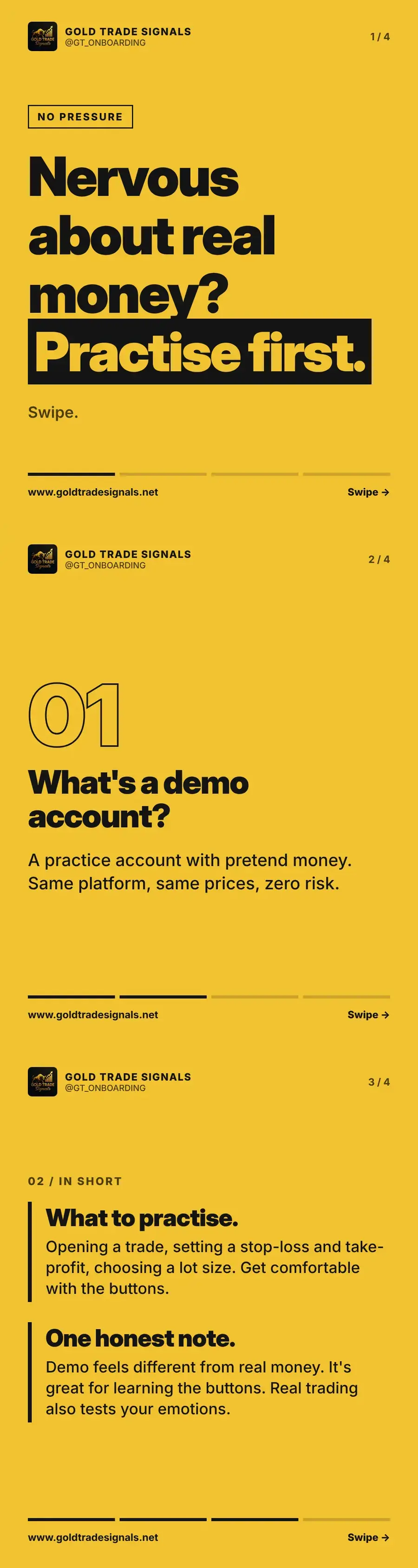
Nervous about real money? Practise on a demo account first
A demo account lets you practise gold trading with pretend money on the same platform. Learn what to practise and how demo differs from live trading.
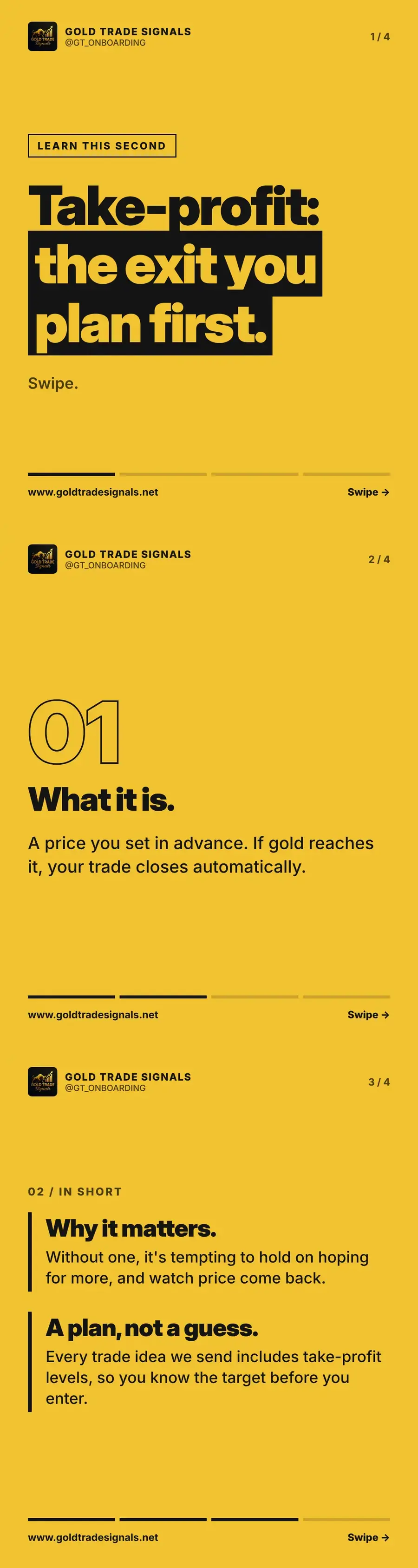
Take-profit explained: the exit you plan before the trade starts
A take-profit is a price set in advance that closes your gold trade at your target. We explain what it is and why planning the exit first helps.
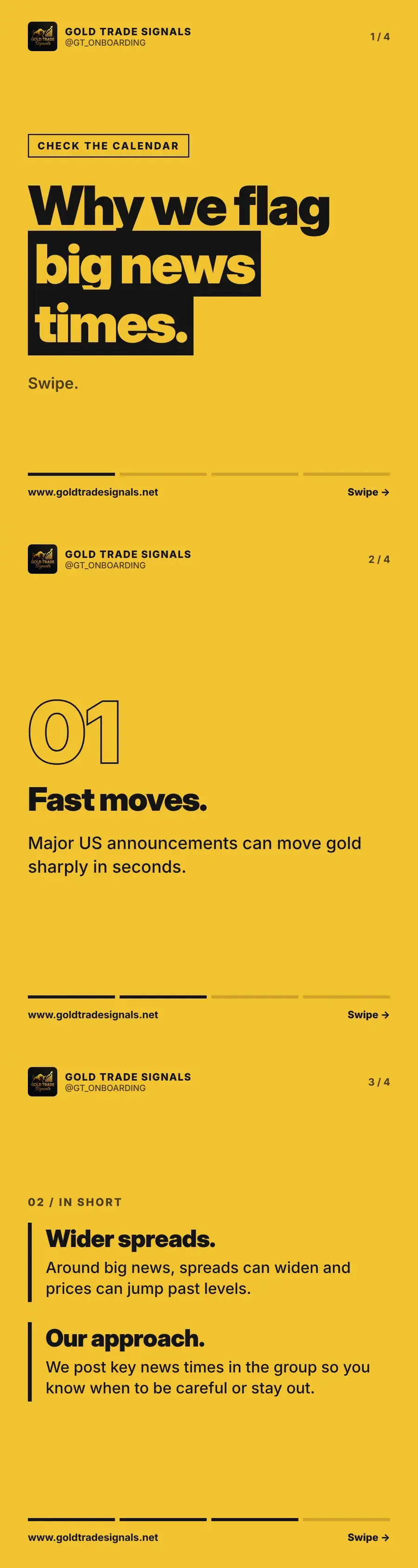
Why we flag big news times before they move the gold market
Some moments move gold in seconds. We explain why major US announcements matter, how spreads widen around news, and how posting key times protects you.
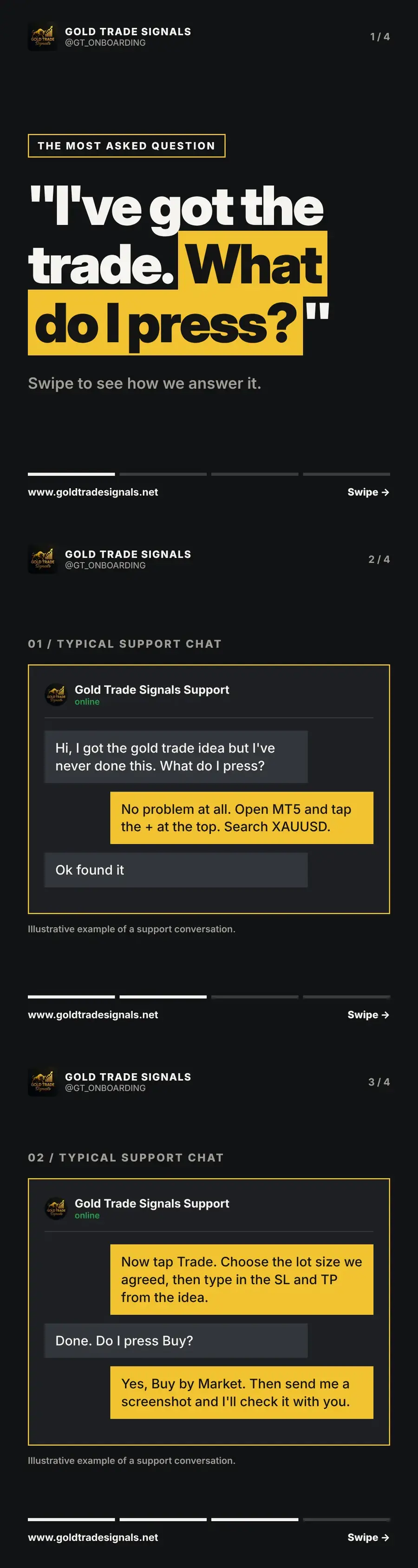
How to place your first gold trade idea in MT5
Not sure which button to press? We walk through placing a gold trade idea in MT5: find XAUUSD, set lot size, SL and TP, then Buy or Sell by Market.
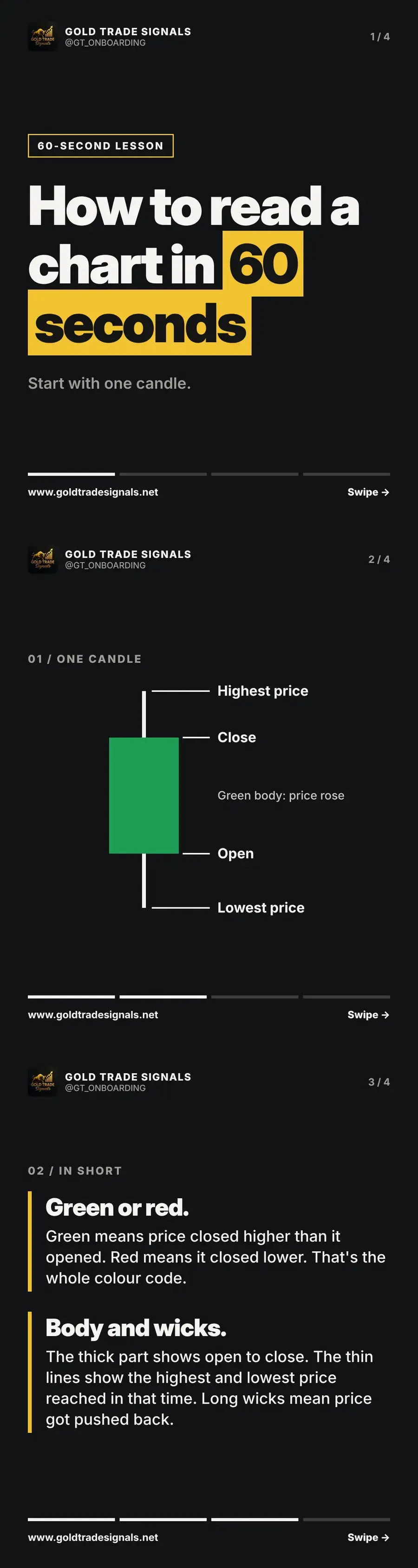
How to read a candlestick chart in 60 seconds
Charts look scary until someone explains one candle. Learn what the colour, body and wicks of a candlestick tell you about the gold price in a few minutes.
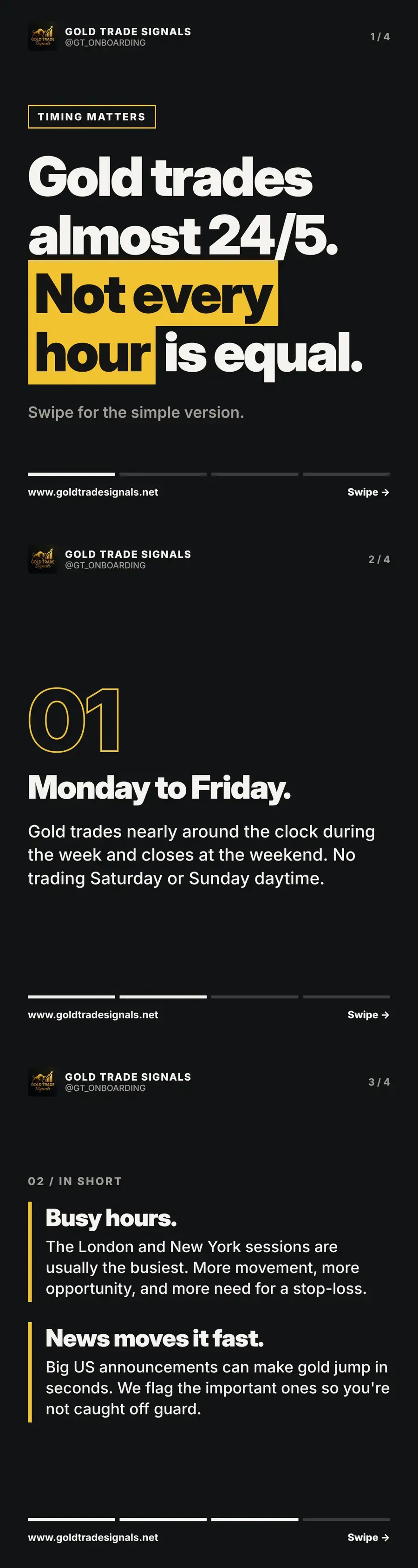
Gold trading hours: when the gold market is open
Gold trades almost around the clock Monday to Friday, but not every hour is the same. When it is open, which sessions are busiest and why news matters.
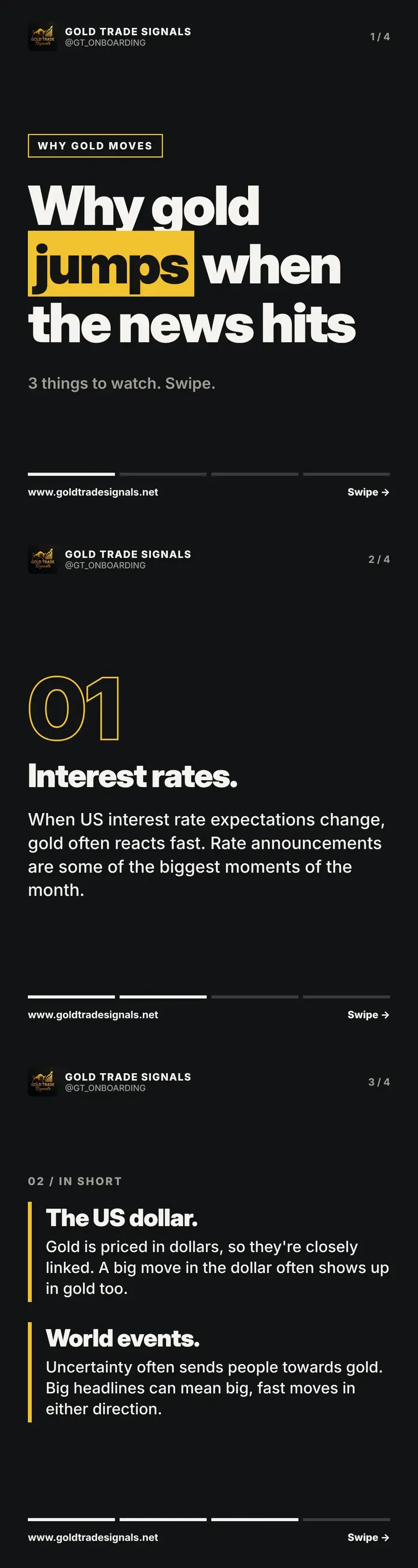
Why gold moves when the news hits: three things to watch
Ever seen gold jump in seconds and wondered why? Usually it is the news. We explain the three big drivers: US interest rates, the dollar and world events.
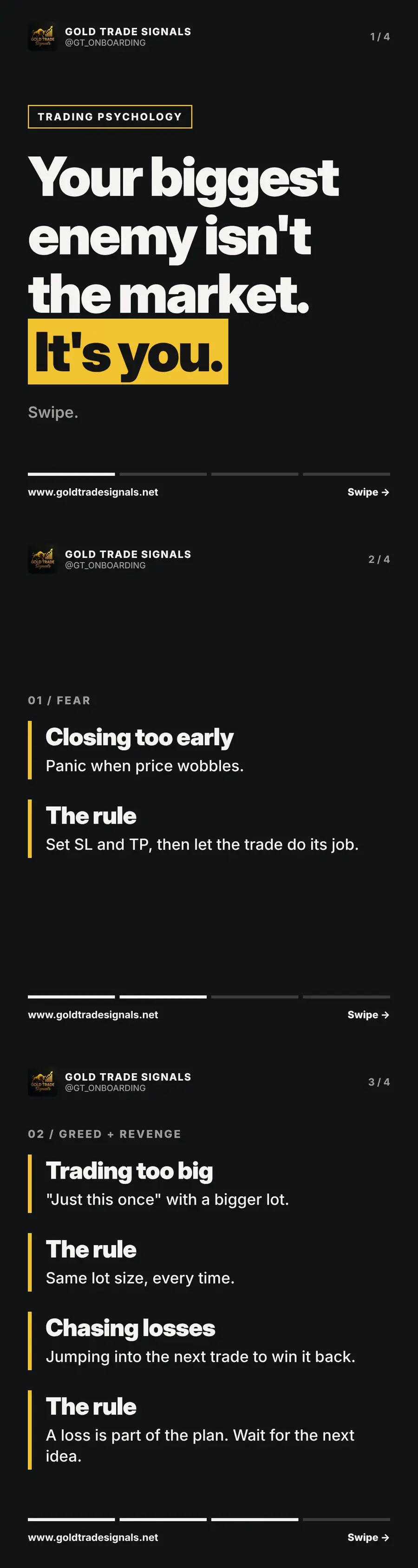
Trading psychology: fear, greed and revenge trading
Your biggest enemy in trading is not the market, it is your emotions. How fear, greed and revenge trading show up for gold traders, and the rule for each.
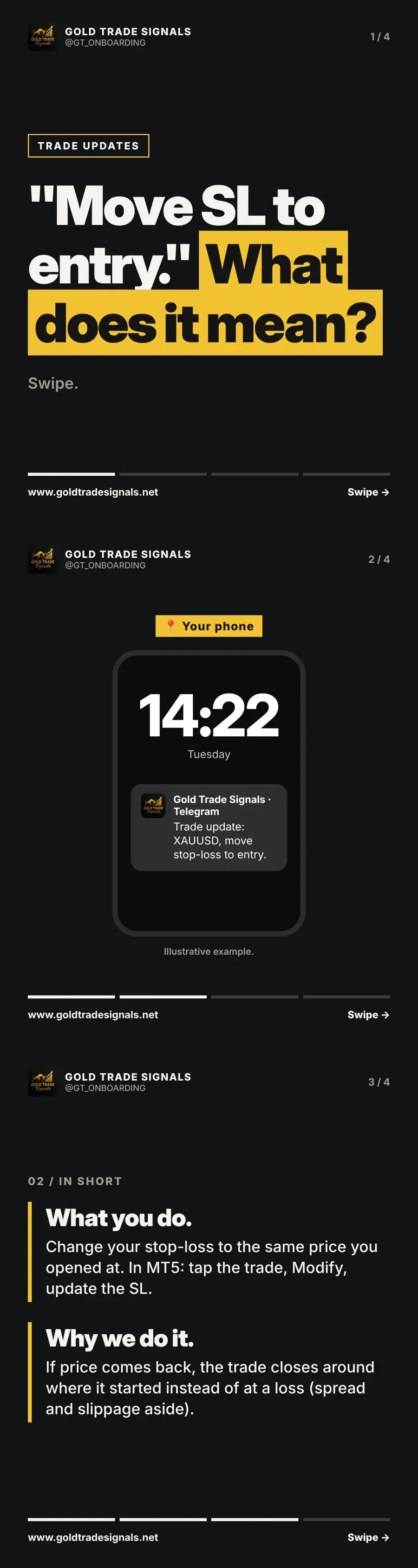
Move stop-loss to entry: what the trade update means
One of the most common trade updates is move stop-loss to entry. We explain what it means, how to do it in MT5 and why it protects an open gold trade.
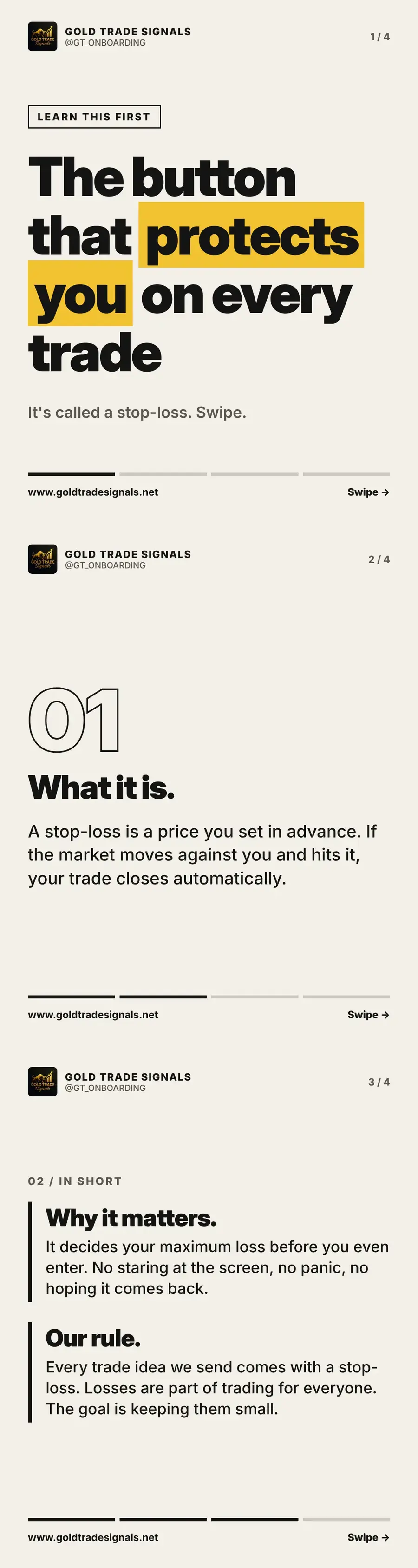
What a stop-loss is and why every gold trade needs one
A stop-loss closes your trade automatically if gold moves against you. Learn what it is, why it matters and how we use one on every trade idea we send.
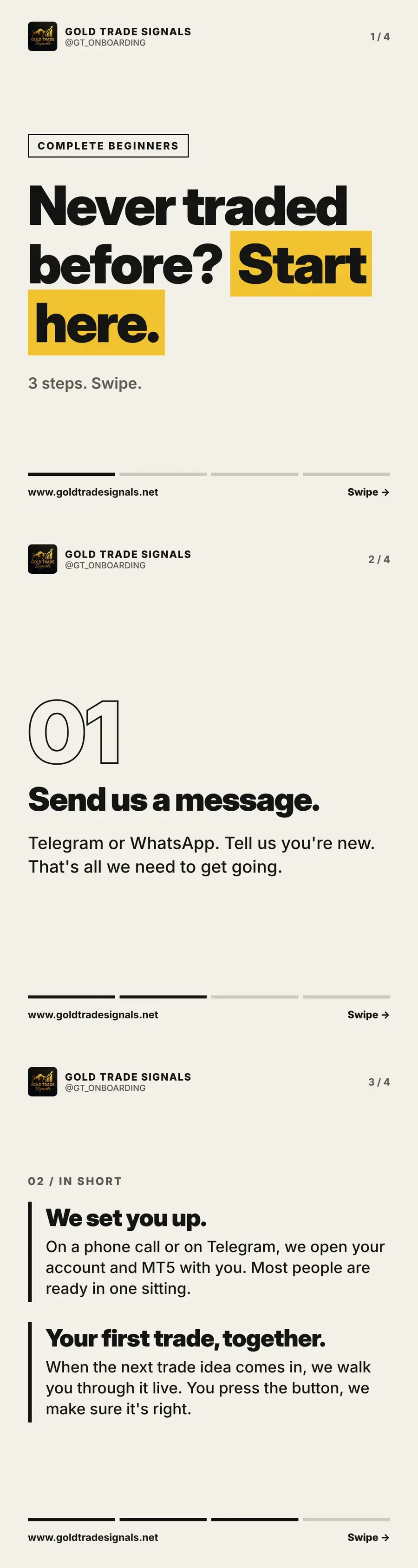
Never traded before? How to start in three simple steps
New to trading and not sure where to begin? Here is how it works with us: message us, we set you up, and your first trade is done together, live.
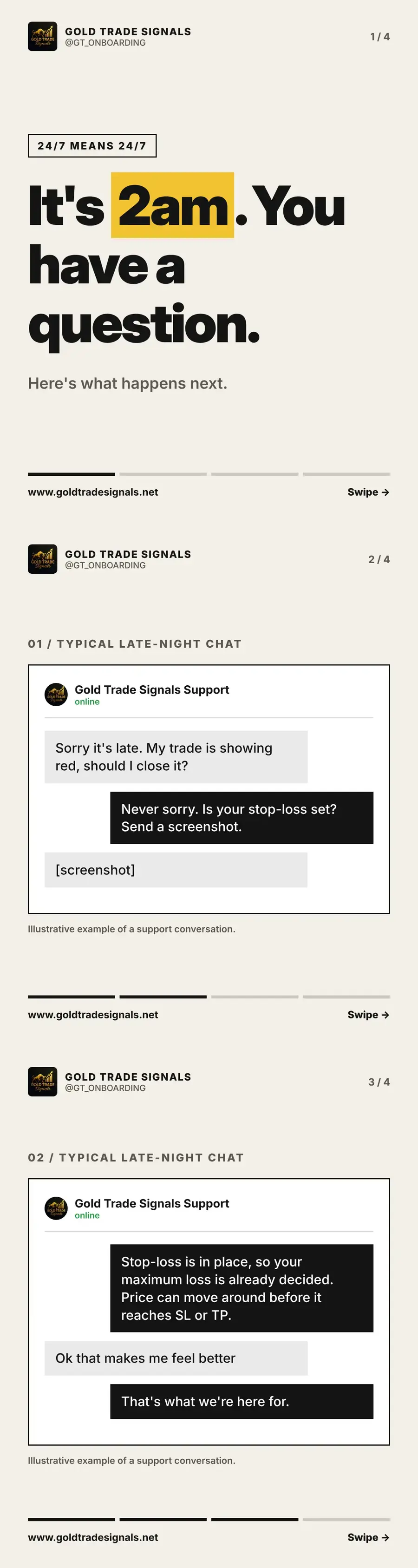
What happens when you have a trading question at 2am
It is 2am, your gold trade is showing red and you have a question. What a late-night message to our 24/7 support looks like, and why the stop-loss matters.
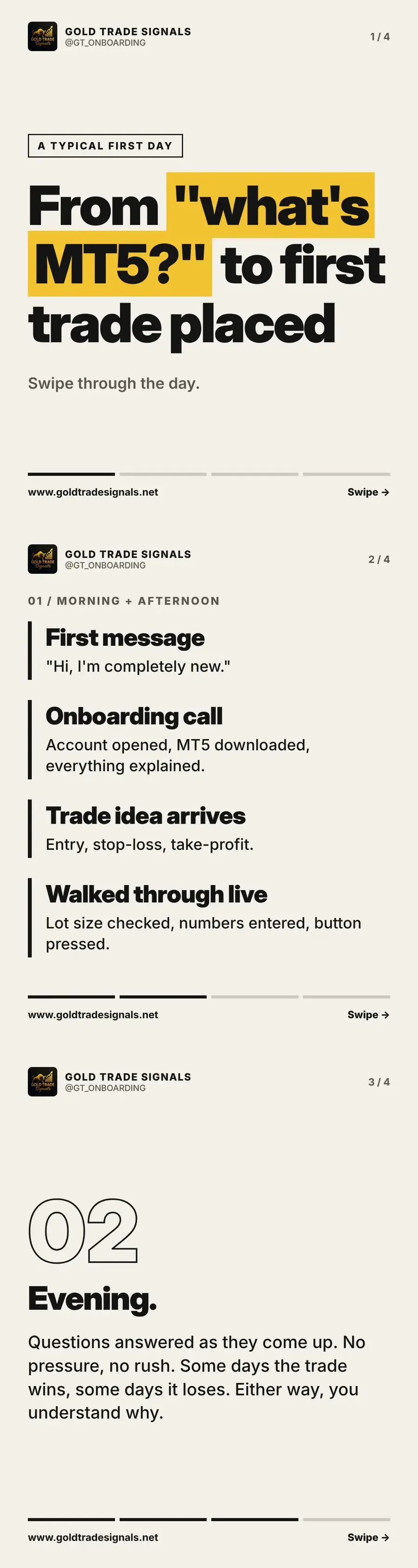
A typical first day: from 'what is MT5?' to first trade placed
From your first message to your first gold trade placed, here is what a typical first day with Gold Trade Signals looks like, with no pressure and no rush.
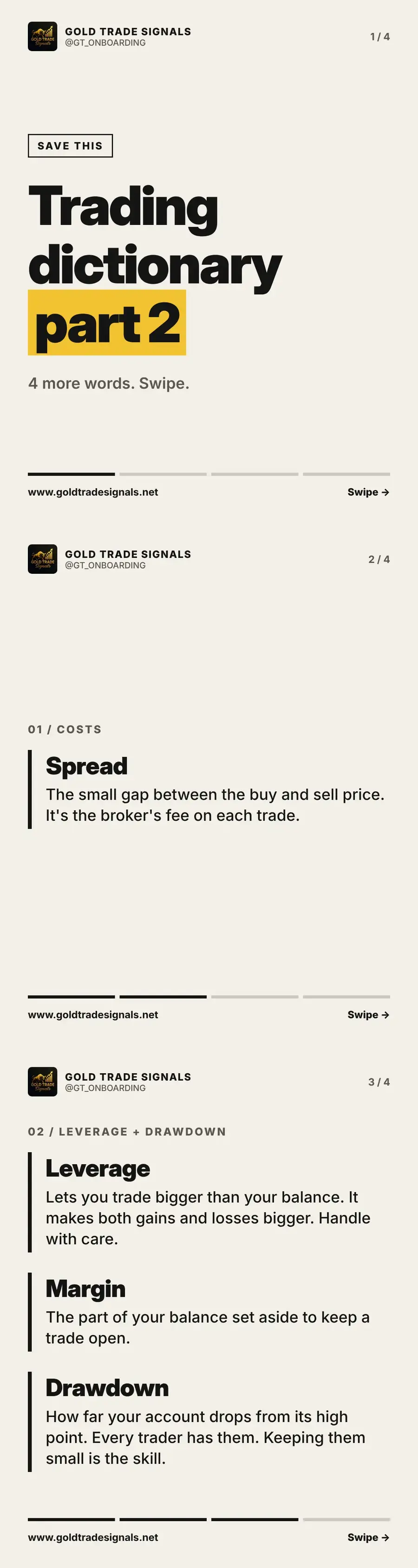
Trading dictionary part two: spread, leverage, margin, drawdown
Four trading words you will hear all the time, explained in plain English for gold traders: spread, leverage, margin and drawdown, and why each matters.
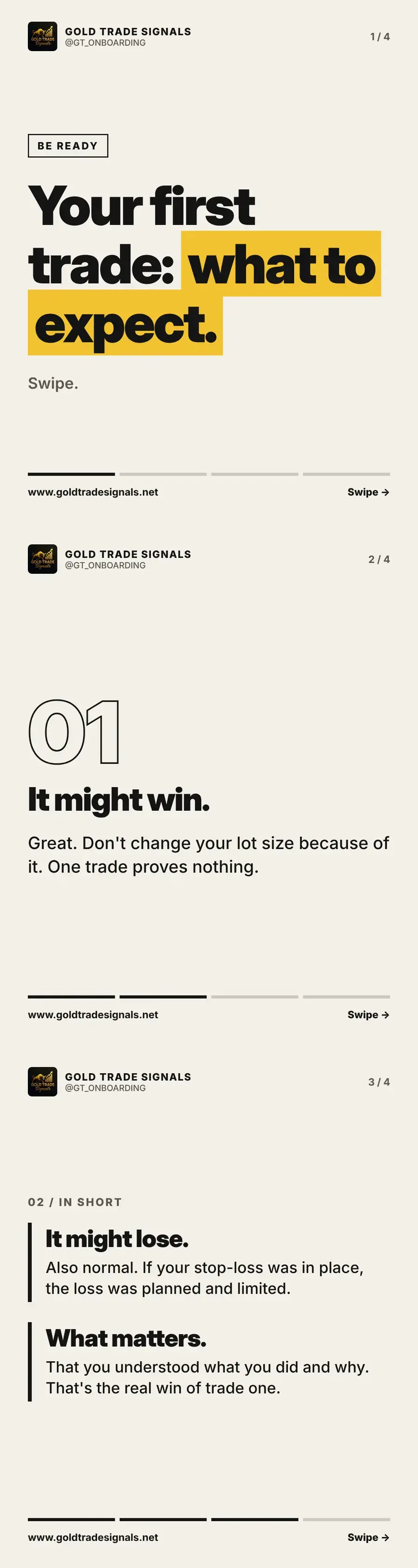
Your first gold trade: what to realistically expect
Your first gold trade might win or it might lose. Here is how to think about either outcome, why one trade proves nothing, and what the real win really is.
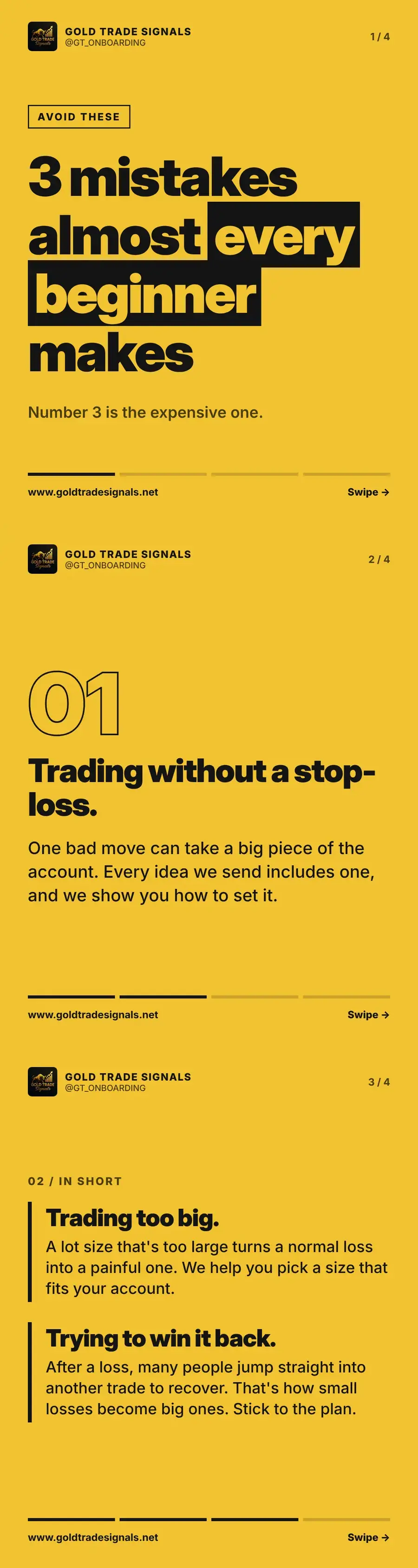
Three beginner trading mistakes to avoid from day one
Almost every new gold trader makes the same three mistakes: no stop-loss, oversized lots and chasing losses. Here is how to avoid each one from the start.
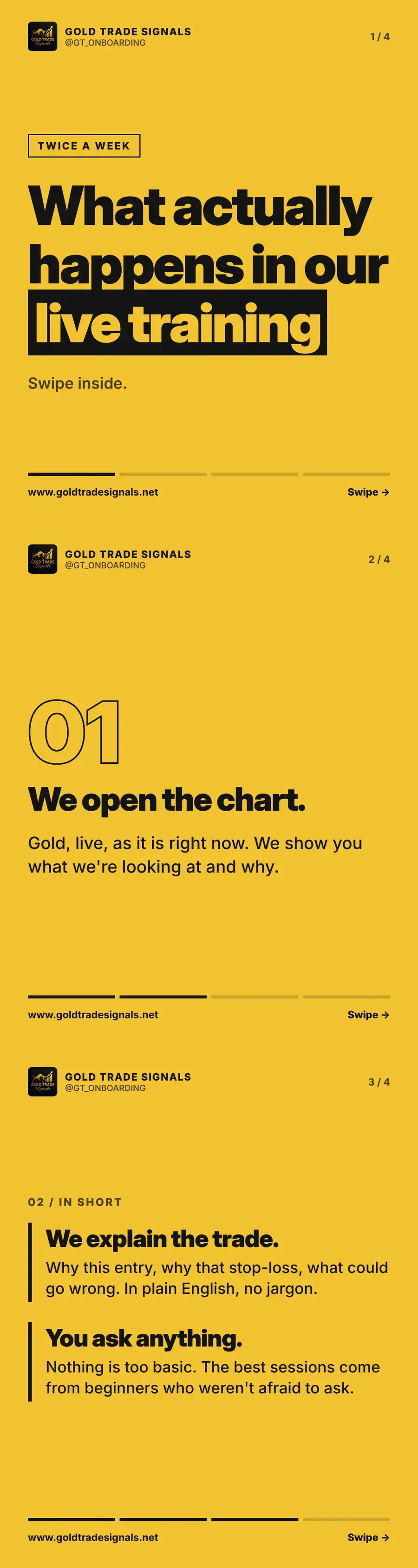
What happens in our live gold trading sessions twice a week
Twice a week we open the gold chart live and trade in front of members. Here is exactly what happens in a session and why beginners get so much from it.
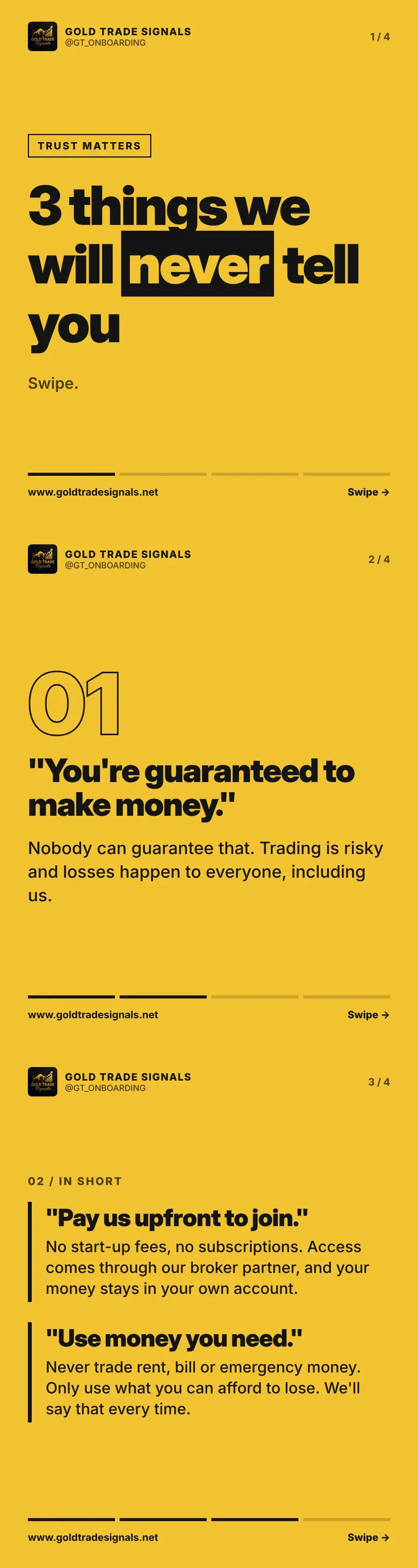
Three things a trading group should never tell you
If a trading group promises you will make money, asks for upfront fees or tells you to trade money you need, be careful. Three lines we will never use.
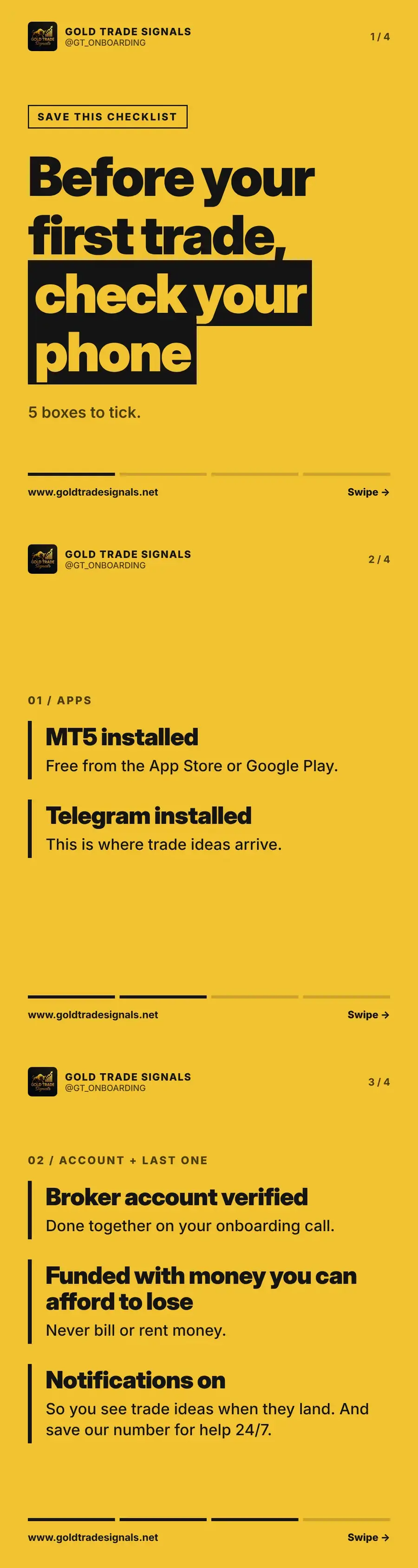
Phone checklist: five boxes to tick before your first gold trade
Before your first gold trade, five things need to be ready on your phone: MT5, Telegram, a verified broker account, sensible funding and notifications on.
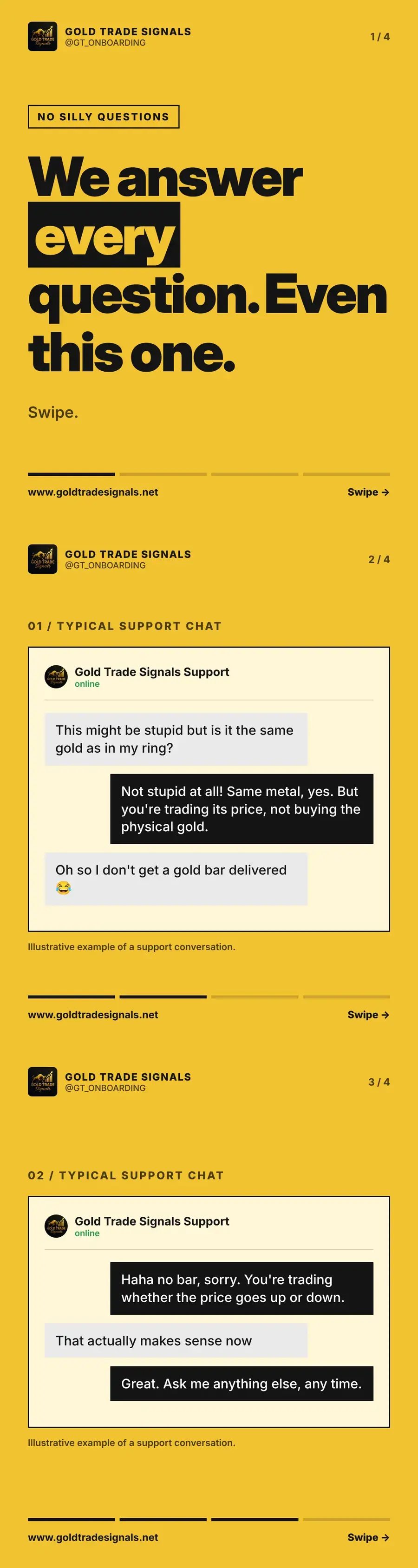
No question is too small: what our support chat is really like
Is the gold you trade the same as the gold in your ring? We answer every question, even that one. Here is what support should feel like for a new trader.
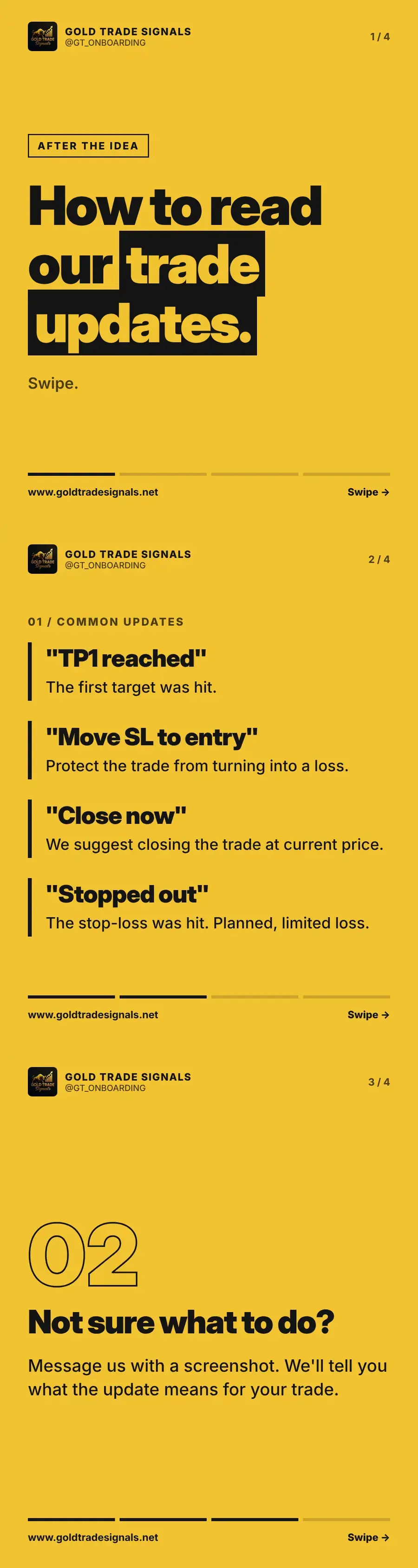
How to read our trade update messages after an idea is sent
TP1 reached, move SL to entry, close now, stopped out. Here is what each of our trade update messages means and what to do when you see one.
Risk warning: This article is educational content, not personal investment advice. Gold is a leveraged, volatile instrument and you can lose some or all of your capital. Gold Trade Signals is not FCA regulated. Read the full risk warning.