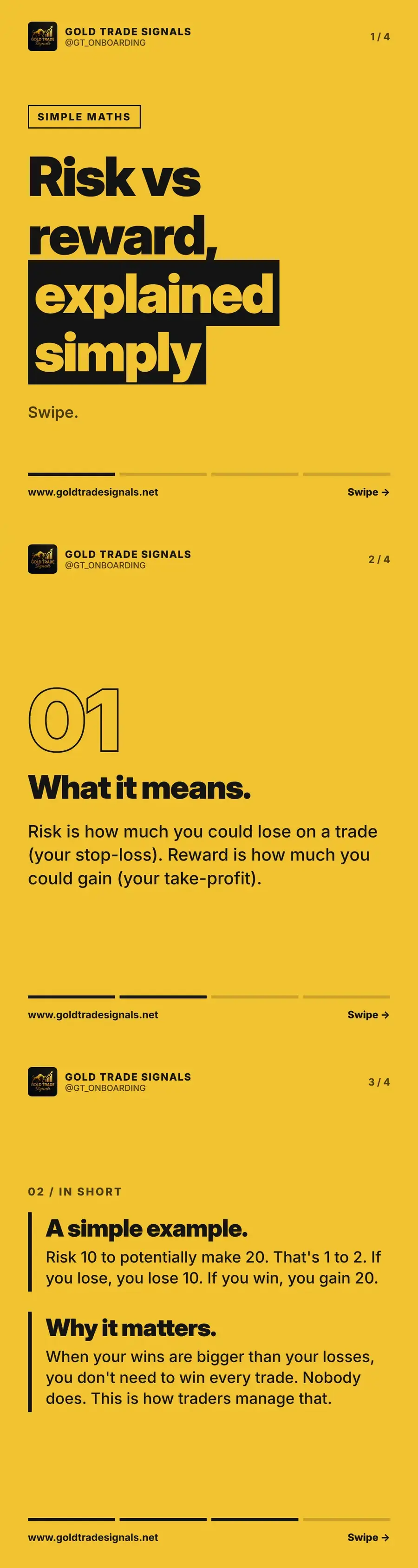
Why does the size of your losses matter more than how often you win? The answer is risk to reward, and it only takes a little simple maths to understand. We define risk and reward on a gold trade, walk through a one-to-two example, and explain why this ratio is at the heart of how traders survive losing trades.
What risk and reward mean
Risk is how much you could lose on a trade. On a gold trade, that amount is set by your stop-loss: the distance from your entry to your stop, multiplied by your lot size. Reward is how much you could gain, which is set by your take-profit in the same way. Because every idea we send includes both levels, you can see the risk and the reward before you enter.
A simple example
Say you risk 10 to potentially make 20. That is a risk to reward of 1 to 2. If the trade loses, you lose 10. If it wins, you gain 20. Nothing about the gold chart changes; the ratio simply describes where you placed your stop-loss and your take-profit relative to your entry. Written out like this, it becomes a clear decision rather than a hope.
Why it matters
When your wins are bigger than your losses, you do not need to win every trade. Nobody does, including experienced traders. With a 1 to 2 ratio, one winning trade covers two losing ones of the same size. This is how traders manage the fact that some trades will go wrong. It is also why we explain the risk on every trade idea, so you know what you are accepting before you place it.
Key takeaways
- Risk is set by your stop-loss, reward by your take-profit
- Risking 10 to make 20 is a 1 to 2 risk to reward
- Bigger wins than losses means you need not win every trade
Common questions
What is a good risk to reward ratio for gold trading?
Many traders aim for at least 1 to 2, meaning the potential gain is twice the potential loss. The exact ratio depends on the setup.
Do you need to win most trades to be profitable?
Not necessarily. The outcome depends on the balance between your average win, your average loss and how often you are right, and none of those are guaranteed. That is why the ratio is planned before entry, not hoped for afterwards.
Trade ideas with the levels already worked out
Join the free community and receive XAU/USD trade ideas with entry, stop-loss and take-profit, live training on Tuesdays and Thursdays, and support whenever you are stuck.
Join free on TelegramOpen the calculatorsRisk warning: This article is educational content, not personal investment advice. Gold is a leveraged, volatile instrument and you can lose some or all of your capital. Gold Trade Signals is not FCA regulated. Read the full risk warning.
More from Trading Basics
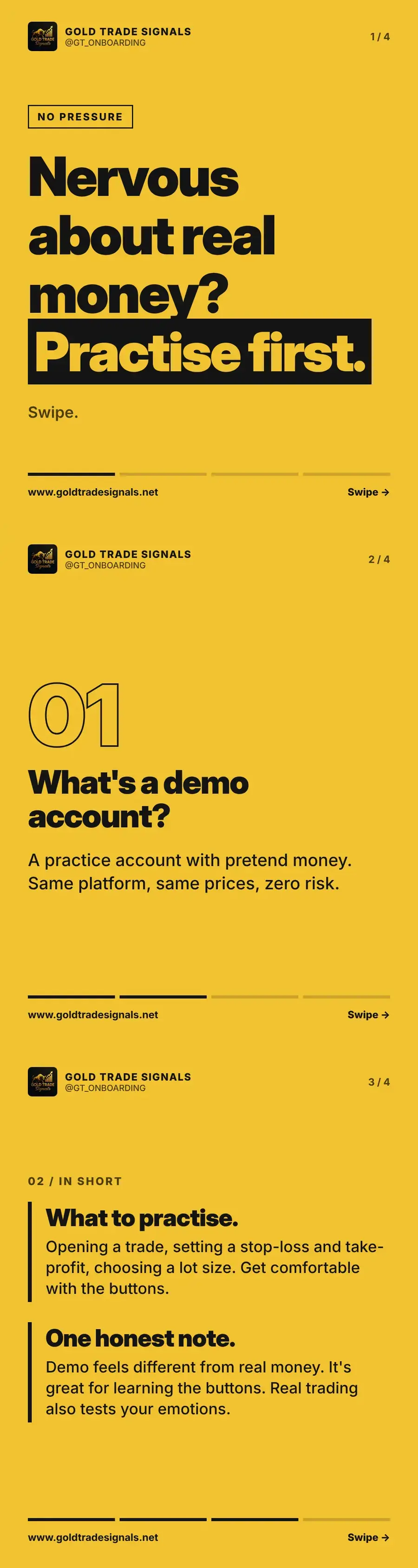
Nervous about real money? Practise on a demo account first
A demo account lets you practise gold trading with pretend money on the same platform. Learn what to practise and how demo differs from live trading.
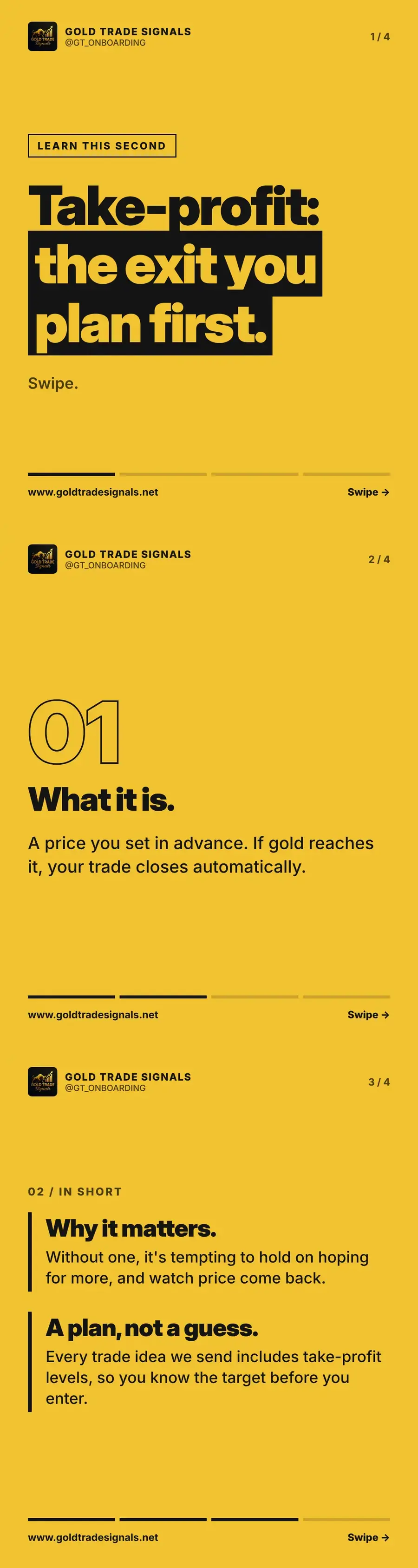
Take-profit explained: the exit you plan before the trade starts
A take-profit is a price set in advance that closes your gold trade at your target. We explain what it is and why planning the exit first helps.
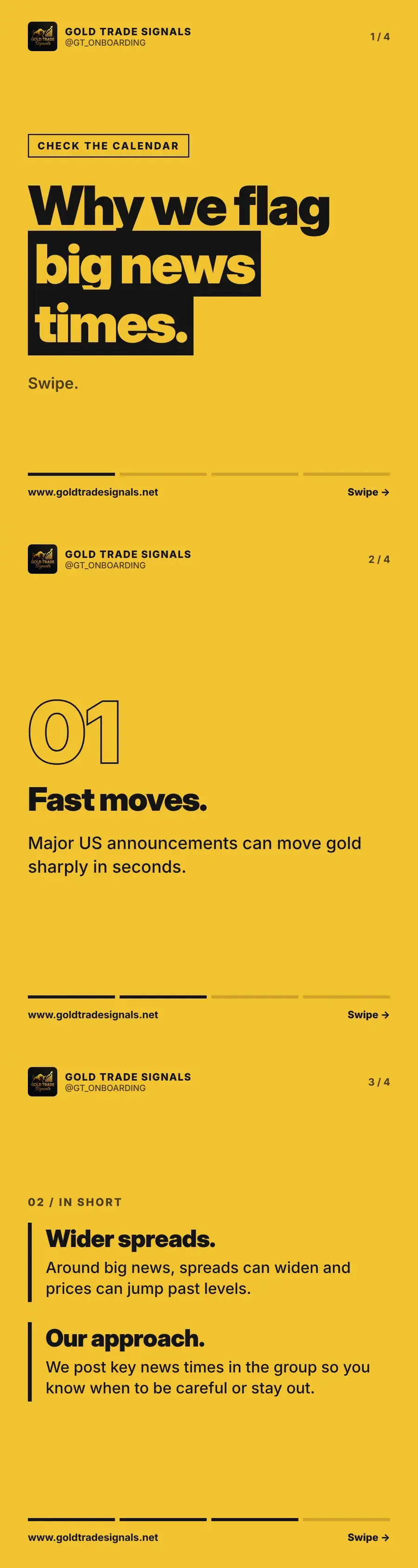
Why we flag big news times before they move the gold market
Some moments move gold in seconds. We explain why major US announcements matter, how spreads widen around news, and how posting key times protects you.