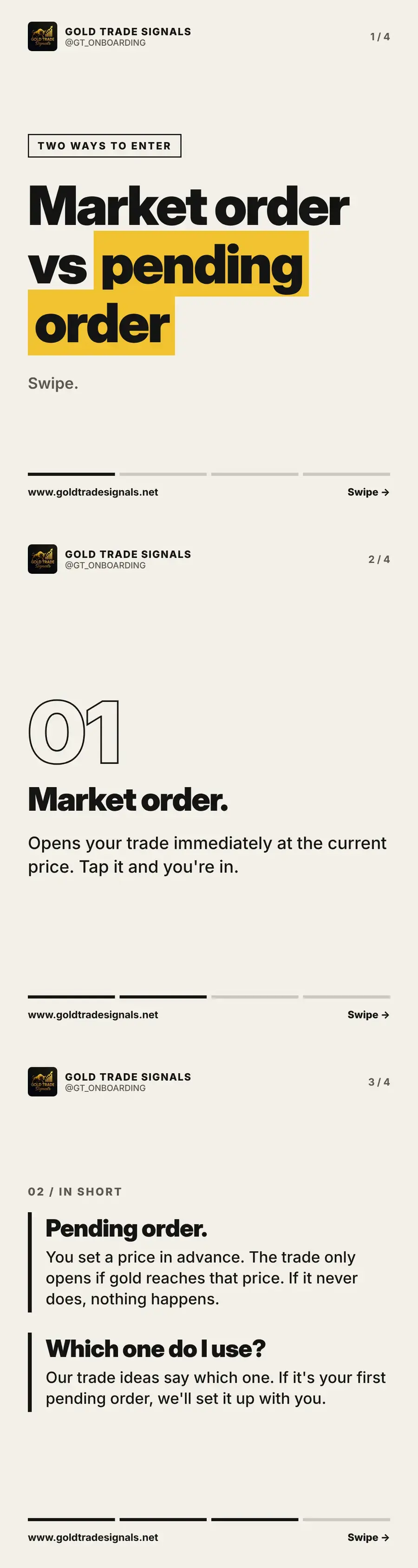
There are two ways to open a trade on your platform: a market order and a pending order. Both get you into a gold trade, but they behave very differently, and picking the wrong one can mean a worse price or no trade at all. Here is how each works and which to use.
Market order
A market order opens your trade immediately at the current price. You tap buy or sell and you are in, at whatever price gold is trading at that second. It is the simplest way to enter and the one most beginners use first. The trade-off is that you accept the price the market gives you, which may be slightly different from the one you saw a moment earlier.
Pending order
A pending order lets you set a price in advance. The trade only opens if gold reaches that price. If it never gets there, nothing happens and no position is opened. This is useful when an idea calls for an entry at a level the market has not yet reached, because you do not have to sit and watch the chart waiting for it.
Which one do you use?
Our trade ideas say which type of order to use, along with the entry, stop-loss and take-profit. You do not have to work it out yourself. If it is your first pending order, we will set it up with you step by step so you can see exactly where each number goes. Learning the platform is part of what we do with new members.
Key takeaways
- A market order opens immediately at the current price.
- A pending order only opens if gold reaches your chosen price.
- Our trade ideas tell you which order type to use.
Common questions
What is the difference between a market order and a pending order?
A market order opens a trade straight away at the current price. A pending order waits and only opens if the market reaches the price you set.
What happens if a pending order is never reached?
Nothing. The order simply sits there until it is triggered or you cancel it, and no trade is opened.
Trade ideas with the levels already worked out
Join the free community and receive XAU/USD trade ideas with entry, stop-loss and take-profit, live training on Tuesdays and Thursdays, and support whenever you are stuck.
Join free on TelegramOpen the calculatorsRisk warning: This article is educational content, not personal investment advice. Gold is a leveraged, volatile instrument and you can lose some or all of your capital. Gold Trade Signals is not FCA regulated. Read the full risk warning.
More from Trading Basics
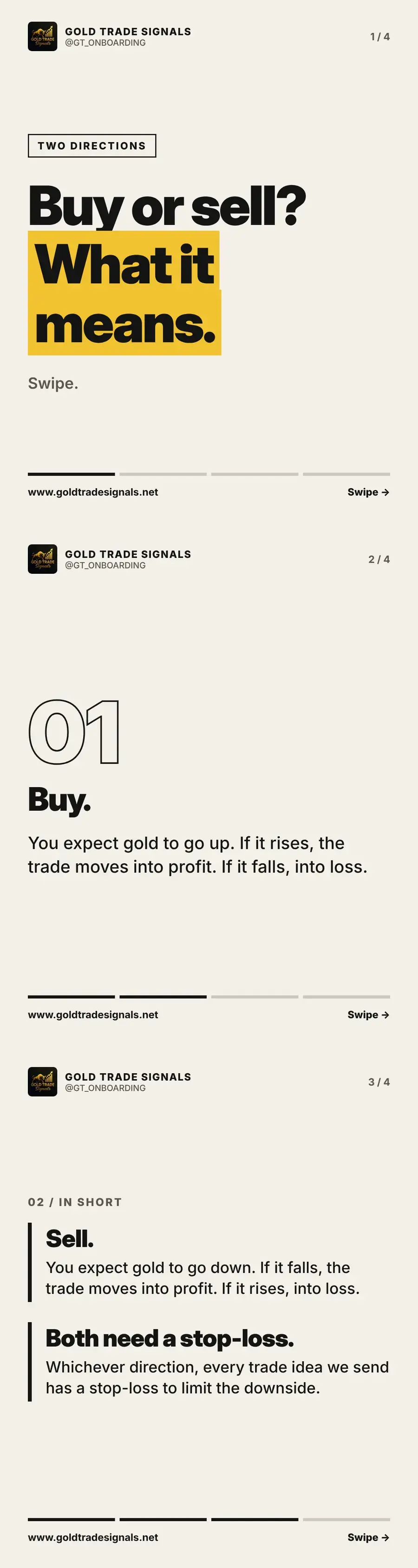
Buy or sell? What each one means when trading gold
You can trade gold in both directions. Buying means you expect the price to rise, selling means you expect it to fall, and every trade needs a stop-loss.
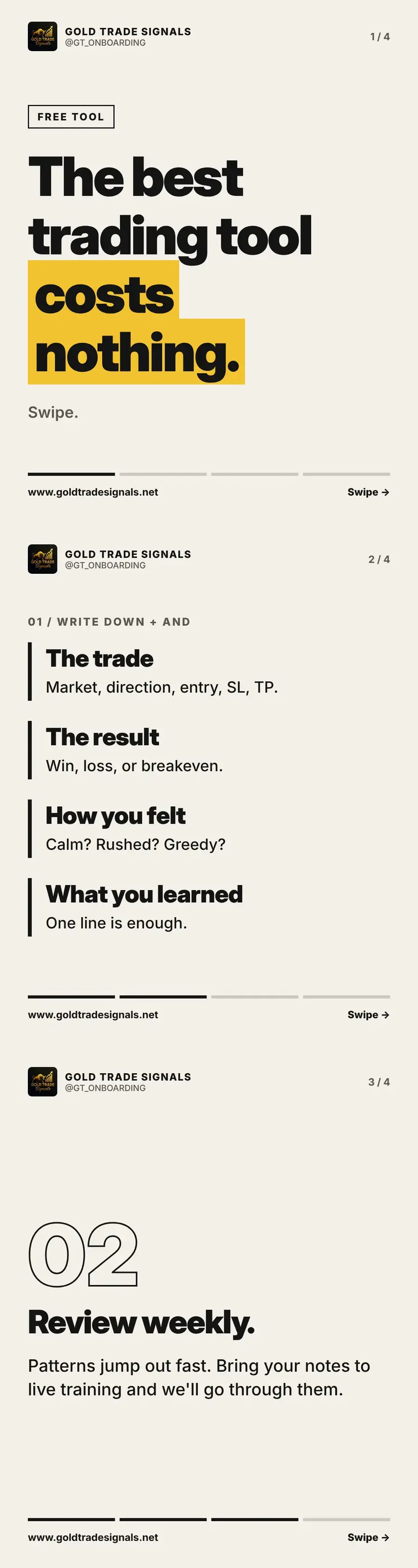
Why a trading journal is the best free tool you have
The cheapest trading tool there is: a notebook. What to write down after every trade, how to review it weekly, and why it teaches you faster than anything.
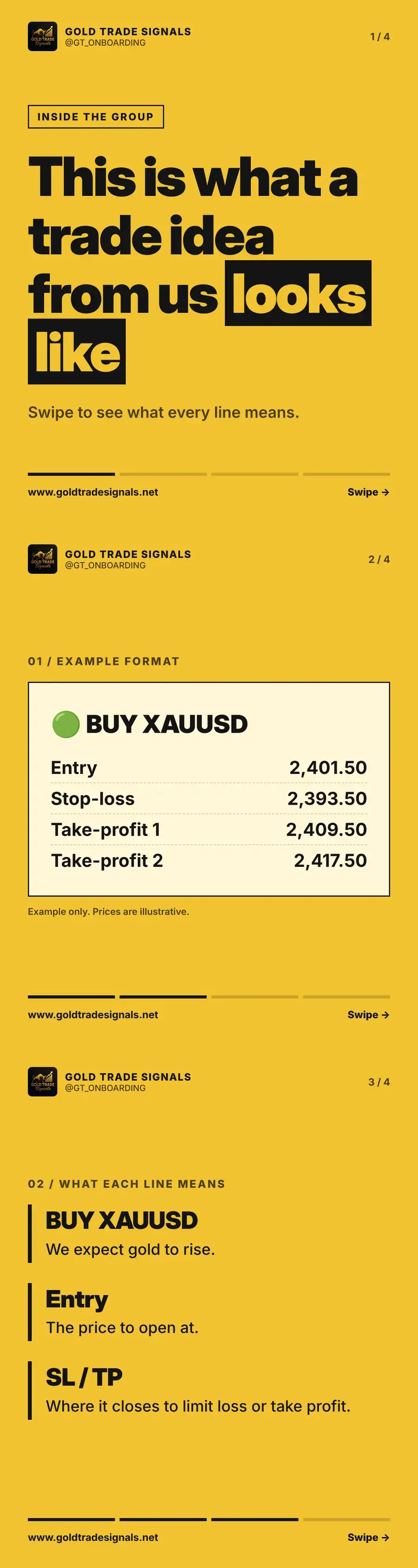
What a gold trade idea from us looks like, line by line
See exactly what a Gold Trade Signals trade idea looks like and what each line means: direction, entry, stop-loss and take-profit, explained for beginners.