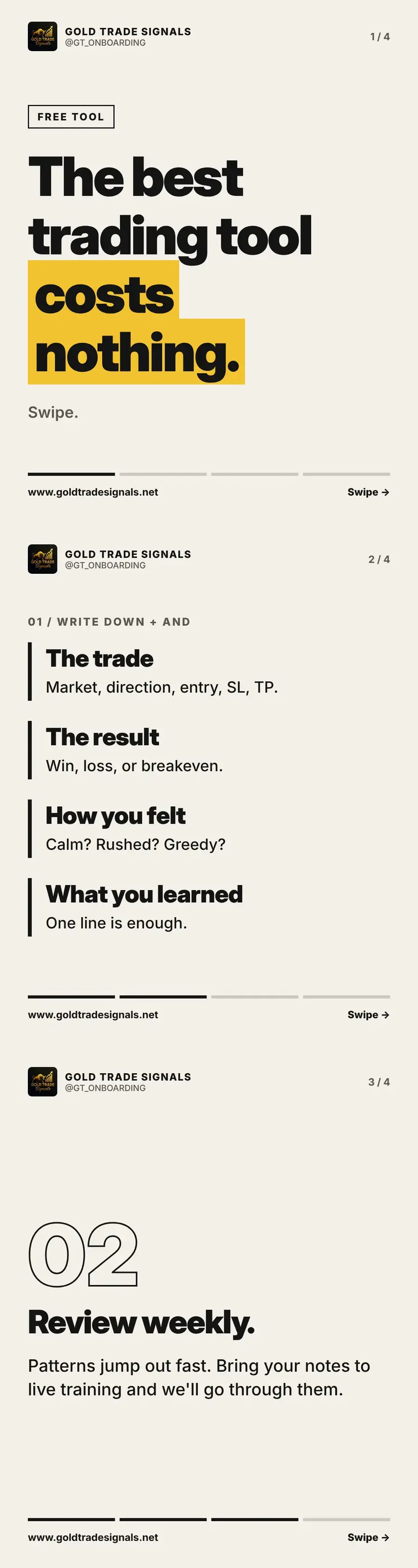
The cheapest trading tool there is costs nothing: a notebook. Writing down your trades teaches you faster than anything else, because it turns a blur of wins and losses into patterns you can actually see. Here is what to record after each trade and how to review it.
Write down the trade and the result
For every trade, note the basics: the market, the direction, the entry, the stop-loss and the take-profit. Then record the result: win, loss or breakeven. This takes less than a minute, and it means you can look back and see exactly what you did rather than what you remember doing. Memory is kind to traders; a journal is honest.
Write down how you felt and what you learned
Next, a word or two on how you felt when you took the trade. Calm? Rushed? Greedy? Emotions drive most beginner mistakes, and naming them is the first step to noticing them in time. Finally, write one line on what you learned. One line is enough. Over a month, those lines become a personal rulebook built from your own experience.
Review weekly
Once a week, read back through the entries. Patterns jump out fast: trades taken without a stop, lot sizes creeping up, the same rushed feeling before every loss. Spotting a pattern is how you fix it. Bring your notes to our live training sessions and we will go through them with you, so the journal becomes a shared tool rather than a private one.
Key takeaways
- Record market, direction, entry, stop-loss, take-profit and result.
- Note how you felt: calm, rushed or greedy.
- Review weekly; patterns jump out fast.
Common questions
What should you write in a trading journal?
The market, direction, entry, stop-loss and take-profit, the result, how you felt, and one line on what you learned.
How often should you review a trading journal?
Weekly works well. Patterns show up quickly when you read a week of trades together.
Trade ideas with the levels already worked out
Join the free community and receive XAU/USD trade ideas with entry, stop-loss and take-profit, live training on Tuesdays and Thursdays, and support whenever you are stuck.
Join free on TelegramOpen the calculatorsRisk warning: This article is educational content, not personal investment advice. Gold is a leveraged, volatile instrument and you can lose some or all of your capital. Gold Trade Signals is not FCA regulated. Read the full risk warning.
More from Trading Basics
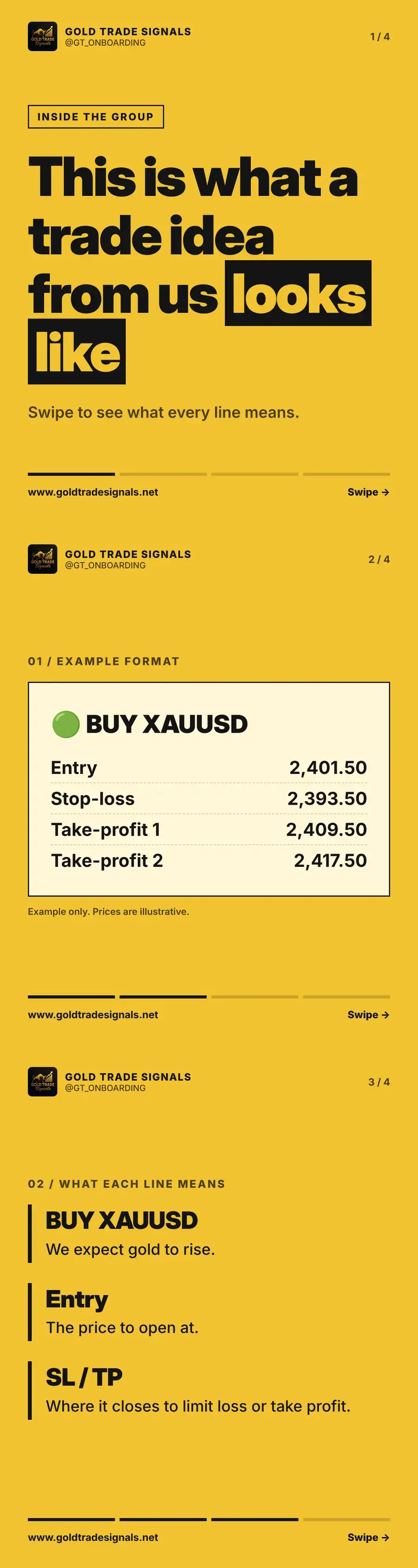
What a gold trade idea from us looks like, line by line
See exactly what a Gold Trade Signals trade idea looks like and what each line means: direction, entry, stop-loss and take-profit, explained for beginners.
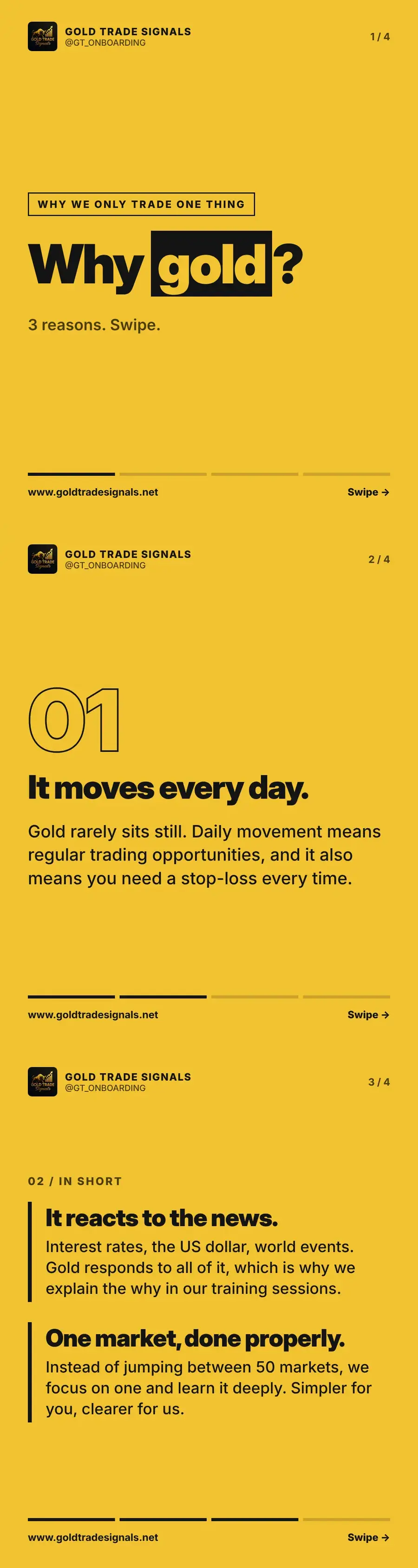
Why we only trade gold: three reasons we focus on one market
Why focus on gold out of everything you could trade? We explain three reasons: daily movement, reaction to news, and learning one market deeply.
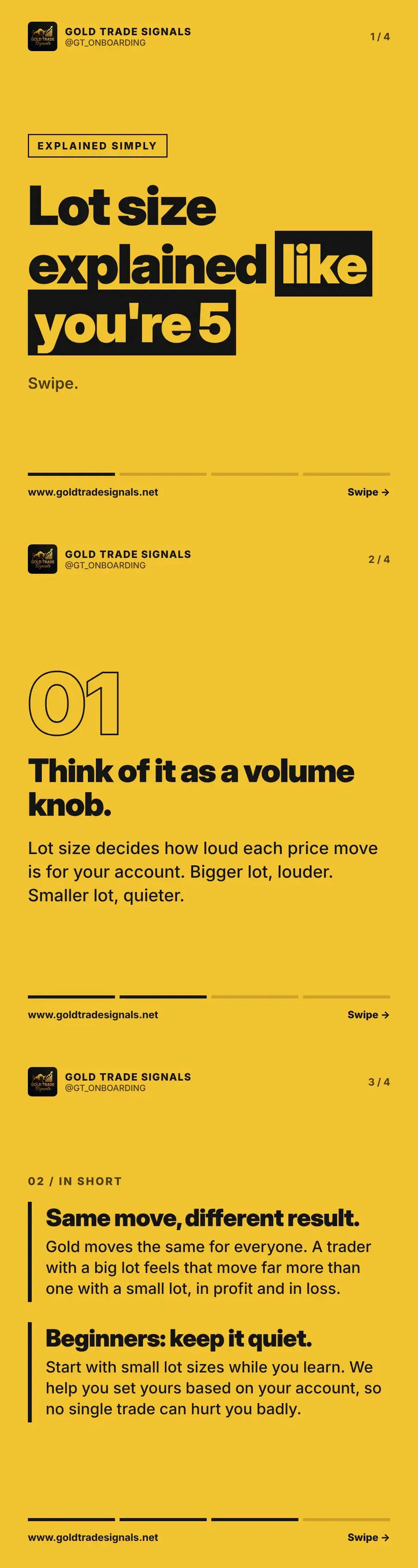
Lot size explained simply: the volume knob for your account
Lot size decides how much each move in gold affects your account. We explain it with a volume knob analogy and show why beginners should keep it small.