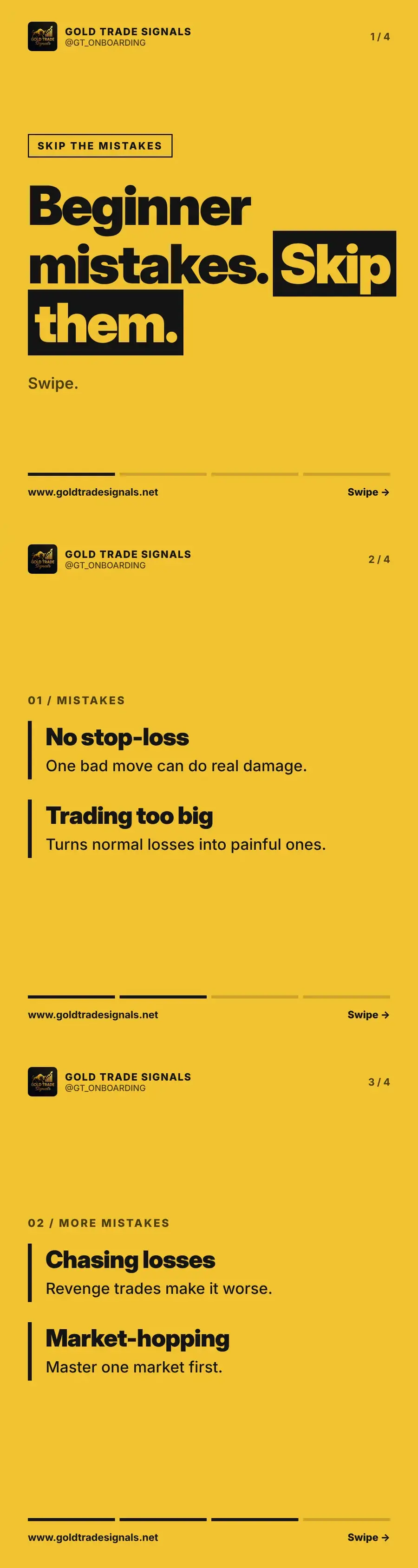
Four beginner trading mistakes and how to skip them
No stop-loss, trading too big, chasing losses and market-hopping. The four mistakes most beginners make, and the simple habits that avoid each one.
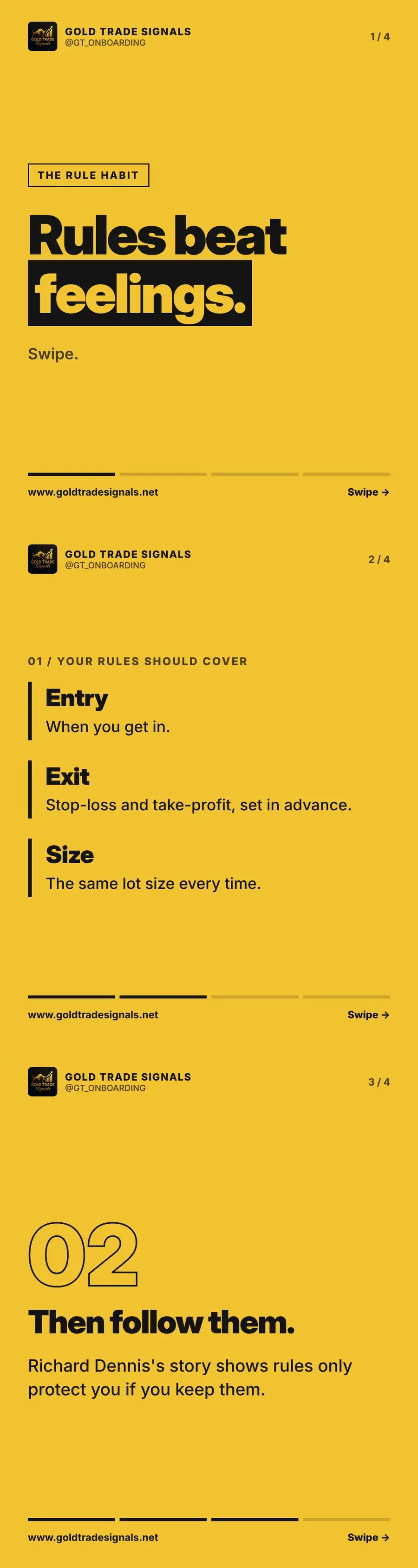
Rules beat feelings: how to build trading rules you follow
The Turtle Traders showed that rules beat feelings. Learn the three things a trading rulebook must cover, and why rules only protect you if you keep them.
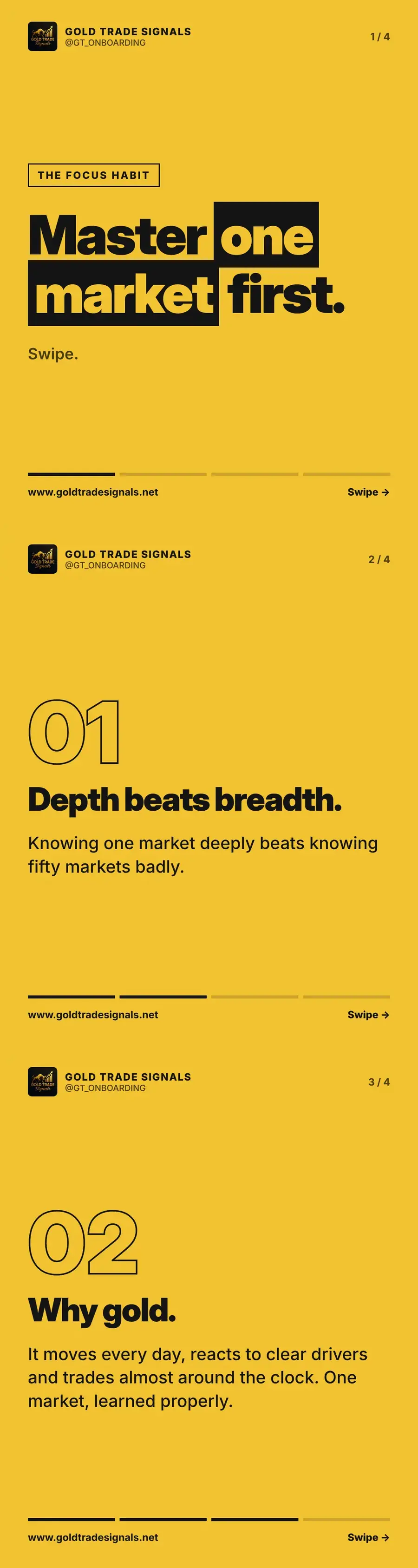
Master one market first: why we focus on gold
Successful traders master one market before anything else. Learn why depth beats breadth and why gold, with daily movement and clear drivers, is our one.
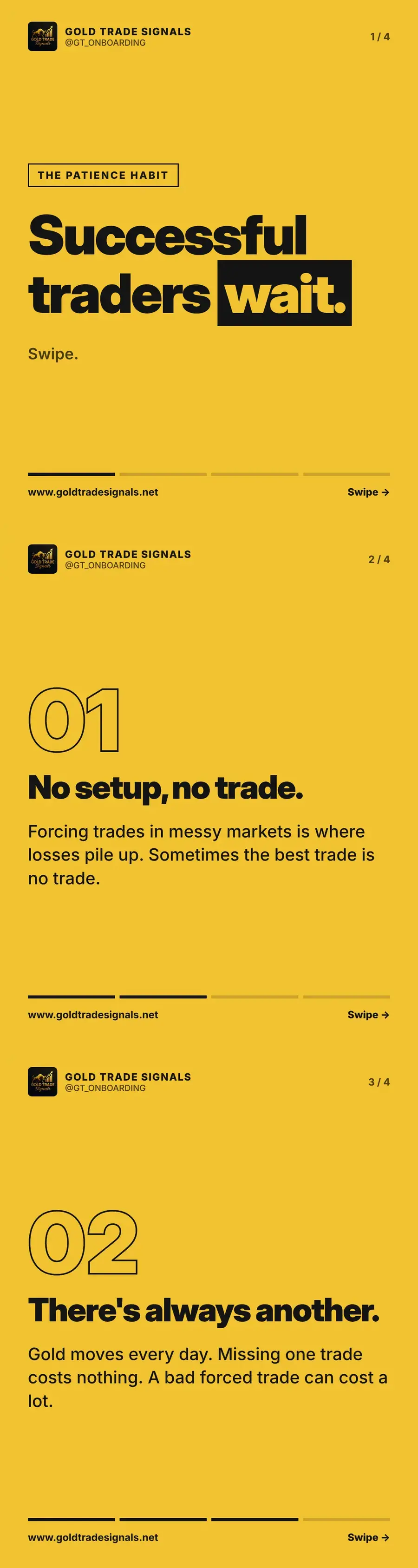
Patience in trading: no setup means no trade
Successful traders wait for the right trade. Forcing trades in messy markets is where losses pile up, and gold moves every day, so there is always another.

Jim Simons: the maths professor who ignored his emotions
Jim Simons left academia at 40 to found Renaissance Technologies and let systems, not feelings, make the decisions. The lesson for gold traders is simple.

Alexander Elder: the psychiatrist who became a trader
Alexander Elder came to trading from psychiatry and wrote Trading for a Living in 1993. His lesson: psychology and discipline matter as much as any method.
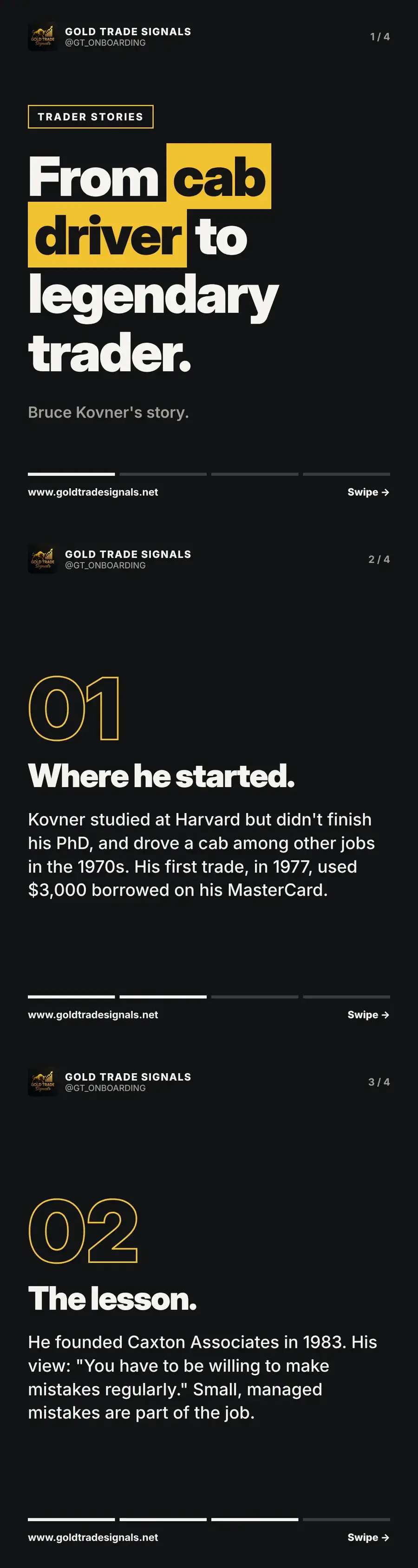
Bruce Kovner: from cab driver to legendary trader
Bruce Kovner drove a cab, made his first trade in 1977 with $3,000 borrowed on a credit card, and founded Caxton Associates. His lesson for gold traders.
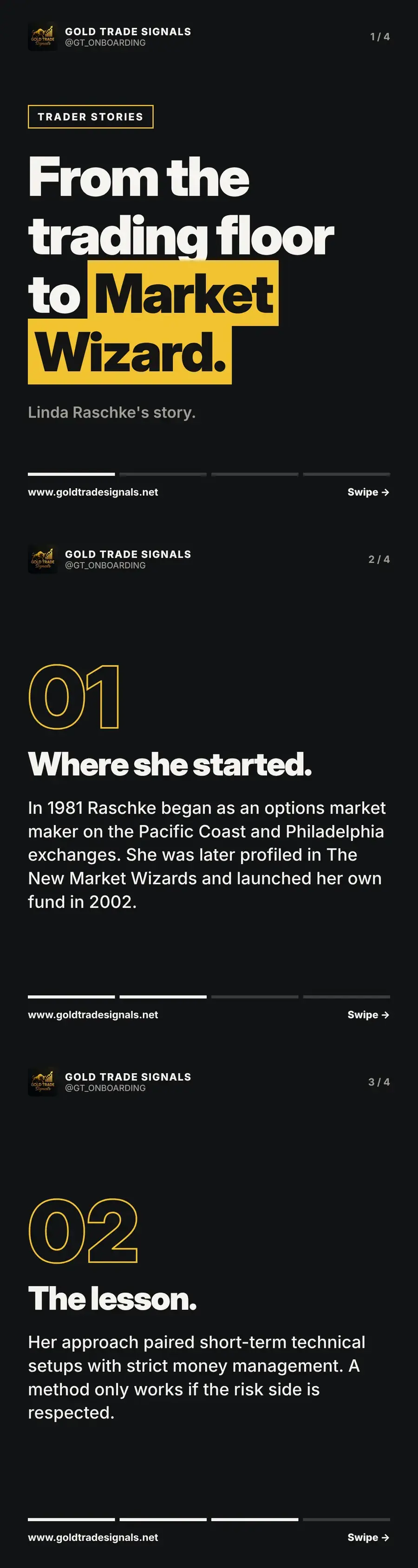
Linda Raschke: from the trading floor to Market Wizard
Linda Raschke began as an options market maker in 1981 and was profiled in The New Market Wizards. Her lesson: a method only works if risk is respected.
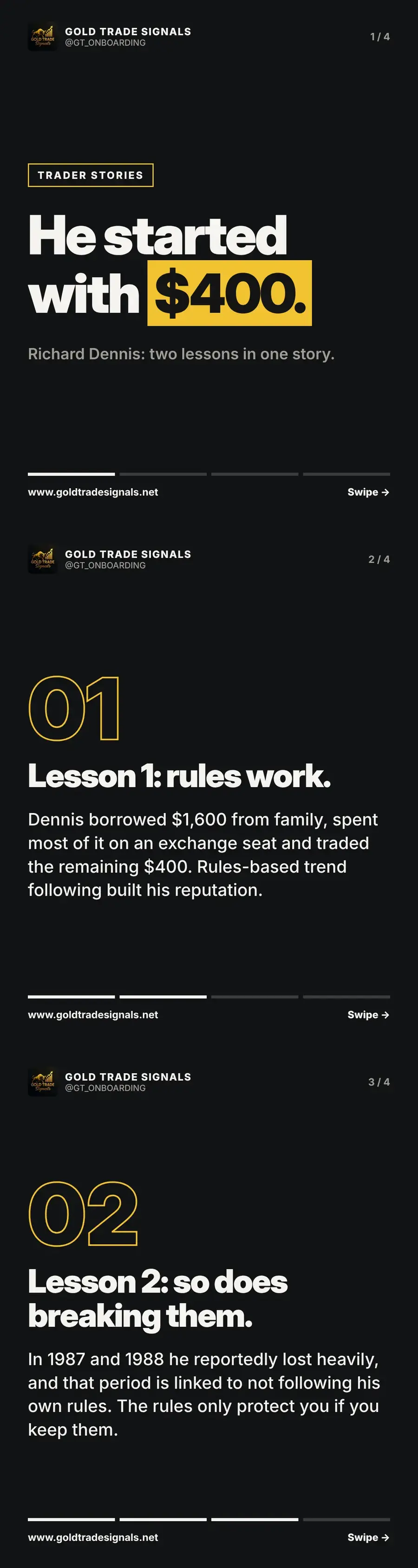
Richard Dennis: rules work, and so does breaking them
Richard Dennis traded $400 into a reputation with rules-based trend following, then reportedly lost heavily in 1987 and 1988. Two lessons for gold traders.
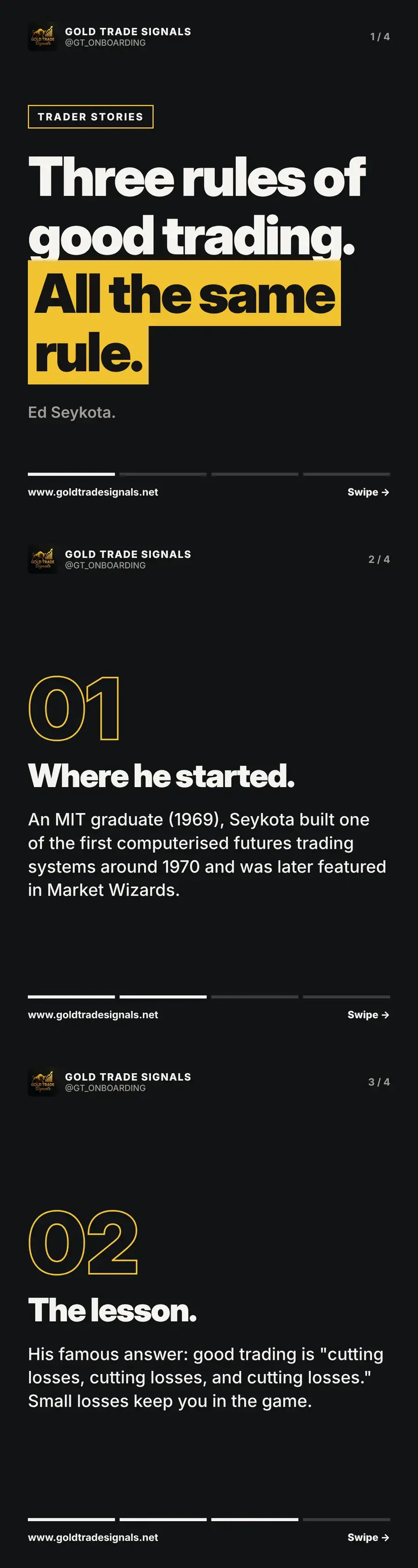
Ed Seykota's three rules of good trading, all the same
Ed Seykota, MIT graduate and early systems trader, summed up good trading as cutting losses, cutting losses, and cutting losses. Why it matters for gold.
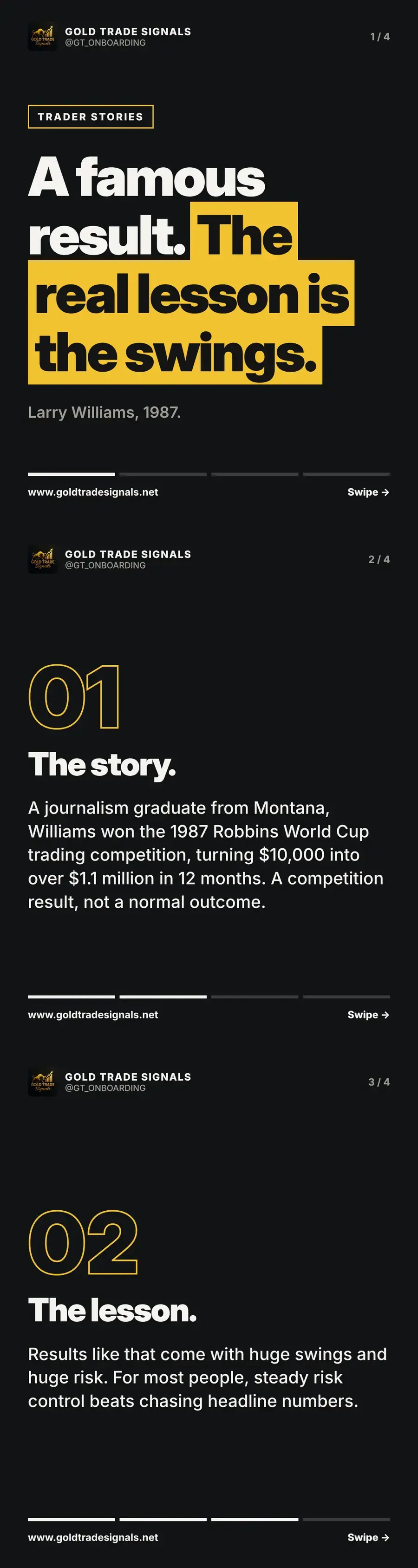
Larry Williams in 1987: the real lesson is the swings
Larry Williams won the 1987 Robbins World Cup, turning $10,000 into over $1.1 million. A competition result, not a normal outcome. The lesson is risk.
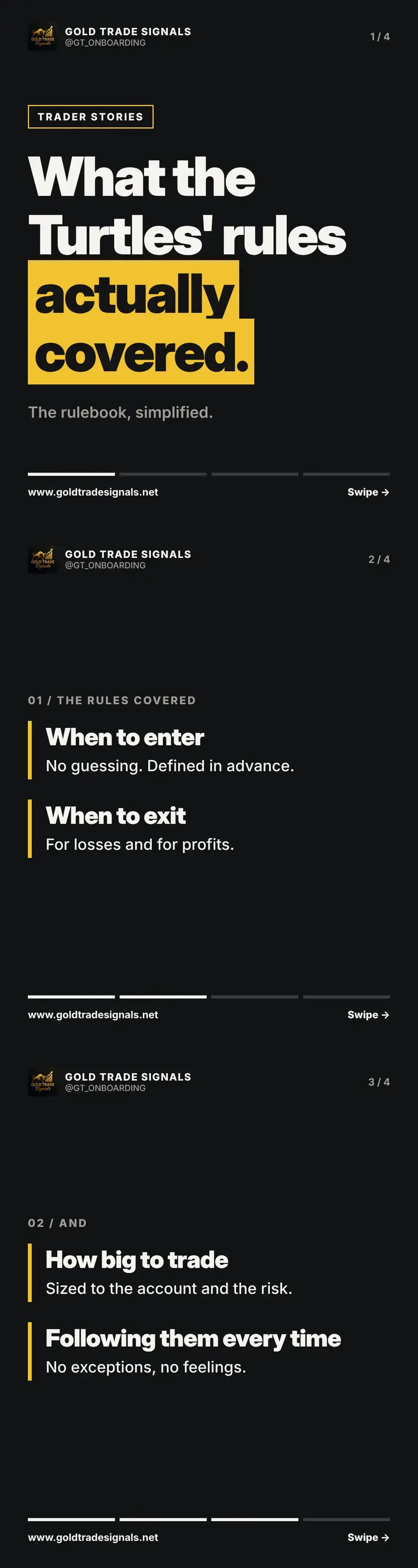
What the Turtle Traders' rules actually covered
The Turtle Traders rulebook covered four things: when to enter, when to exit, how big to trade, and following the rules. What that means for gold.
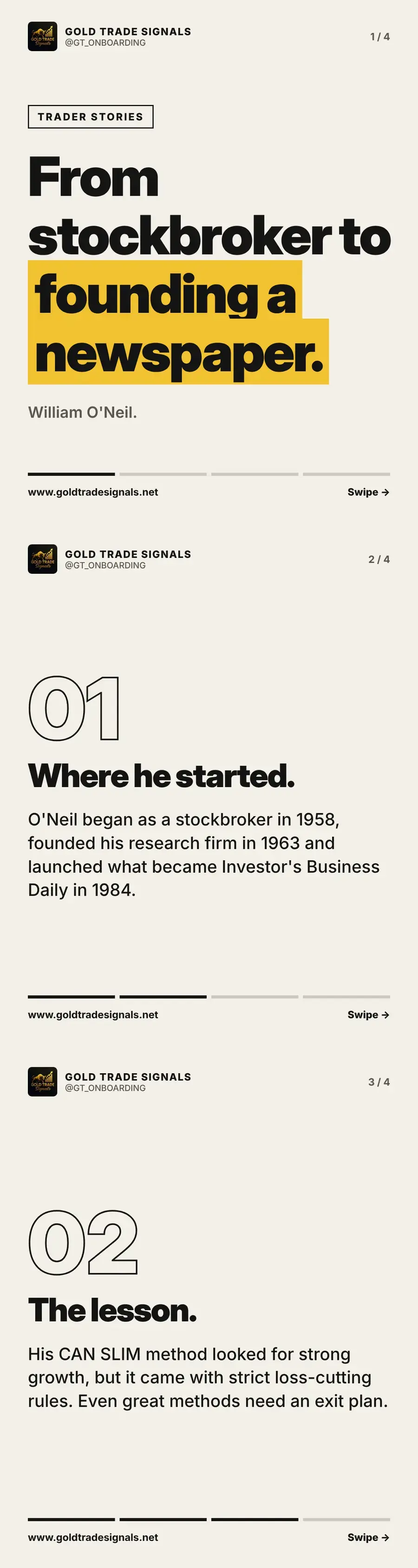
William O'Neil: from stockbroker to Investor's Business Daily
William O'Neil went from stockbroker to founding Investor's Business Daily. His CAN SLIM method had strict loss-cutting rules: a lesson for gold traders.
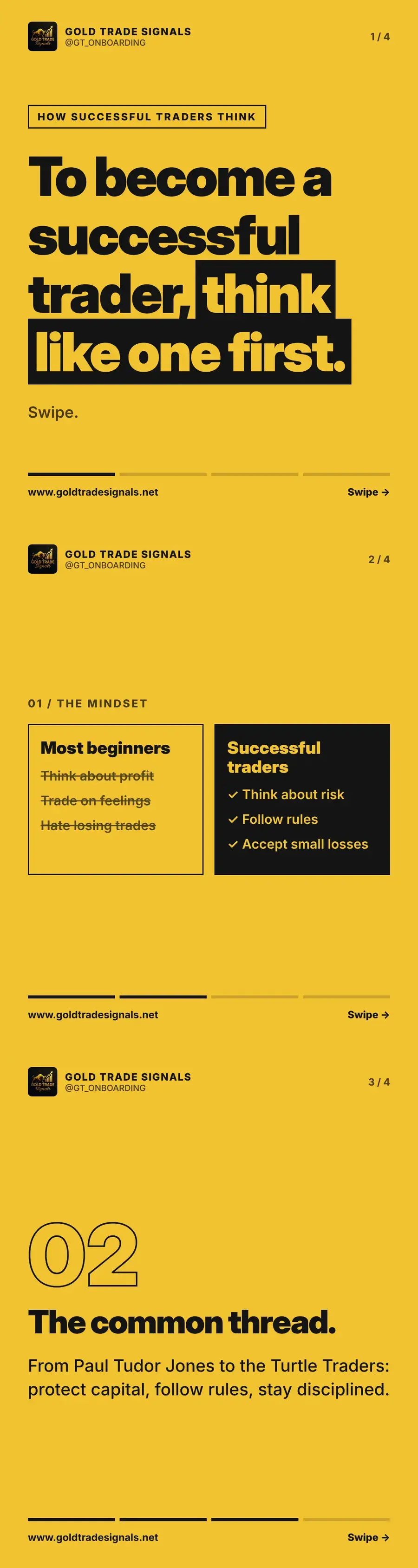
How successful traders think differently from beginners
To become a successful trader, think like one first. How the beginner mindset differs from successful traders on risk, rules and losses.
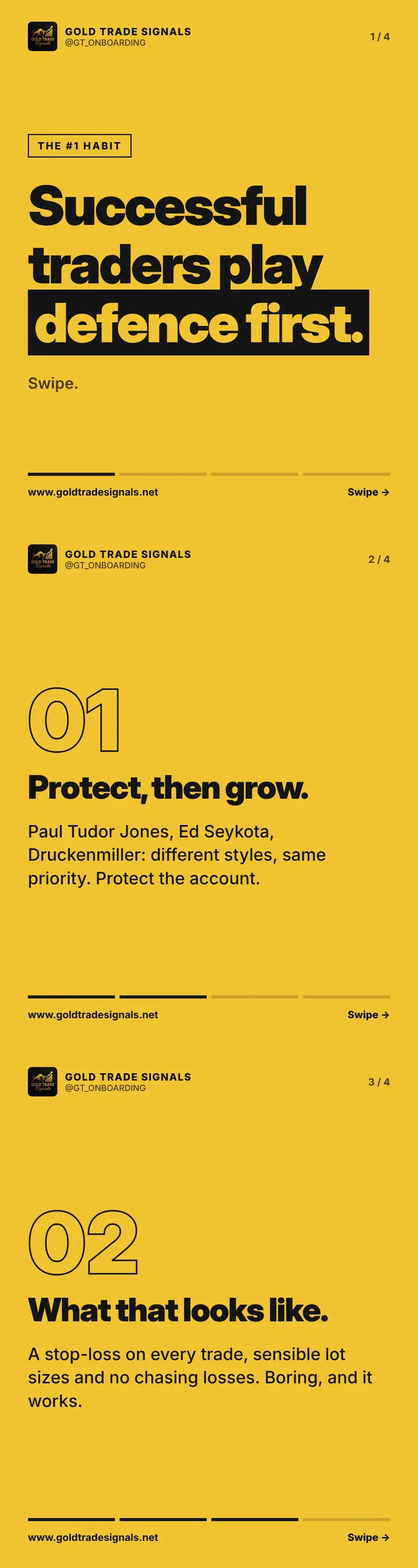
Why successful traders play defence first
The one lesson almost every great trader shares: protect the account before trying to grow it. What defence first looks like for a gold trader.
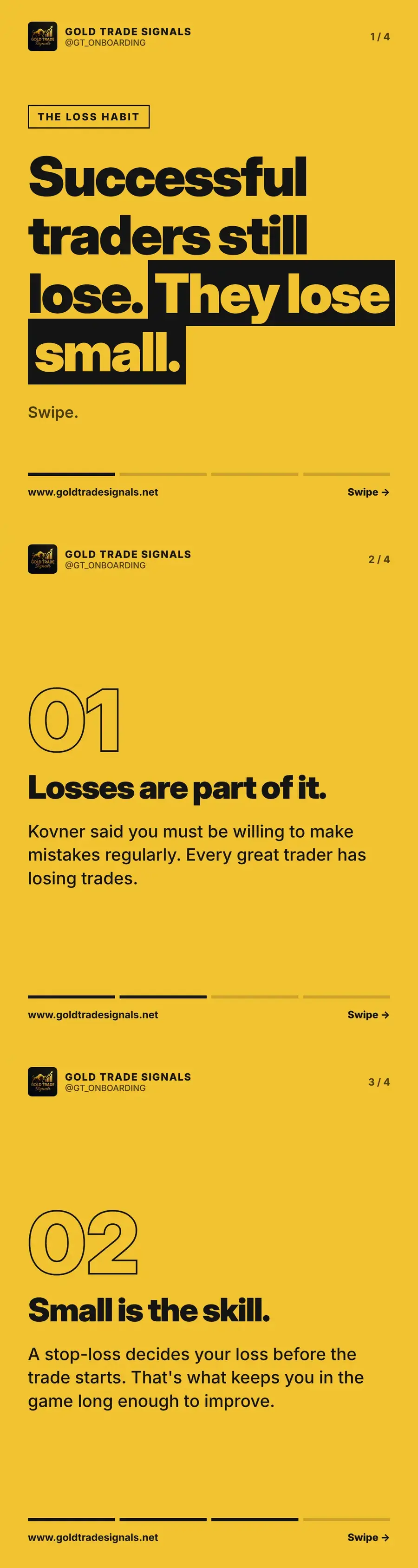
Successful traders still lose, they just lose small
Losing trades are normal. Big losing trades are optional. Why every great trader has losses and how a stop-loss keeps each one small enough to survive.
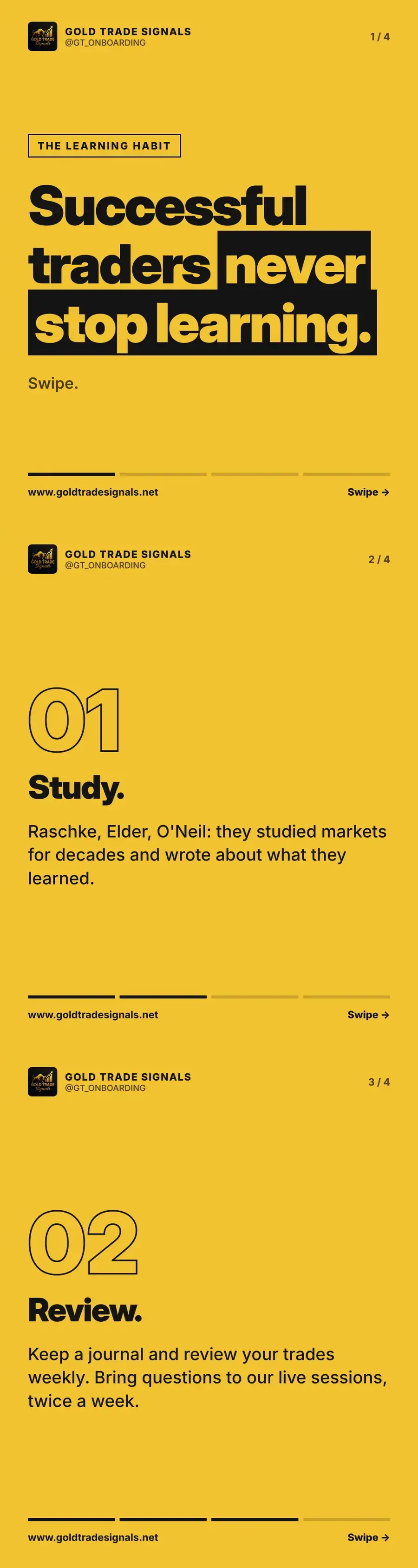
Successful traders never stop learning: study and review
Even the greats kept studying, adapting and reviewing. The two learning habits, study and review, and how a gold trader builds both into a weekly routine.
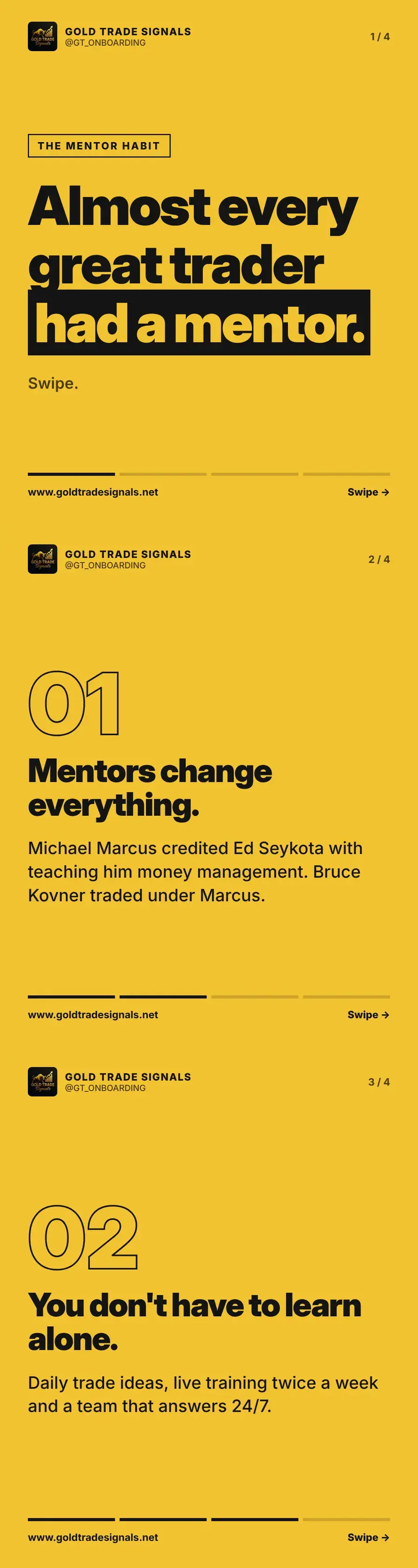
Why almost every great trader had a mentor
Marcus learned from Seykota. Kovner traded under Marcus. Why mentors change everything in trading, and how to avoid learning gold alone.
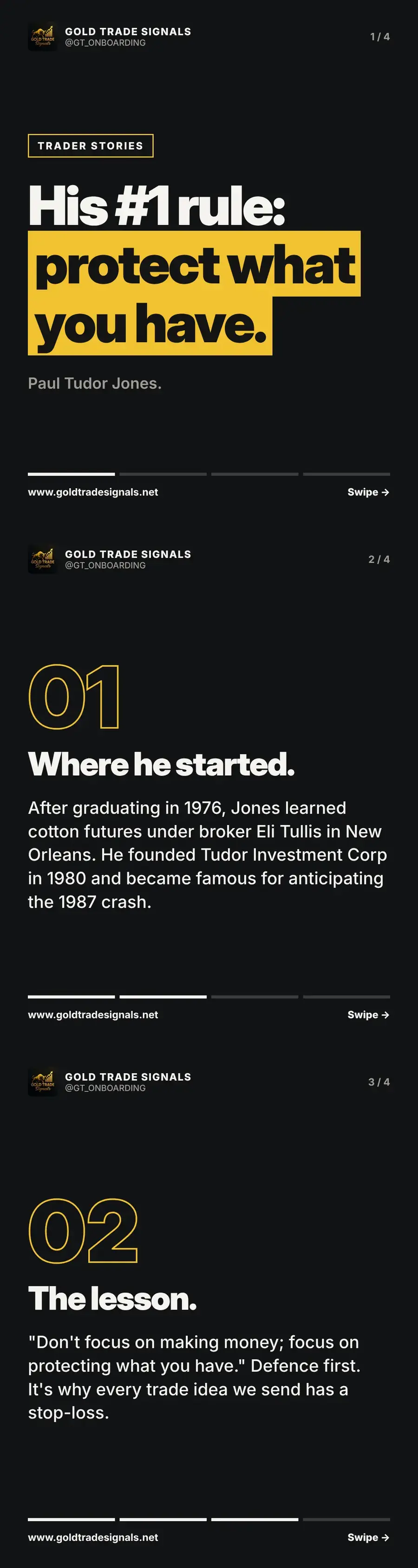
Paul Tudor Jones and his number one rule: protect what you have
Paul Tudor Jones built his reputation on defence first. Where he started, the rule he is known for, and why every trade idea we send has a stop-loss.
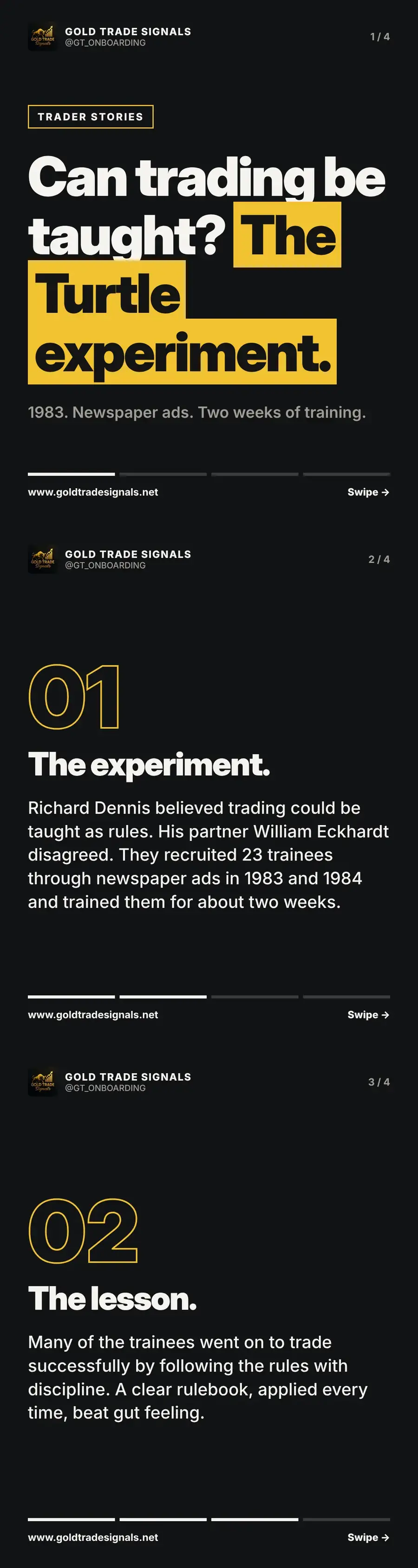
The Turtle Traders: can trading be taught? The 1983 experiment
In 1983 Richard Dennis and William Eckhardt recruited trainees through newspaper ads to test whether trading can be taught. The lesson for gold traders.
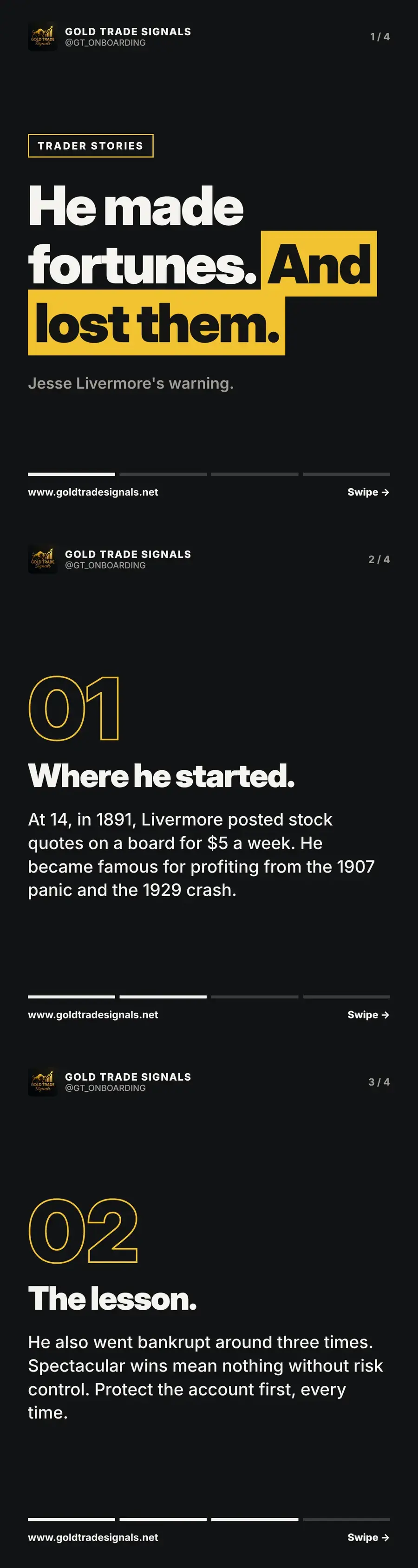
Jesse Livermore made and lost fortunes: the risk control lesson
Jesse Livermore profited from the 1907 panic and the 1929 crash, yet went bankrupt around three times. Why his story is a warning about risk control.
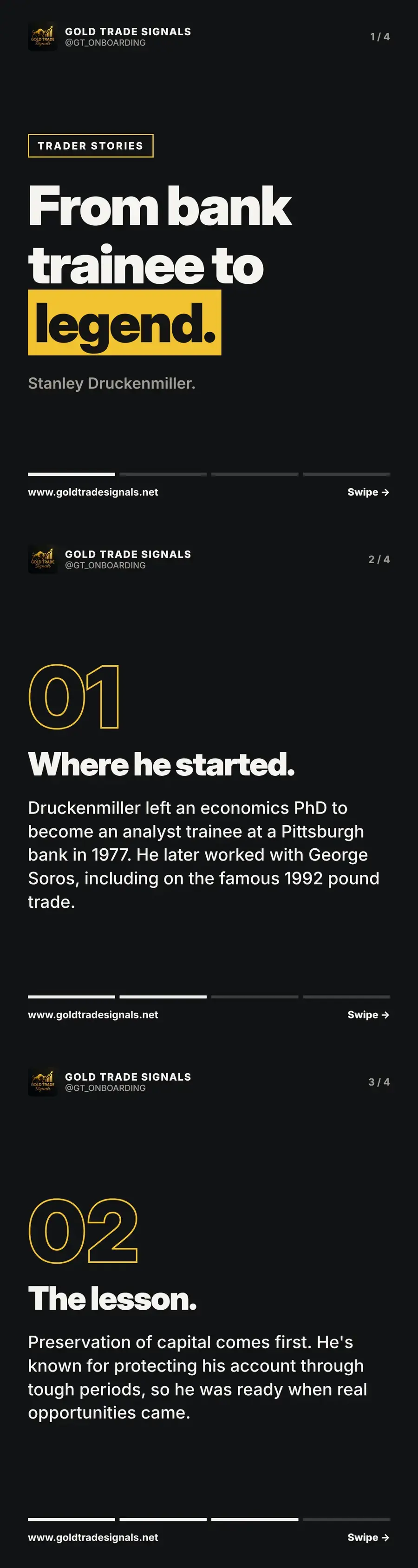
Stanley Druckenmiller: from bank trainee to capital preservation
Stanley Druckenmiller left a PhD to become a bank trainee and later worked with George Soros. His core principle, preservation of capital, explained.
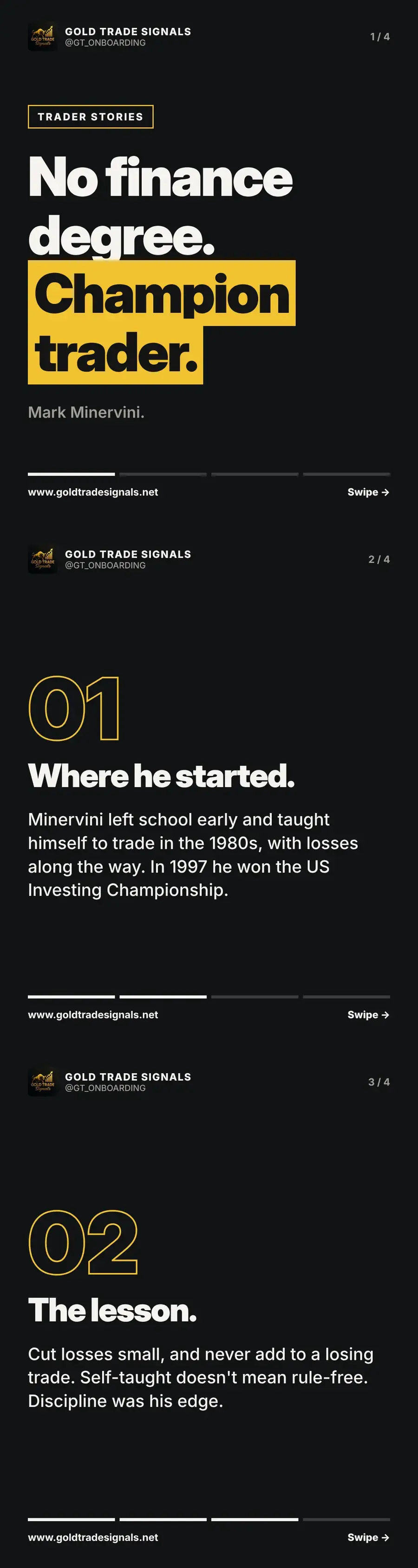
Mark Minervini: no finance degree, champion trader, one rule
Mark Minervini left school early, taught himself to trade and won the 1997 US Investing Championship. His edge: cut losses small, never add to a loser.
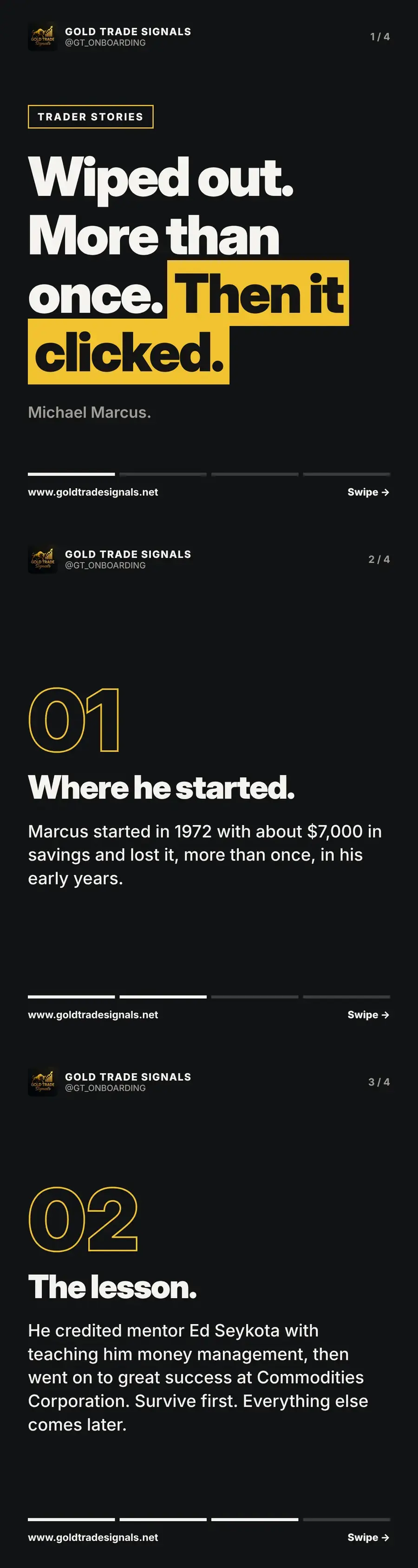
Michael Marcus was wiped out more than once: what changed
Michael Marcus started in 1972 with about $7,000 and lost it more than once. What changed? Money management, learned from Ed Seykota. The lesson explained.
Risk warning: This article is educational content, not personal investment advice. Gold is a leveraged, volatile instrument and you can lose some or all of your capital. Gold Trade Signals is not FCA regulated. Read the full risk warning.