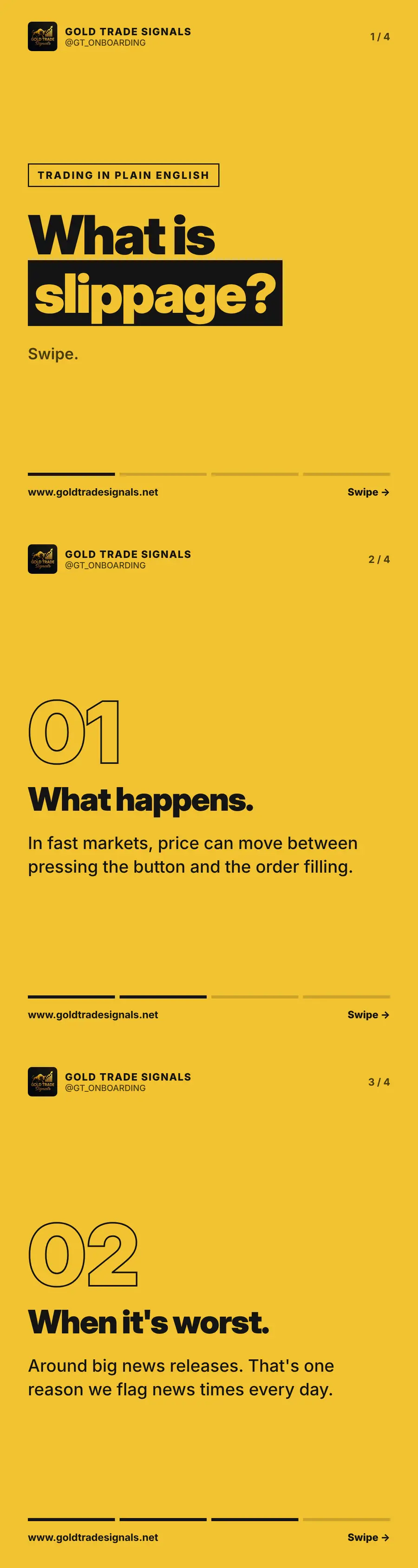
You tap buy at one price and the trade opens a little higher or lower. Nothing is broken. That gap is called slippage, it is a normal part of trading, and it is especially common in gold around big news. Here is what causes it and how to keep it from catching you out.
What happens between the tap and the fill
A market order asks your broker to fill you at the best price available right now. In a calm market, the moment you tapped and the moment the order fills are almost the same price. In a fast market, price can move between pressing the button and the order reaching the server, so you are filled at the next price available.
Slippage can go in your favour as well as against you, but traders notice the bad kind more. It also applies to stop-losses: if price jumps straight through your stop level, the order fills at the next available price, which can be a little worse than planned. Risk per trade should never be set to the exact limit of what you can afford.
When it is worst, and how we plan around it
Slippage is at its worst around major news releases, such as US jobs data or interest rate decisions, when gold can move several dollars in a second and liquidity thins out. It is also more common at the Sunday evening market open and during very quiet hours when fewer orders are in the market.
That is one reason we post the day's key news times in the group every morning. Knowing when the fast moments are coming lets you avoid placing new orders right into them, or at least size down. Reading the news calendar is something we cover in the live training, and the community is free to join.
Key takeaways
- Slippage is the gap between the price you clicked and the fill.
- It is worst around big news releases when gold moves fast.
- Check the daily news times before placing orders.
Common questions
What is slippage in trading?
Slippage is the difference between the price you expected and the price your order actually filled at. It happens because price can move in the moment between placing the order and the broker executing it.
Can you avoid slippage in gold trading?
Not entirely, but you can reduce it by avoiding new orders around major news releases and very illiquid hours, and by keeping risk per trade small enough that a slightly worse fill does not matter.
Trade ideas with the levels already worked out
Join the free community and receive XAU/USD trade ideas with entry, stop-loss and take-profit, live training on Tuesdays and Thursdays, and support whenever you are stuck.
Join free on TelegramOpen the calculatorsRisk warning: This article is educational content, not personal investment advice. Gold is a leveraged, volatile instrument and you can lose some or all of your capital. Gold Trade Signals is not FCA regulated. Read the full risk warning.
More from Trading Basics
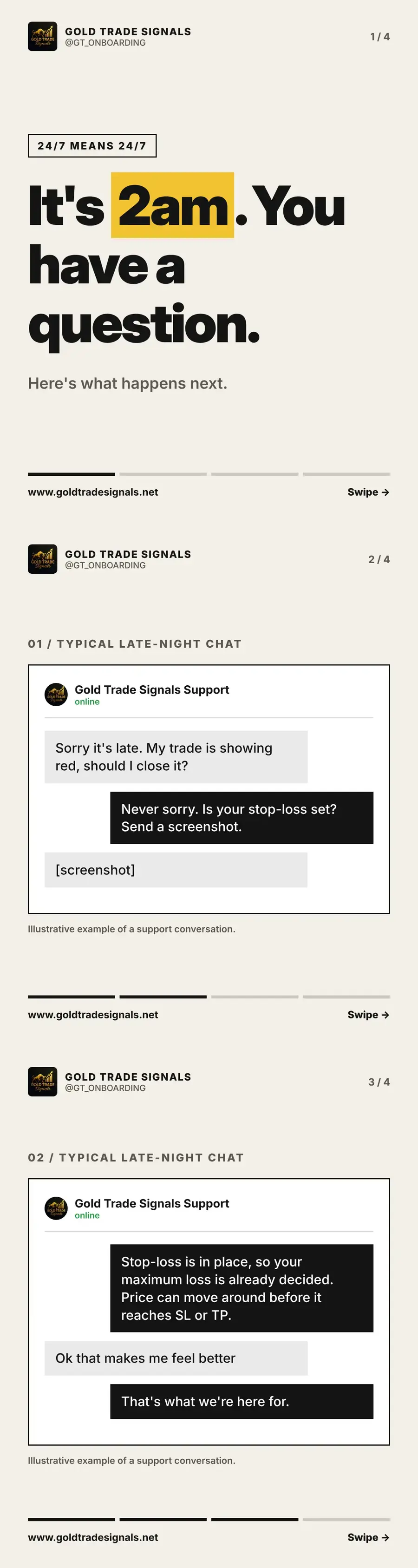
What happens when you have a trading question at 2am
It is 2am, your gold trade is showing red and you have a question. What a late-night message to our 24/7 support looks like, and why the stop-loss matters.
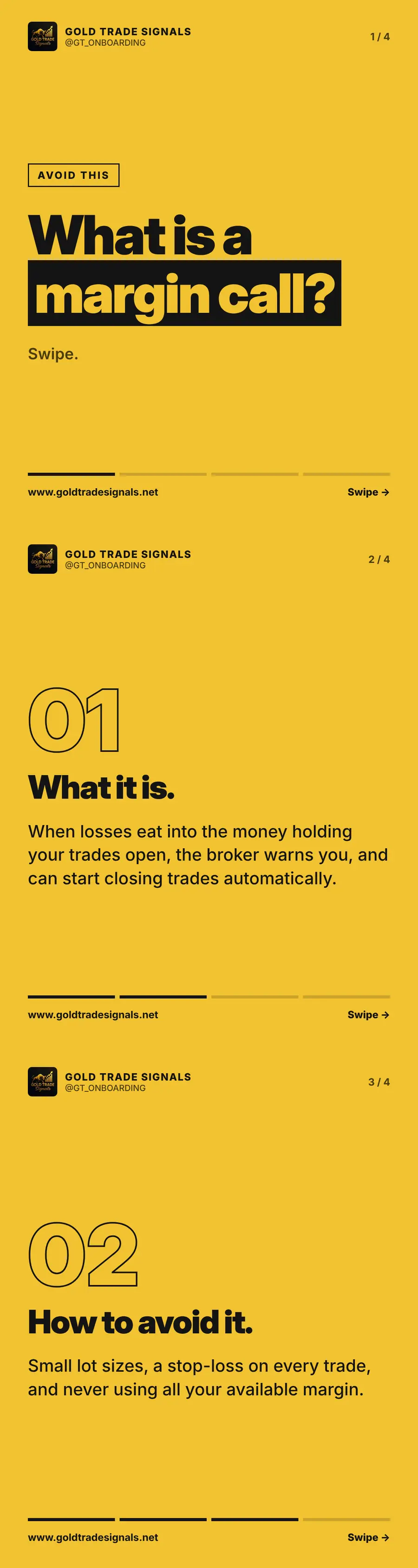
What is a margin call and how do you avoid one?
A margin call is the warning no trader wants. Learn what it is, how losses trigger it, how brokers respond, and the habits that keep your account safe.
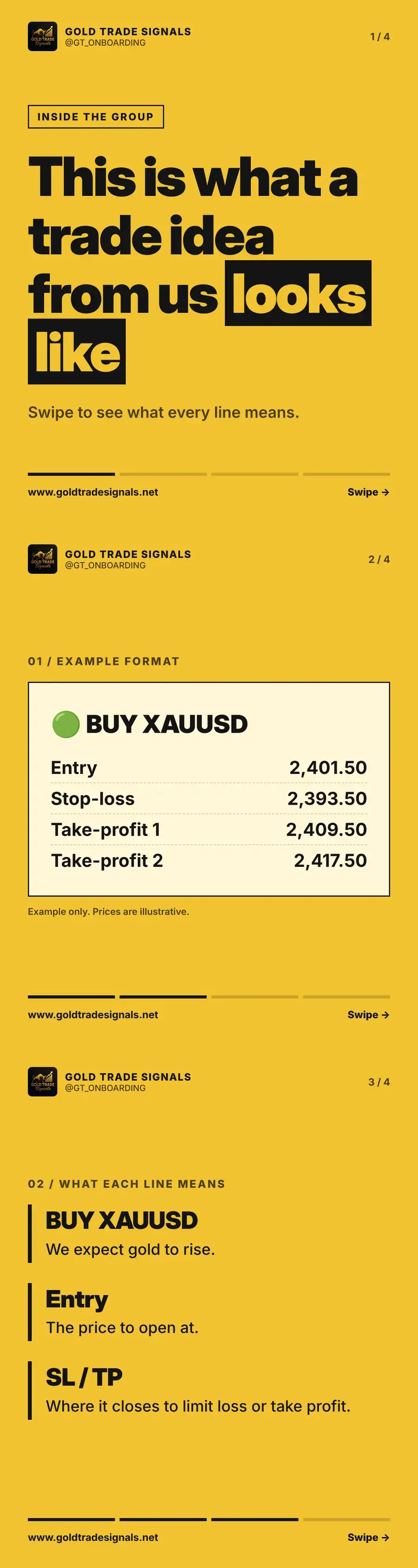
What a gold trade idea from us looks like, line by line
See exactly what a Gold Trade Signals trade idea looks like and what each line means: direction, entry, stop-loss and take-profit, explained for beginners.