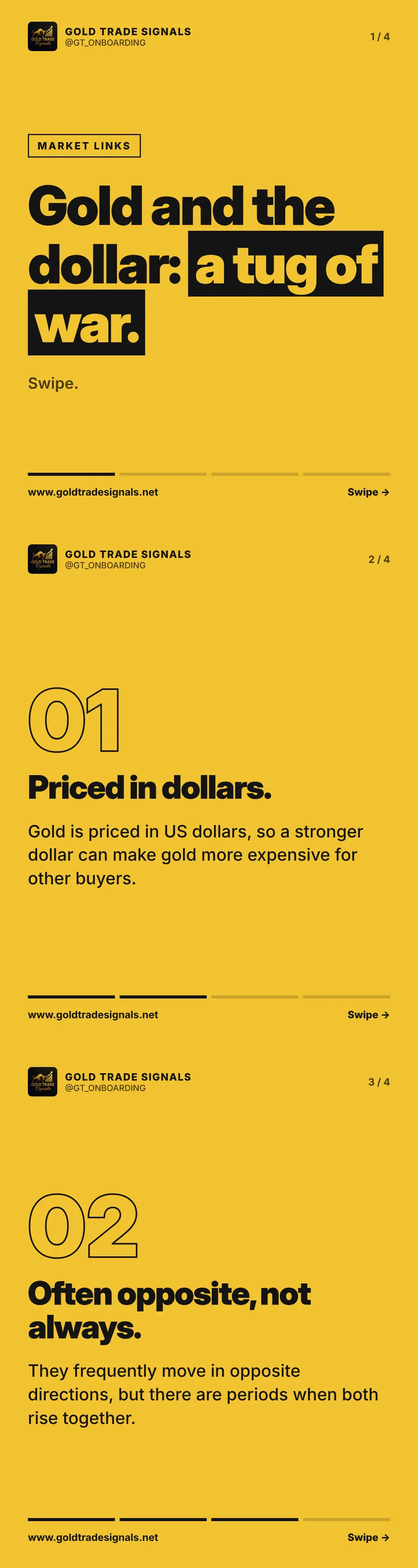
If you watch gold for a week you will notice something: when the US dollar strengthens, gold often falls, and when the dollar weakens, gold often rises. It is one of the most useful relationships in the market, as long as you remember it is a tendency and not a law.
Gold is priced in dollars
The global gold price is quoted in US dollars per ounce, which is what XAU/USD means. When the dollar strengthens against other currencies, an ounce of gold costs more for buyers holding euros, yen or rupees, even if the dollar price has not changed. That can soften demand from those buyers and put downward pressure on the dollar price.
There is also a competition for safe-haven money. The dollar and gold are both places investors go when they are nervous. If US interest rates are rising, holding dollars pays more, which makes gold, which pays no interest, relatively less attractive. When rates fall or the dollar weakens, that balance tips back towards gold.
Often opposite, not always
The inverse relationship is frequent but not constant. There are periods when both rise together, usually when fear is high enough that investors want every safe asset at once, or when central banks are buying gold heavily regardless of currency moves. There are also quiet periods when gold trades on its own factors and ignores the dollar for days.
For a trader, the practical use is simple. Keep an eye on the US dollar index and on US interest rate news, because they often set the tone for gold. But never trade gold purely because the dollar moved. Confirm it on the gold chart itself, with your entry, stop-loss and take-profit planned. Learning what drives gold is a regular topic in our live training.
Key takeaways
- Gold is priced in dollars, so a stronger dollar often weighs on gold.
- Both compete for safe-haven money and react to US interest rates.
- The relationship is a tendency, not a rule; confirm on the chart.
Common questions
Why does gold go down when the dollar goes up?
Gold is priced in dollars, so a stronger dollar makes it more expensive for other buyers, and higher-yielding dollars compete with gold for safe-haven money.
Can gold and the dollar rise at the same time?
Yes. In periods of high fear or heavy central bank buying, both can rise together. The inverse relationship is common but not guaranteed.
Trade ideas with the levels already worked out
Join the free community and receive XAU/USD trade ideas with entry, stop-loss and take-profit, live training on Tuesdays and Thursdays, and support whenever you are stuck.
Join free on TelegramOpen the calculatorsRisk warning: This article is educational content, not personal investment advice. Gold is a leveraged, volatile instrument and you can lose some or all of your capital. Gold Trade Signals is not FCA regulated. Read the full risk warning.
More from Gold by Numbers
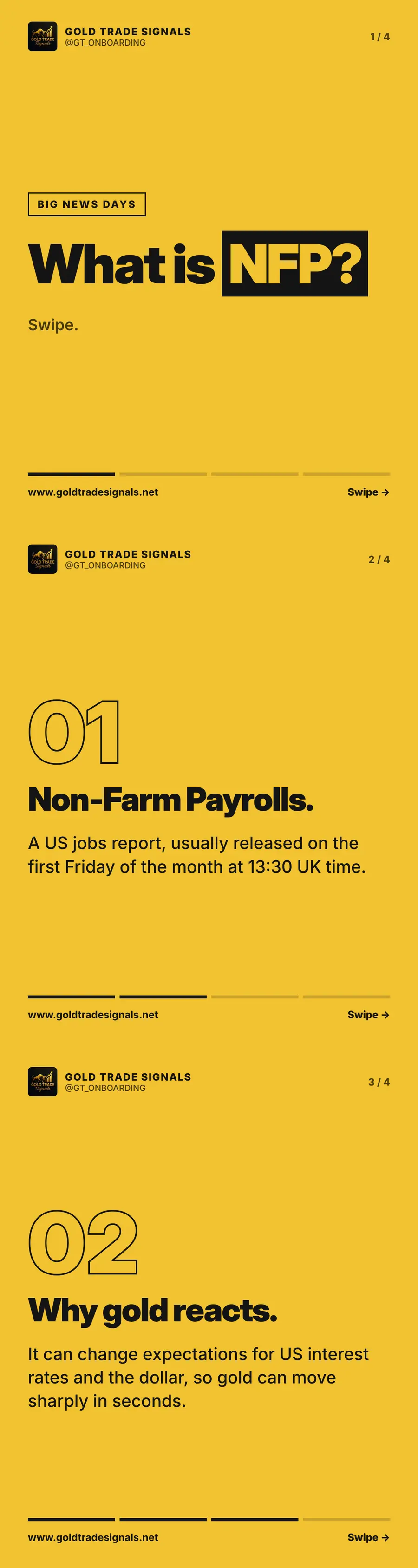
What is NFP? The US jobs report that moves gold fast
Non-Farm Payrolls is the monthly US jobs report, usually released on the first Friday at 13:30 UK time. Learn what it measures and why gold can move sharply.
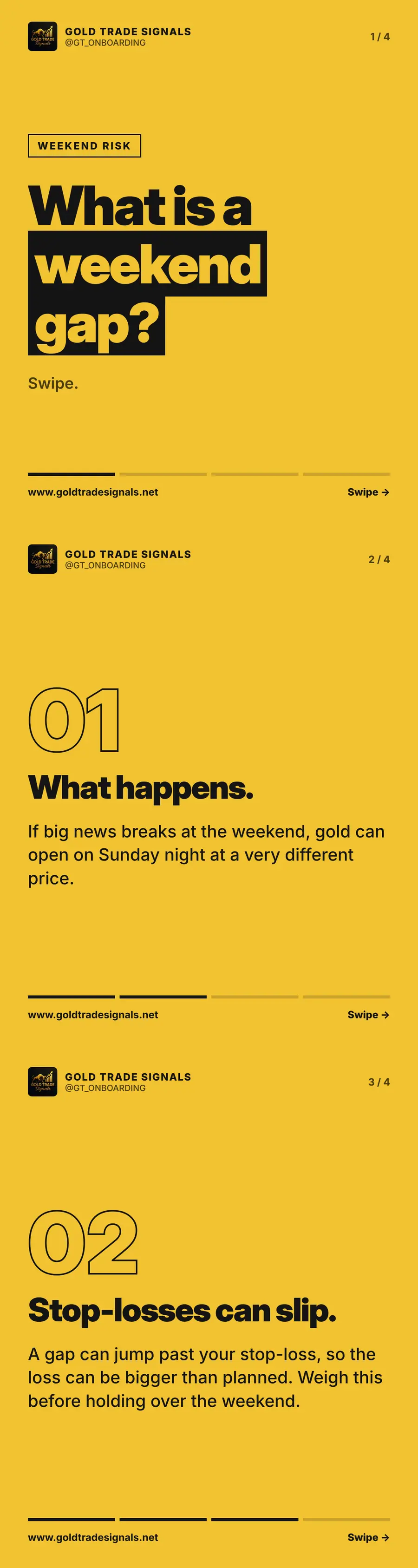
What is a weekend gap and why does it matter for gold?
Gold can open on Sunday night far from where it closed on Friday. Learn what a weekend gap is, why stop-losses can slip, and how to weigh the risk.
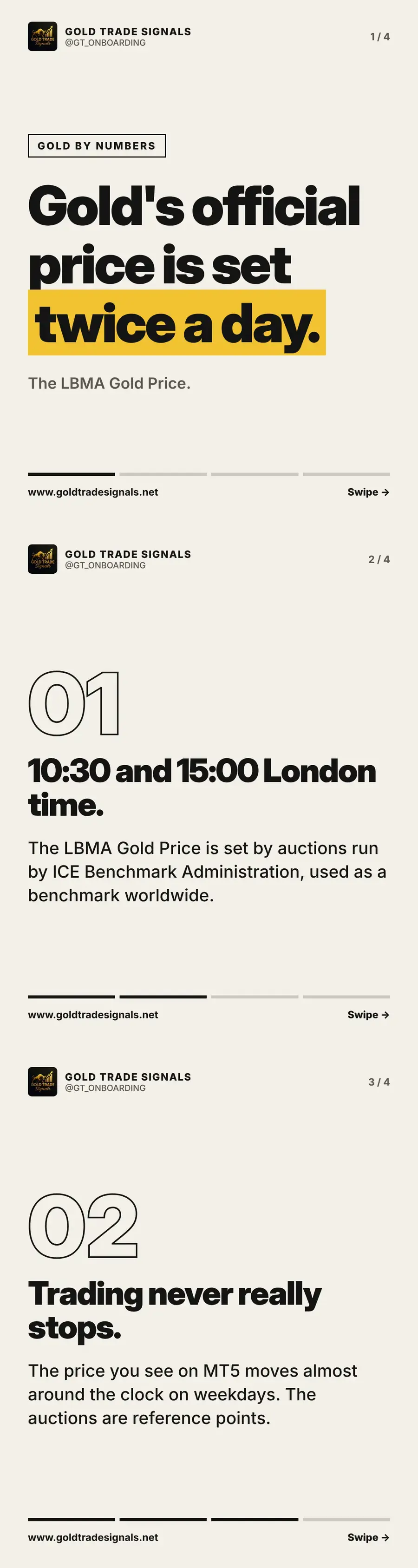
How the LBMA Gold Price is set twice a day in London
Gold's official price is set at 10:30 and 15:00 London time through auctions run by ICE Benchmark Administration. How it works and how it relates to MT5.