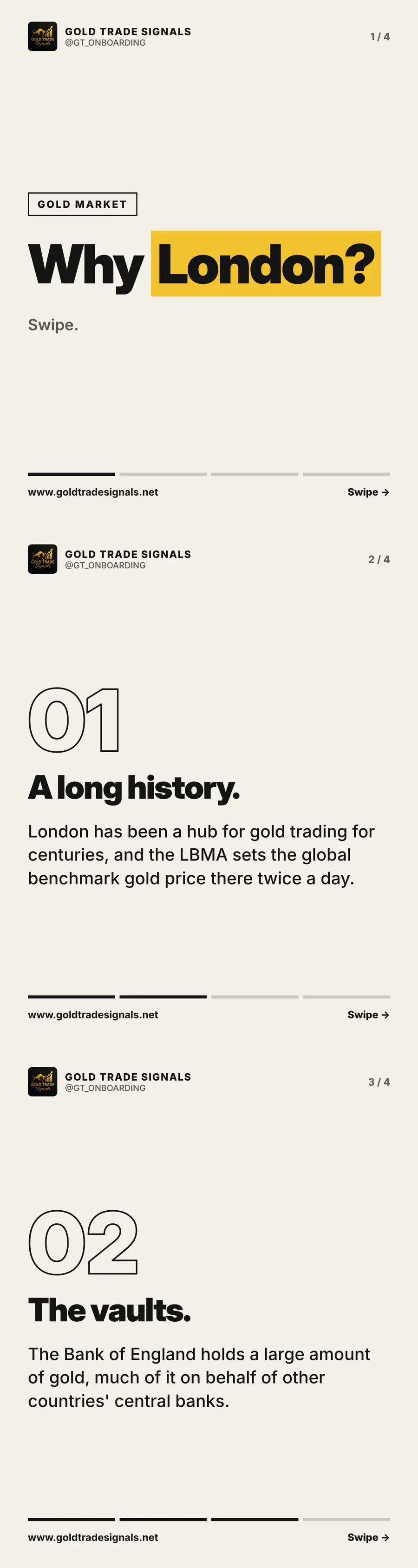
Gold is mined in Australia, China, Russia and South Africa, and bought everywhere from India to the United States. Yet the price the world refers to is set in London, and a vast amount of the metal sits in vaults beneath its streets. Centuries of history explain why.
A long history
London has been a hub for gold trading for centuries, with the Bank of England founded in 1694 and a network of merchants, refiners and bullion dealers growing up around it. By the 1800s, with the pound tied to gold, London was the natural place for the world's gold to be bought, sold and stored.
That role continues today through the London Bullion Market Association, the LBMA. It sets the standards for Good Delivery bars, accredits refiners, and oversees the benchmark gold price, which is set in London twice a day, in the morning and the afternoon, and used as a reference by miners, jewellers and central banks worldwide.
The vaults
The Bank of England holds a large amount of gold in its vaults, one of the biggest stores of the metal anywhere. Much of it does not belong to the UK. It is held on behalf of other countries' central banks and institutions, who keep their reserves in London because of its history, legal system and position at the heart of the market.
Commercial vaults operated by banks and security companies across London hold even more. Because so much metal is already there, large transactions can settle simply by changing the records of who owns which bars, without the gold ever leaving the building.
Why it matters to a gold trader
The London market is why the gold day has a rhythm: activity picks up as London opens, and the afternoon benchmark falls inside the London and New York overlap. Understanding where the price is anchored makes the chart easier to read. We cover how the market works alongside the charts in our free community.
Key takeaways
- London has been a gold trading hub for centuries.
- The LBMA benchmark gold price is set in London twice a day.
- The Bank of England stores gold for many other countries.
Common questions
Why is London the centre of the gold market?
Centuries of history, the LBMA standards and twice-daily benchmark price, and the huge amount of gold stored in London vaults make it the reference point for the global market.
Who holds the gold in the Bank of England?
The Bank of England holds gold for the UK and, in larger part, on behalf of other countries' central banks and institutions that choose to store reserves in London.
Trade ideas with the levels already worked out
Join the free community and receive XAU/USD trade ideas with entry, stop-loss and take-profit, live training on Tuesdays and Thursdays, and support whenever you are stuck.
Join free on TelegramOpen the calculatorsRisk warning: This article is educational content, not personal investment advice. Gold is a leveraged, volatile instrument and you can lose some or all of your capital. Gold Trade Signals is not FCA regulated. Read the full risk warning.
More from Gold by Numbers

The London and New York overlap: gold's busiest hours
From roughly 13:00 to 17:00 UK time, London and New York are both open and gold is often most active. Learn why, what it means for risk, and how to use it.
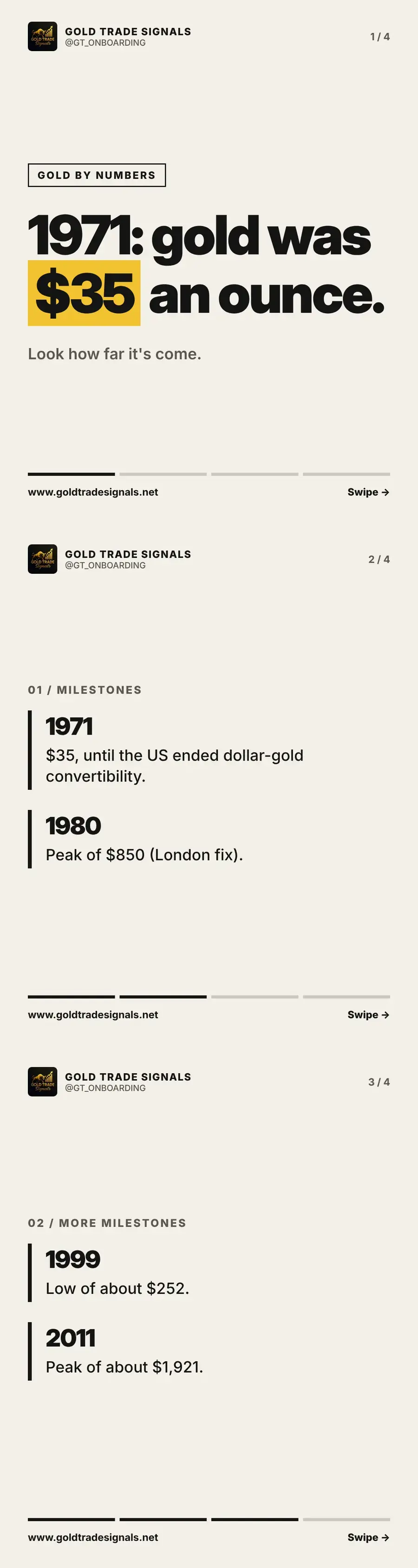
Gold price history: from $35 an ounce in 1971 to today
In 1971 gold was officially $35 an ounce. Follow the milestones since: the 1980 peak of $850, the 1999 low near $252 and the 2011 peak of about $1,921.
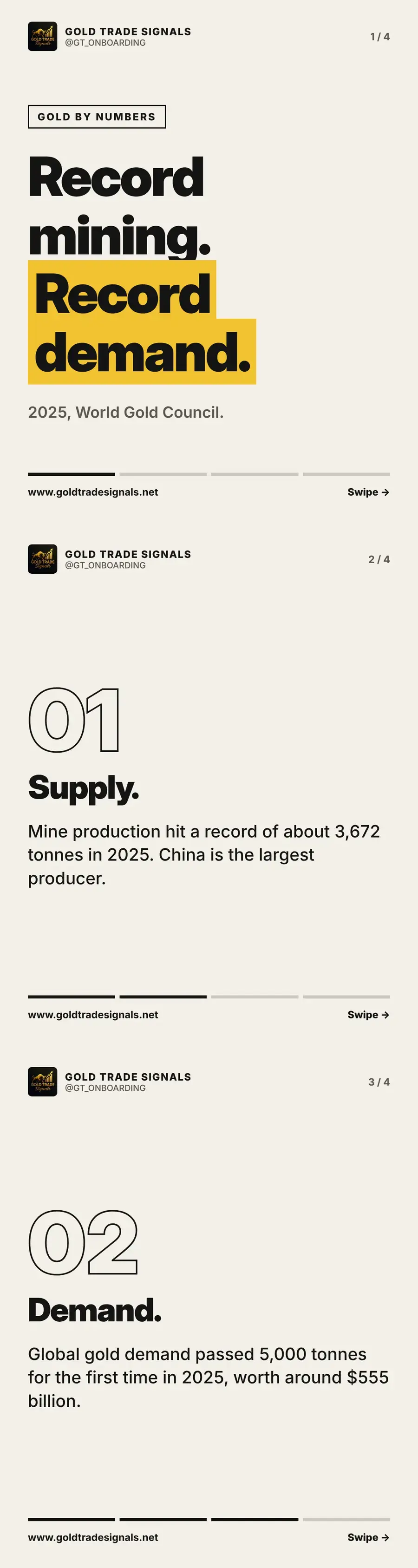
Record gold mining in 2025: 3,672 tonnes mined, demand past 5,000
Mine production hit a record of about 3,672 tonnes in 2025, and global demand passed 5,000 tonnes for the first time. What supply and demand numbers show.