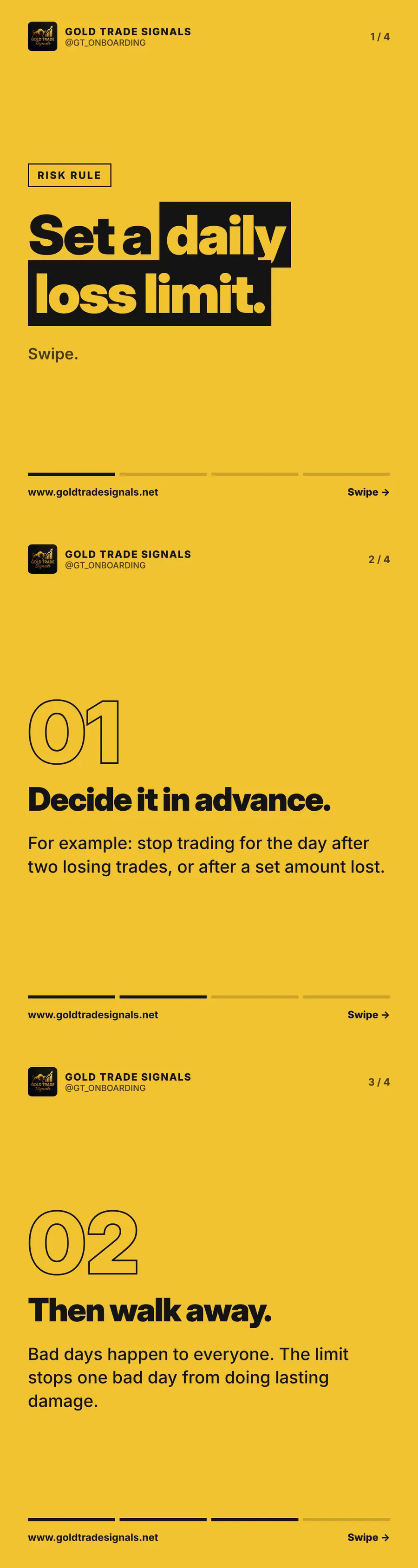
Every trader has bad days. The difference between a bad day and a disaster is usually one rule: a daily loss limit, decided in advance and obeyed without debate. It is the simplest piece of risk management there is, and one of the most ignored. Here is how to set yours and stick to it.
Decide it in advance
The limit must be set before the trading day starts, when you are calm and thinking clearly. Two common versions: stop trading for the day after two losing trades, or stop after a set amount is lost, for example 2% or 3% of the account. Either works. What matters is that the number is written down.
Keep it tight enough to matter. If your per-trade risk is 1%, a daily limit of 2% or 3% means two or three losing trades end the day, which is plenty. A limit so wide that you never reach it is not really a limit. Start conservative and loosen it only once you have months of discipline behind you.
Then walk away
Hitting the limit is not the hard part. Walking away is. The urge to win it back is strongest exactly when the rule says stop, and that is the point: the rule exists because your judgement after two losses is not the judgement you had at breakfast. Close MT5, mute the group if you need to, and do something else.
Bad days happen to everyone, including experienced traders. The limit stops one bad day from doing lasting damage, so that tomorrow you are trading with almost the same account you had yesterday. We help new members set sensible limits in the live training on Tuesday and Thursday, and the community is free to join.
Key takeaways
- Set the limit before the day starts, and write it down.
- Two losing trades or 2% to 3% of the account is a sensible start.
- When you hit it, close the app and walk away.
Common questions
What is a daily loss limit in trading?
A pre-set point at which you stop trading for the day, defined either as a number of losing trades or as an amount or percentage of the account lost.
What should my daily loss limit be?
A common starting point is two losing trades, or 2% to 3% of the account if you risk around 1% per trade. Keep it tight enough that you actually reach it on bad days.
Trade ideas with the levels already worked out
Join the free community and receive XAU/USD trade ideas with entry, stop-loss and take-profit, live training on Tuesdays and Thursdays, and support whenever you are stuck.
Join free on TelegramOpen the calculatorsRisk warning: This article is educational content, not personal investment advice. Gold is a leveraged, volatile instrument and you can lose some or all of your capital. Gold Trade Signals is not FCA regulated. Read the full risk warning.
More from Trading Basics
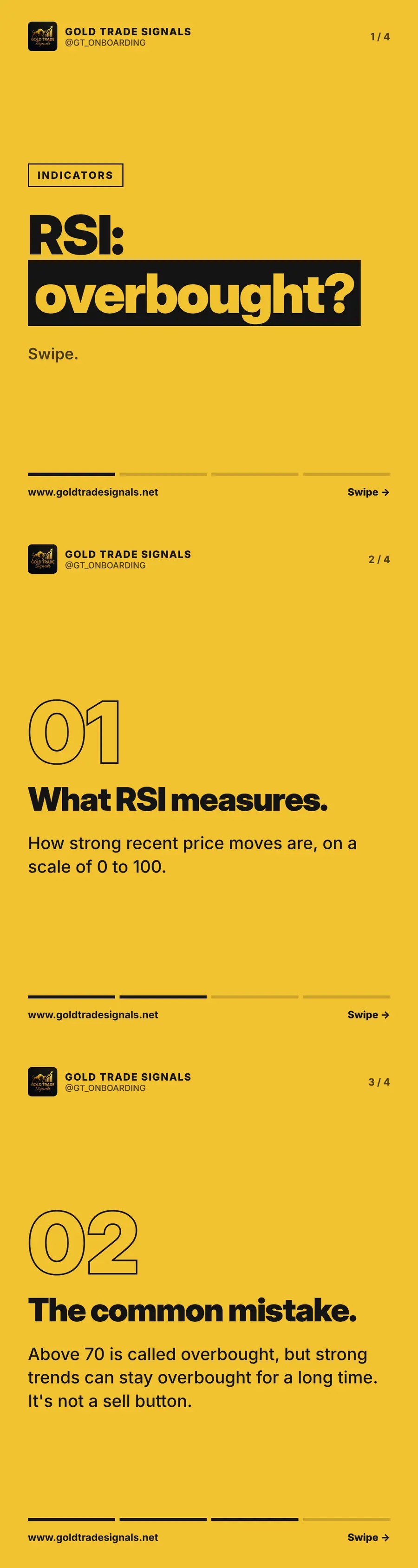
RSI basics: what overbought and oversold really mean
RSI is one of the most used indicators in trading and one of the most misread. Learn what it measures, what overbought means and why it is not a sell button.
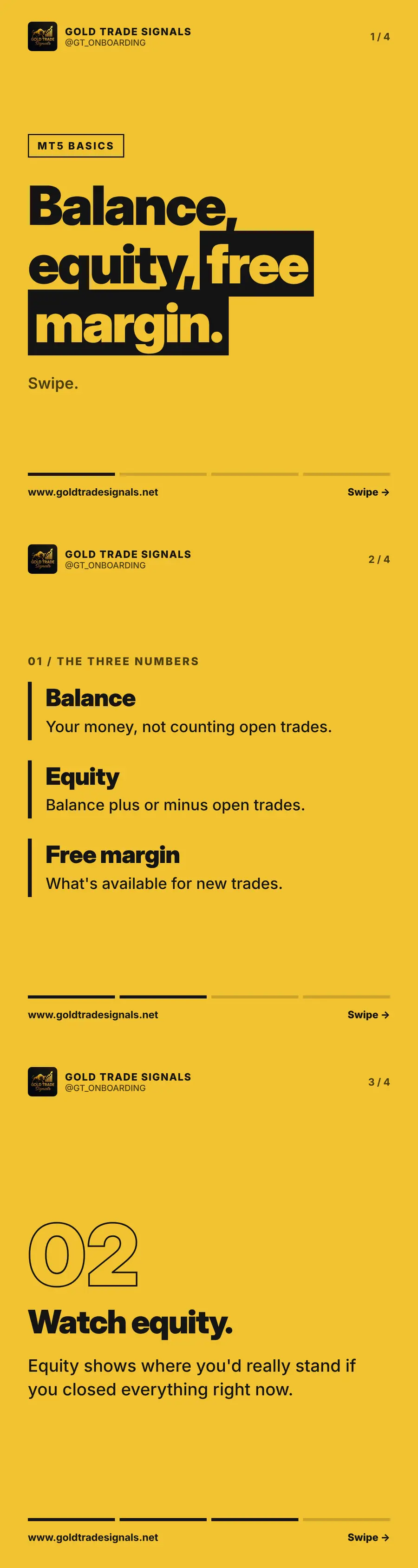
Balance, equity and free margin in MT5 explained
Confused by the three numbers at the bottom of MetaTrader 5? Learn what balance, equity and free margin mean and which one to watch while trades are open.
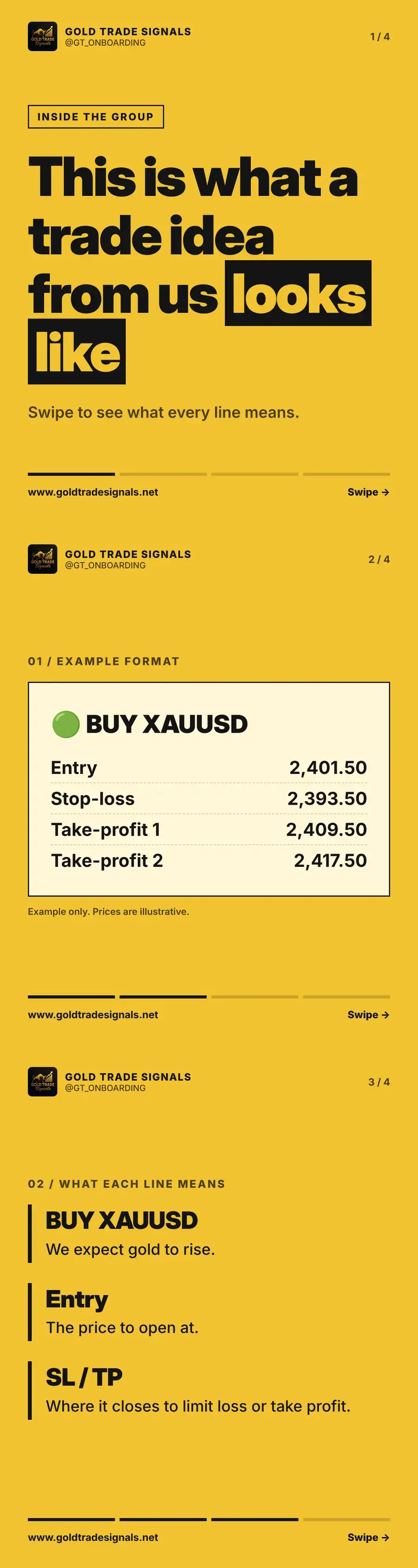
What a gold trade idea from us looks like, line by line
See exactly what a Gold Trade Signals trade idea looks like and what each line means: direction, entry, stop-loss and take-profit, explained for beginners.