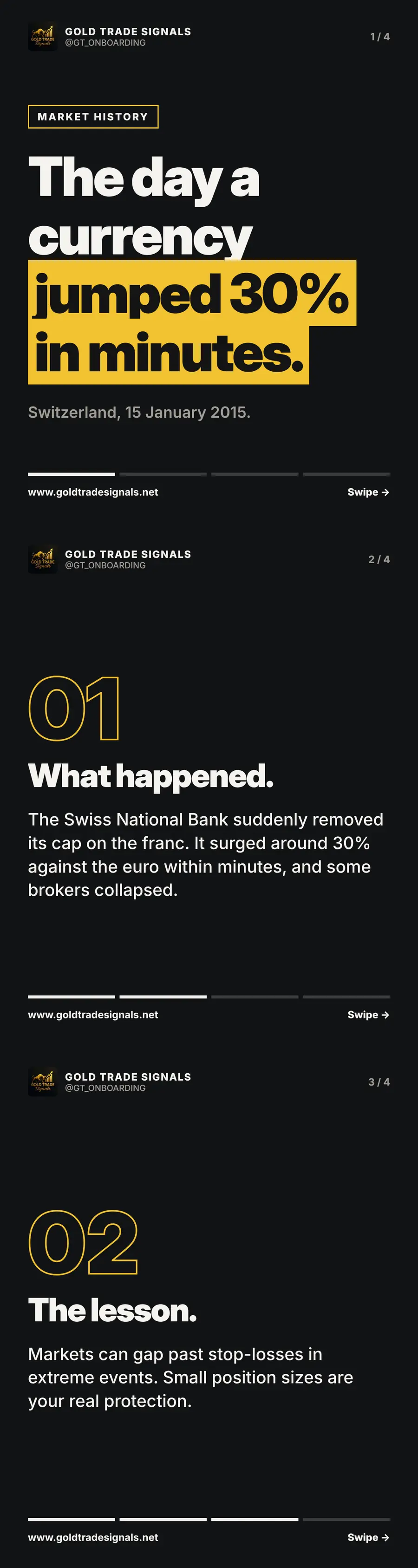
Most trading days are forgettable. 15 January 2015 was not. In a matter of minutes the Swiss franc surged around 30% against the euro, stop-losses were skipped, and several brokers went under. The story matters to anyone trading gold, because it shows what happens when a market moves faster than your orders can.
What happened on 15 January 2015
For more than three years the Swiss National Bank had held a cap on the franc, promising to stop it strengthening past 1.20 against the euro. Traders treated that cap as a fixed feature of the market. Then, without warning, the central bank removed it. The franc surged around 30% against the euro within minutes, one of the most violent moves a major currency has ever made.
Because the move was so sudden, there was almost nobody willing to trade on the way through. Orders could not be filled at the prices traders had set. Accounts that were betting against the franc went deeply negative, and several brokers, unable to collect those losses from clients, collapsed or had to be rescued.
Why stop-losses did not save people
A stop-loss is an instruction to close a trade when price reaches a level. It is not a promise that you will get that price. When a market gaps, price jumps from one level to another with nothing traded in between, and your stop is filled at the next available price, which can be far worse than planned.
In normal conditions on gold the difference is a few pips. In extreme events it can be enormous. That is why we treat the stop-loss as the first layer of protection rather than the only one, and why we never size a trade as if the stop will always hold exactly where it was placed.
The lesson for gold traders
Gold is not the Swiss franc, but it can gap too: around major news, over weekends and in moments of panic. The only protection that works through a gap is a small position size. If a trade is sized so that even a poor fill well past your stop is survivable, no single event can end your account. Those are the habits we build in our live training on Tuesday and Thursday.
Key takeaways
- Markets can gap straight past your stop-loss in extreme events.
- A stop-loss is a request, not a promise of that price.
- Small position sizes are the protection that still works through a gap.
Common questions
What happened to the Swiss franc in January 2015?
The Swiss National Bank unexpectedly removed its cap against the euro on 15 January 2015. The franc surged around 30% within minutes and several brokers collapsed because client losses could not be covered.
Can gold gap past a stop-loss?
Yes. Around major news, weekend opens or sudden panics, gold can jump from one price to another with nothing traded in between, so a stop can be filled at a worse price than you set.
Trade ideas with the levels already worked out
Join the free community and receive XAU/USD trade ideas with entry, stop-loss and take-profit, live training on Tuesdays and Thursdays, and support whenever you are stuck.
Join free on TelegramOpen the calculatorsRisk warning: This article is educational content, not personal investment advice. Gold is a leveraged, volatile instrument and you can lose some or all of your capital. Gold Trade Signals is not FCA regulated. Read the full risk warning.
More from Market History
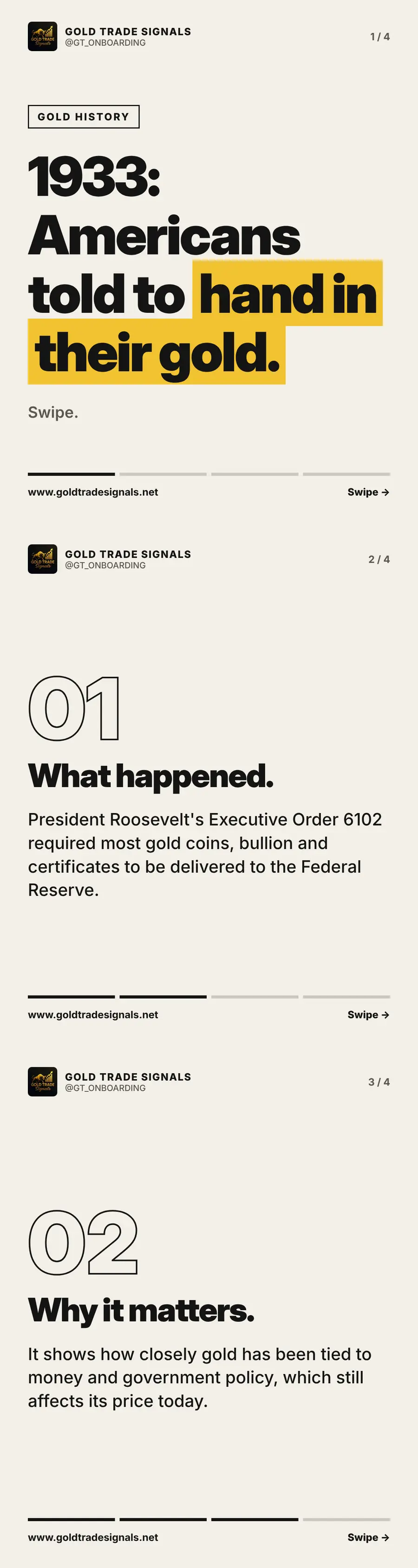
Executive Order 6102: when Americans had to hand in gold
In 1933 President Roosevelt ordered most privately held gold coins, bullion and certificates handed to the Federal Reserve. Why it still matters today.
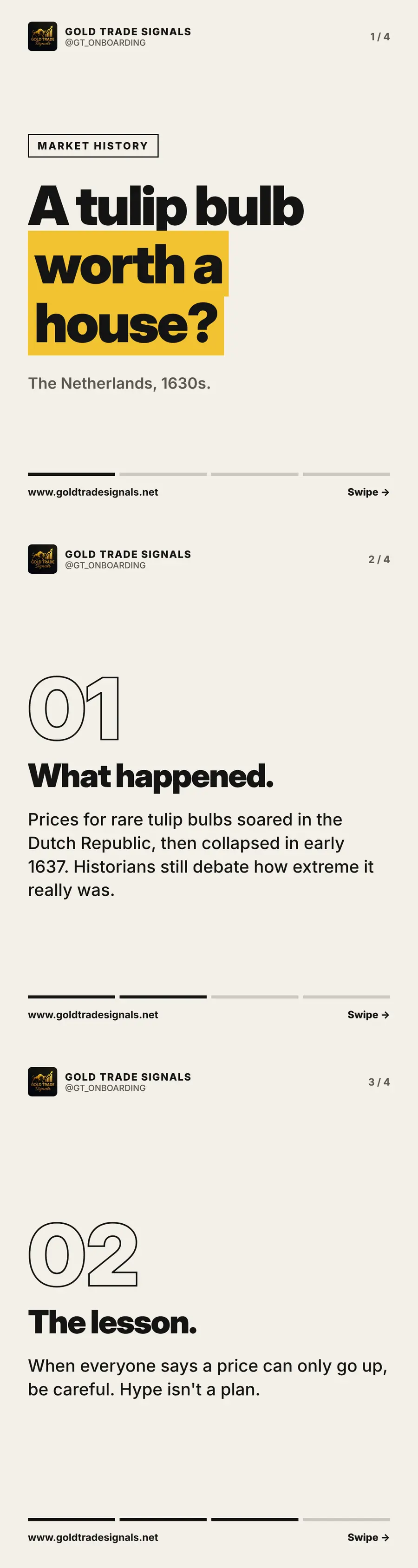
Tulip mania in the 1630s and what it teaches gold traders
In the 1630s rare tulip bulbs in the Dutch Republic reportedly sold for more than a house, then prices collapsed in 1637. Learn the story and the lesson.
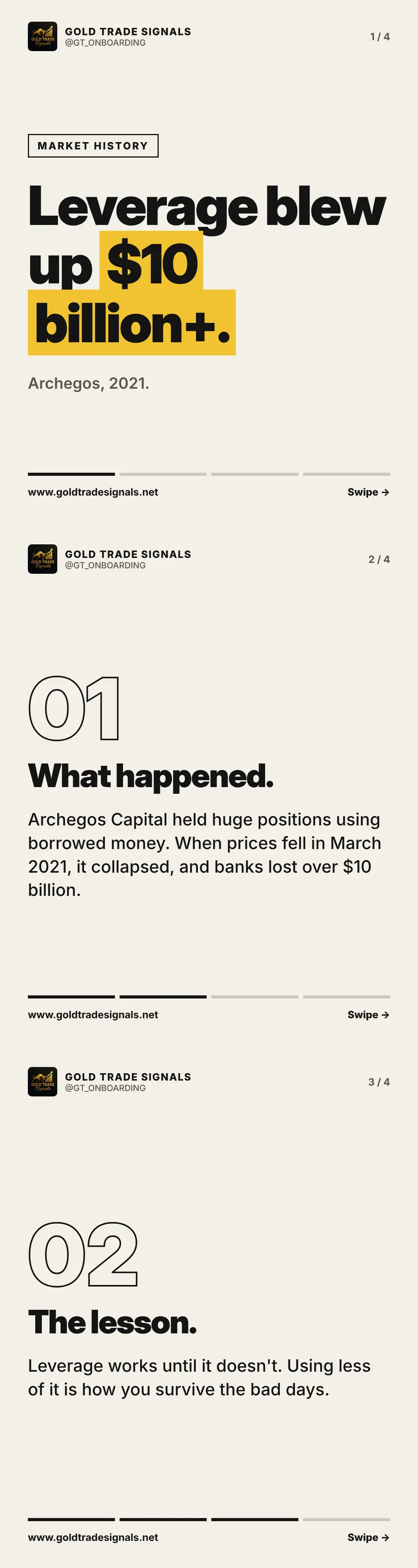
Archegos 2021: how extreme leverage blew up a family office
In March 2021 Archegos Capital collapsed after prices fell on its heavily leveraged positions, costing banks over $10 billion. The lesson for gold traders.