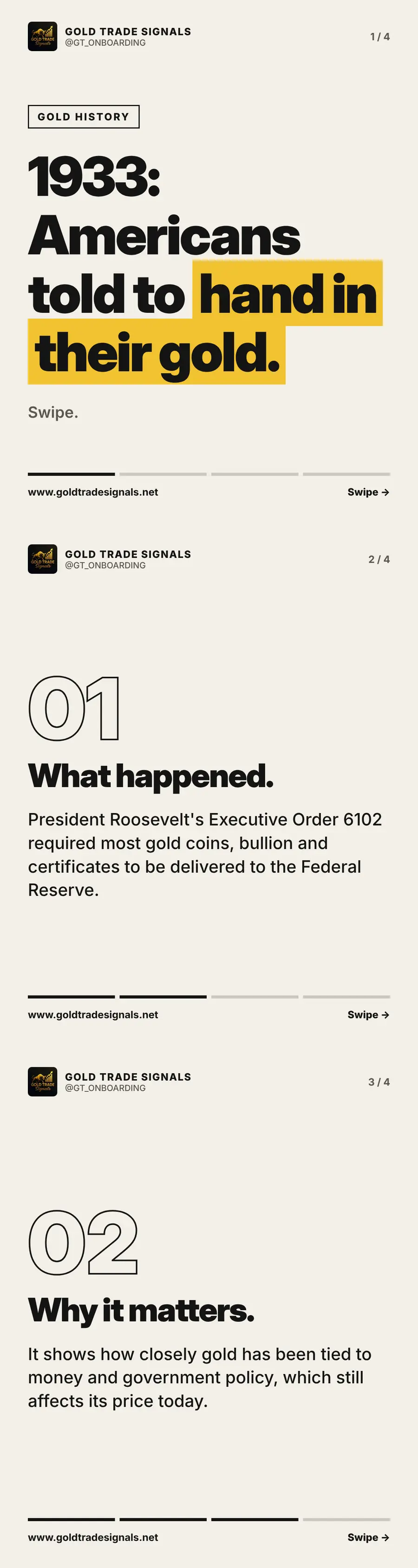
Imagine being told by your government to hand in your gold. In 1933, that is what happened to Americans. Executive Order 6102, signed by President Franklin D. Roosevelt during the Great Depression, required most privately held gold to be delivered to the Federal Reserve. The story says a lot about why gold still behaves the way it does.
What happened
In April 1933, with banks failing and the economy in deep depression, Roosevelt signed Executive Order 6102. It required most gold coins, gold bullion and gold certificates held by individuals and businesses to be delivered to the Federal Reserve, in exchange for paper dollars at the official price of the time, $20.67 an ounce.
There were exceptions, including jewellery, collectors' coins and a small personal allowance, but the intent was clear: to take gold out of private hands so the government could expand the money supply. The following year the official gold price was raised to $35 an ounce. Ordinary Americans were not allowed to own gold bullion again until the end of 1974.
Why it matters for gold traders
The order shows how tightly gold has been bound to money and government policy. For most of modern history, gold was the thing currencies were measured against, and governments acted on it directly. That history is why gold still reacts to interest rates, inflation and central bank decisions far more than most assets.
The lesson for a gold trader is to respect the role of policy. Big moves in XAU/USD are often driven by what central banks and governments do, not by chart patterns alone. Watch the news calendar, know when decisions are due, and keep your risk small around them. We post those times in the group every morning.
Key takeaways
- Executive Order 6102 in 1933 required most private gold to be handed in.
- The move helped the US government expand the money supply.
- Gold still reacts strongly to policy, so watch the news calendar.
Common questions
What was Executive Order 6102?
A 1933 order by President Roosevelt requiring most gold coins, bullion and gold certificates held privately in the US to be delivered to the Federal Reserve in exchange for dollars.
When could Americans legally own gold again?
Restrictions on private ownership of gold bullion were lifted at the end of 1974, more than forty years after the original order.
Trade ideas with the levels already worked out
Join the free community and receive XAU/USD trade ideas with entry, stop-loss and take-profit, live training on Tuesdays and Thursdays, and support whenever you are stuck.
Join free on TelegramOpen the calculatorsRisk warning: This article is educational content, not personal investment advice. Gold is a leveraged, volatile instrument and you can lose some or all of your capital. Gold Trade Signals is not FCA regulated. Read the full risk warning.
More from Market History
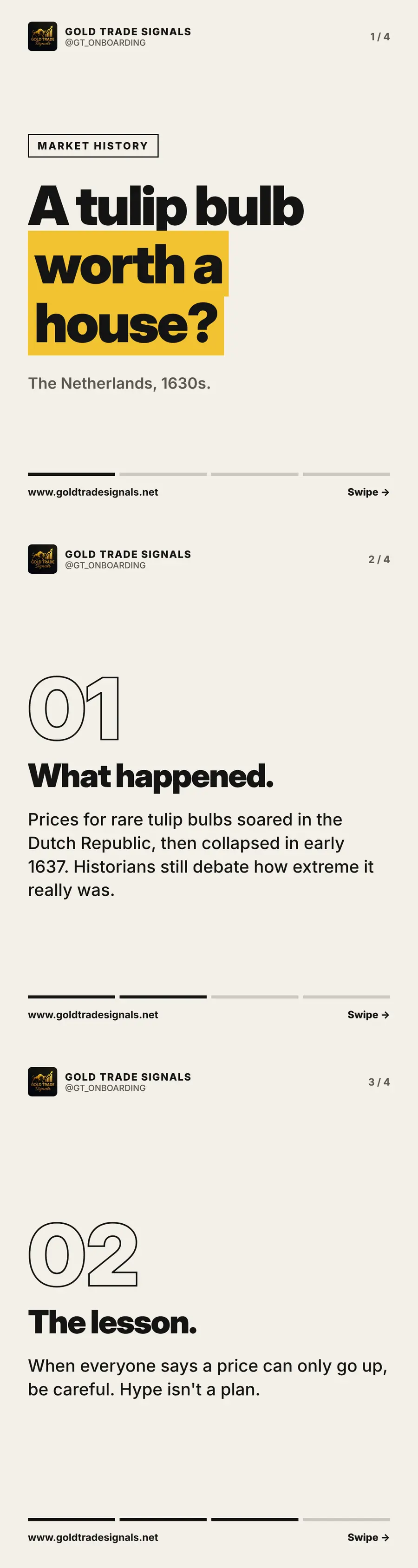
Tulip mania in the 1630s and what it teaches gold traders
In the 1630s rare tulip bulbs in the Dutch Republic reportedly sold for more than a house, then prices collapsed in 1637. Learn the story and the lesson.
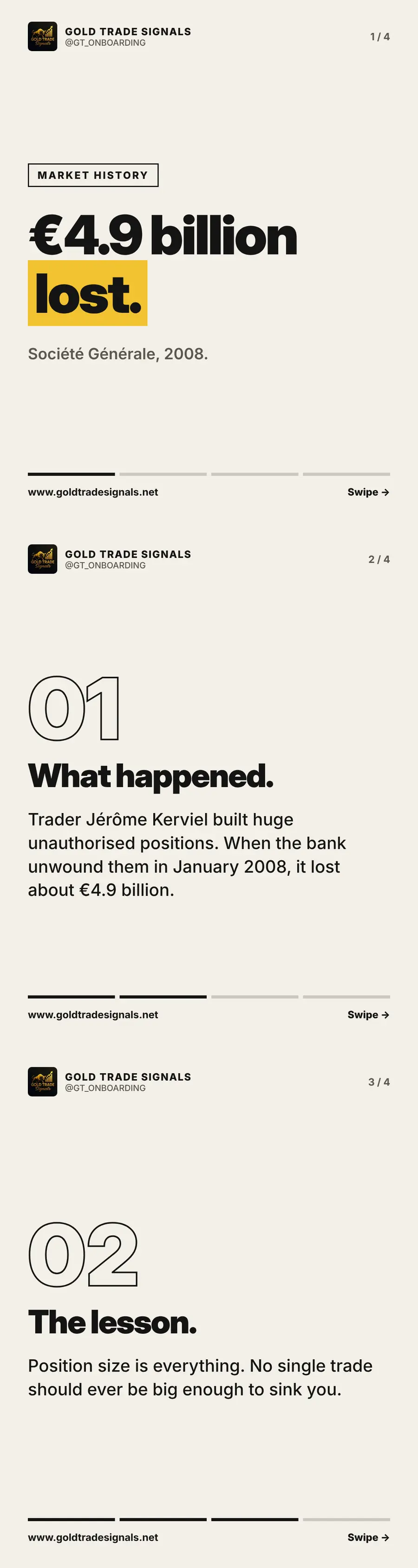
Kerviel and the €4.9 billion Société Générale loss, 2008
In January 2008 Société Générale lost about €4.9 billion unwinding a rogue trader's hidden positions. What happened and the lesson on position size.
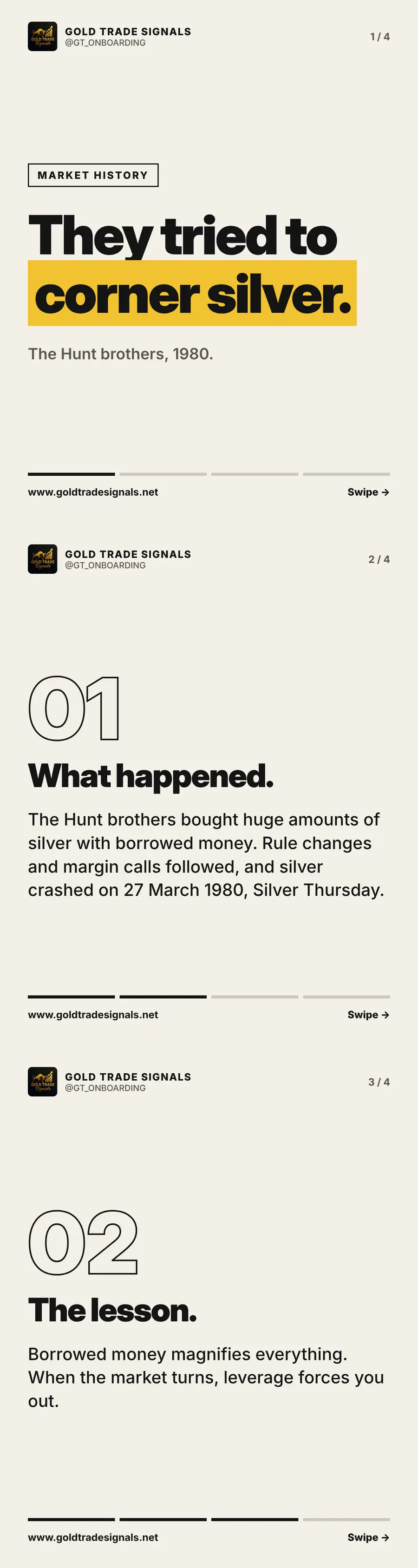
The Hunt brothers and Silver Thursday, 1980
Two billionaire brothers tried to corner the silver market with borrowed money. What happened on Silver Thursday in 1980 and what it teaches gold traders.