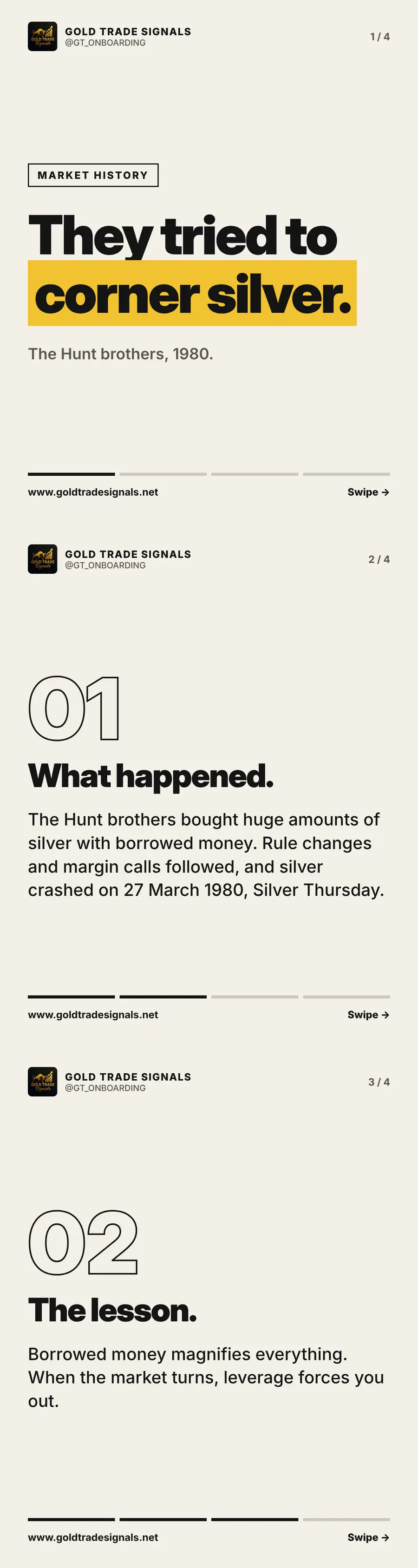
The Hunt brothers and Silver Thursday, 1980
Two billionaire brothers tried to corner the silver market with borrowed money. What happened on Silver Thursday in 1980 and what it teaches gold traders.
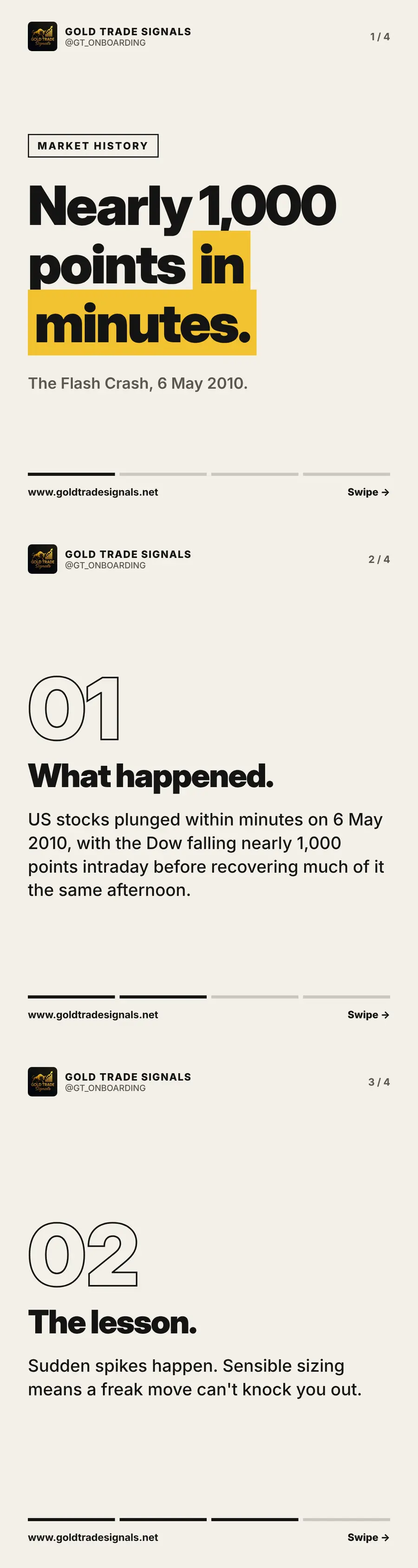
The 2010 Flash Crash: nearly 1,000 points in minutes
On 6 May 2010 the Dow fell nearly 1,000 points in minutes and then bounced back. Learn what happened in the Flash Crash and why sensible sizing matters.
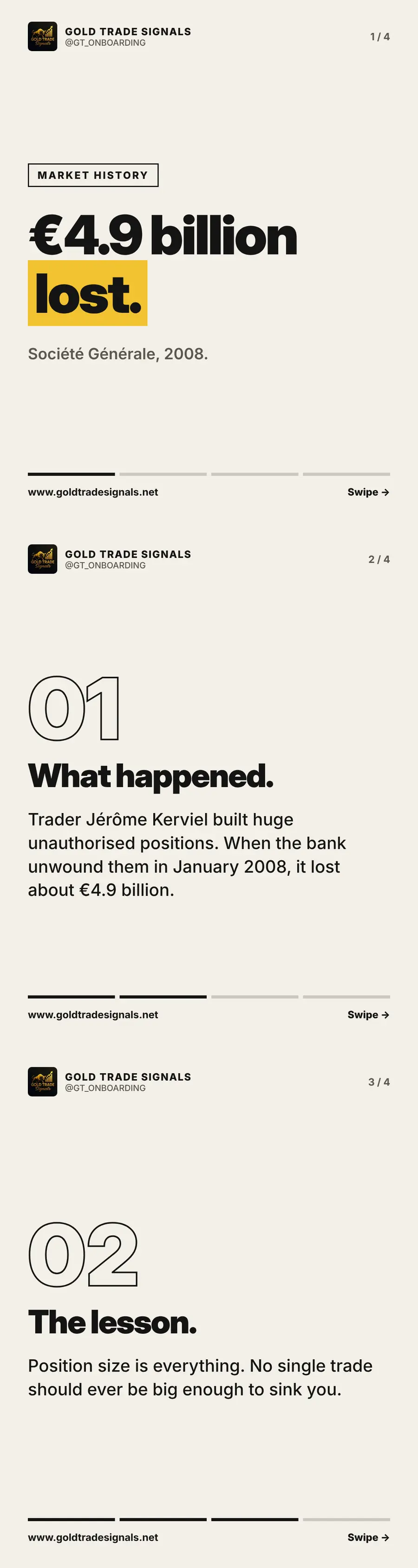
Kerviel and the €4.9 billion Société Générale loss, 2008
In January 2008 Société Générale lost about €4.9 billion unwinding a rogue trader's hidden positions. What happened and the lesson on position size.
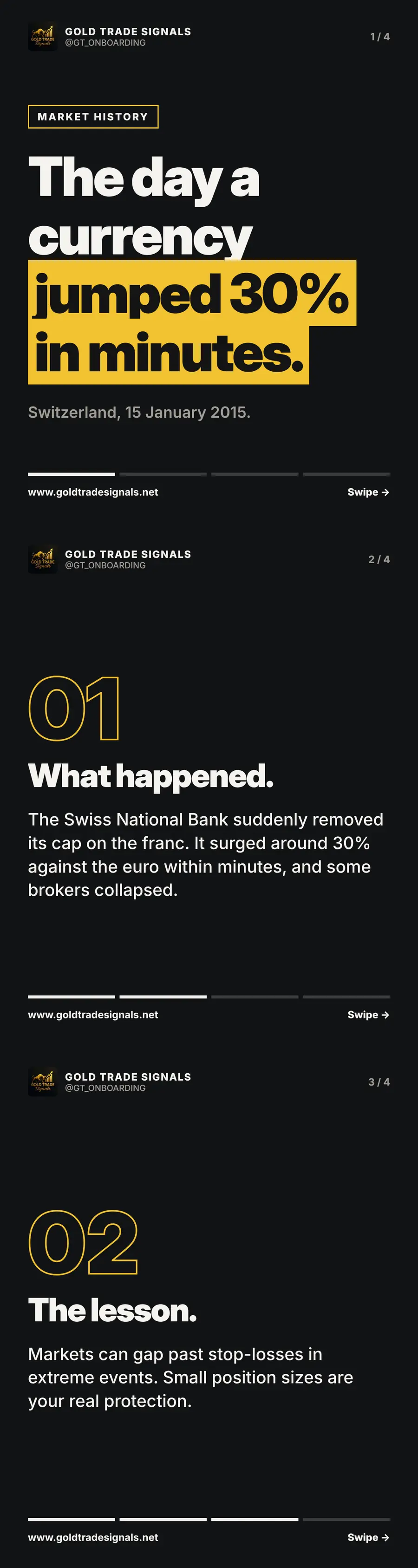
The Swiss franc shock of 2015 and what it teaches gold traders
On 15 January 2015 the Swiss franc jumped around 30% in minutes and brokers collapsed. Learn what happened and why position size is your real protection.
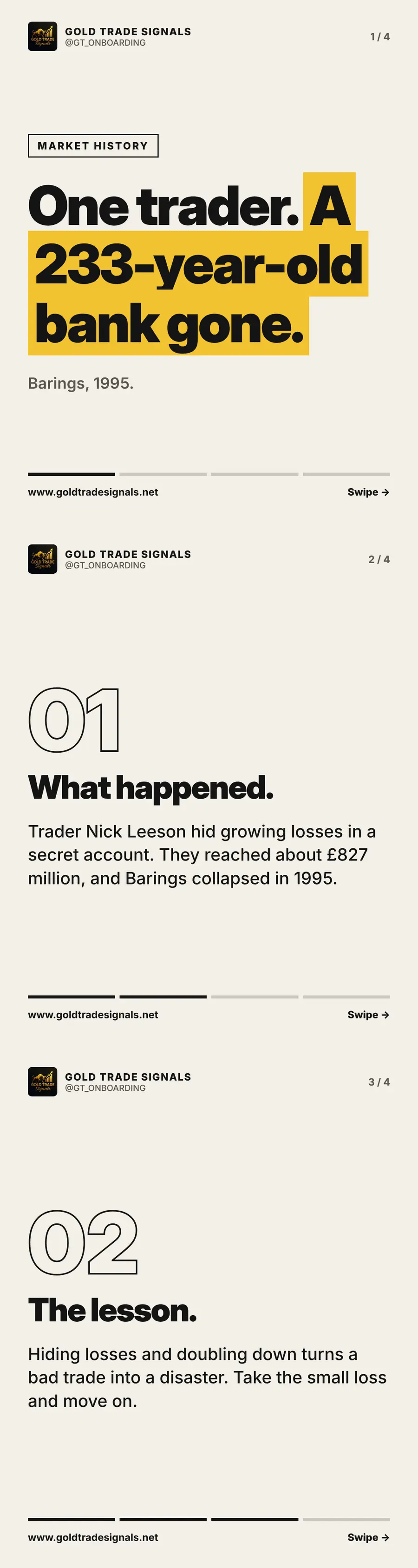
Barings Bank 1995: how one trader's hidden losses sank a bank
In 1995 Nick Leeson hid losses of around £827 million and brought down Barings, a 233-year-old bank. Learn what happened and the lesson for gold traders.
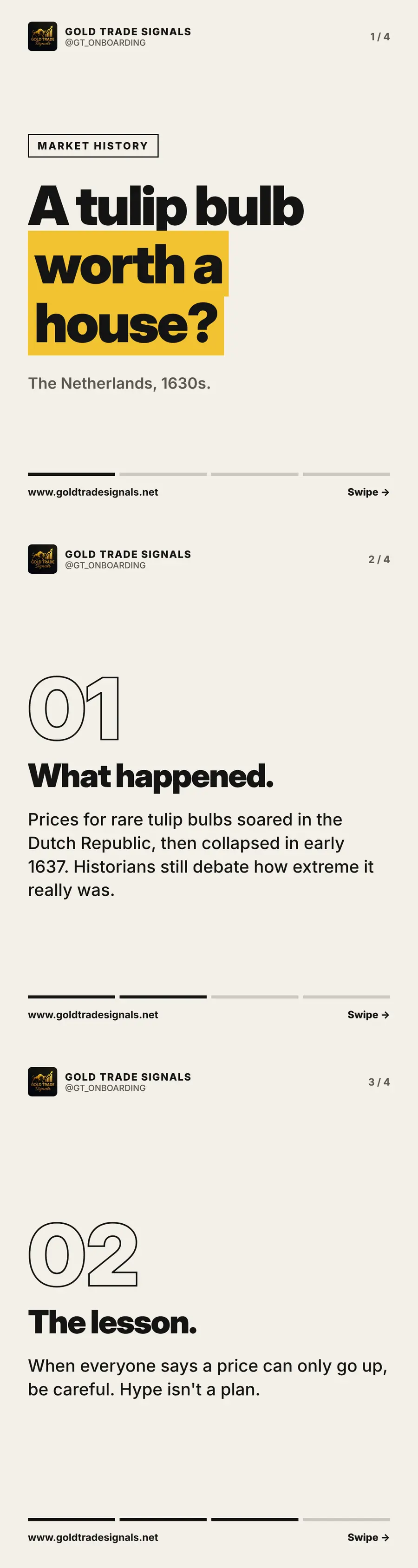
Tulip mania in the 1630s and what it teaches gold traders
In the 1630s rare tulip bulbs in the Dutch Republic reportedly sold for more than a house, then prices collapsed in 1637. Learn the story and the lesson.
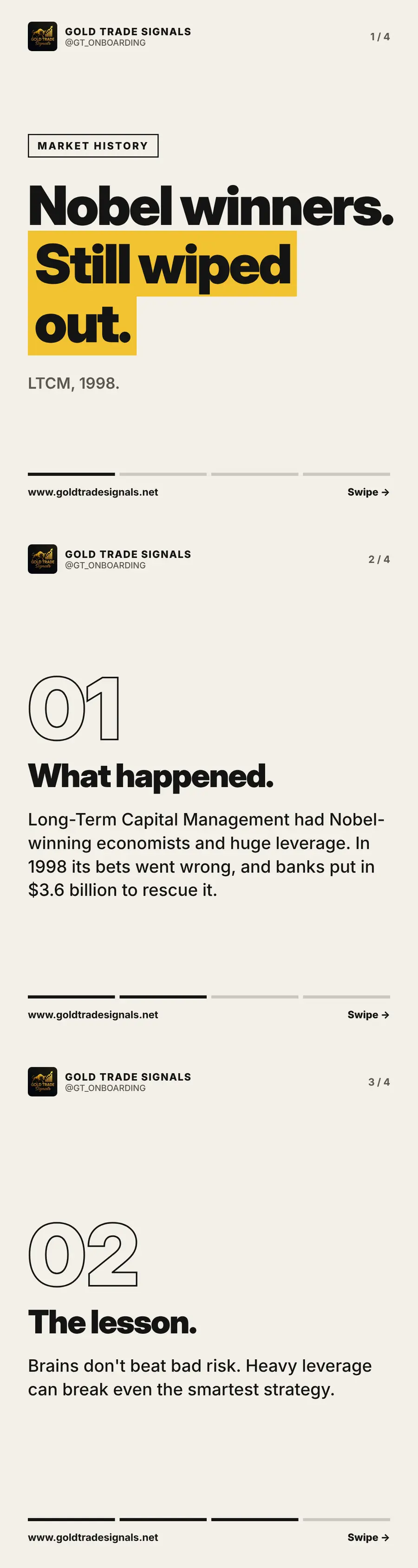
LTCM 1998: when Nobel winners met too much leverage
Long-Term Capital Management had Nobel-winning economists and huge leverage. In 1998 it needed a $3.6 billion rescue. Here is the lesson for gold traders.
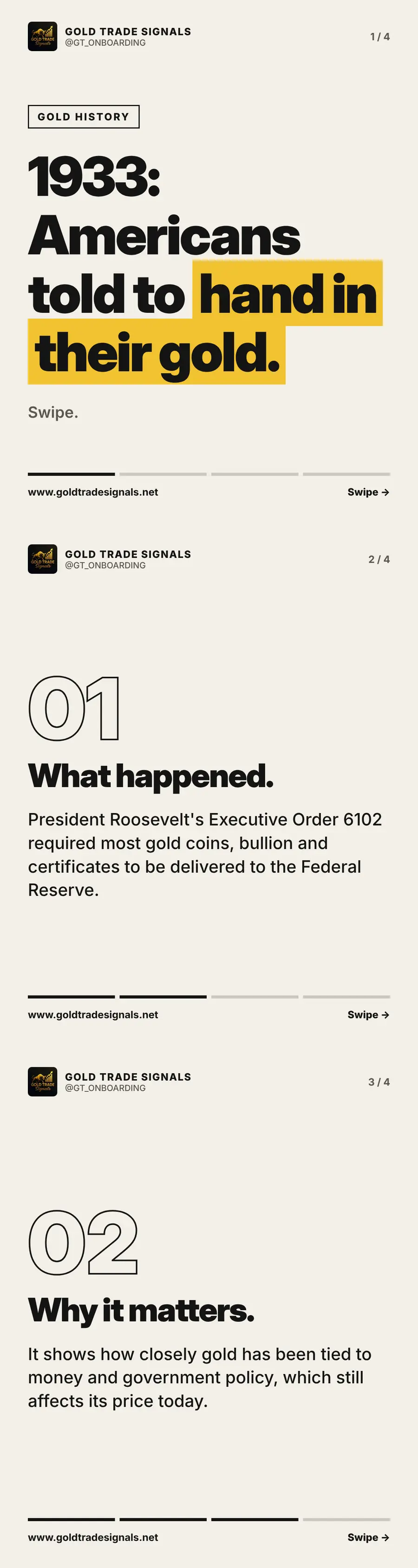
Executive Order 6102: when Americans had to hand in gold
In 1933 President Roosevelt ordered most privately held gold coins, bullion and certificates handed to the Federal Reserve. Why it still matters today.
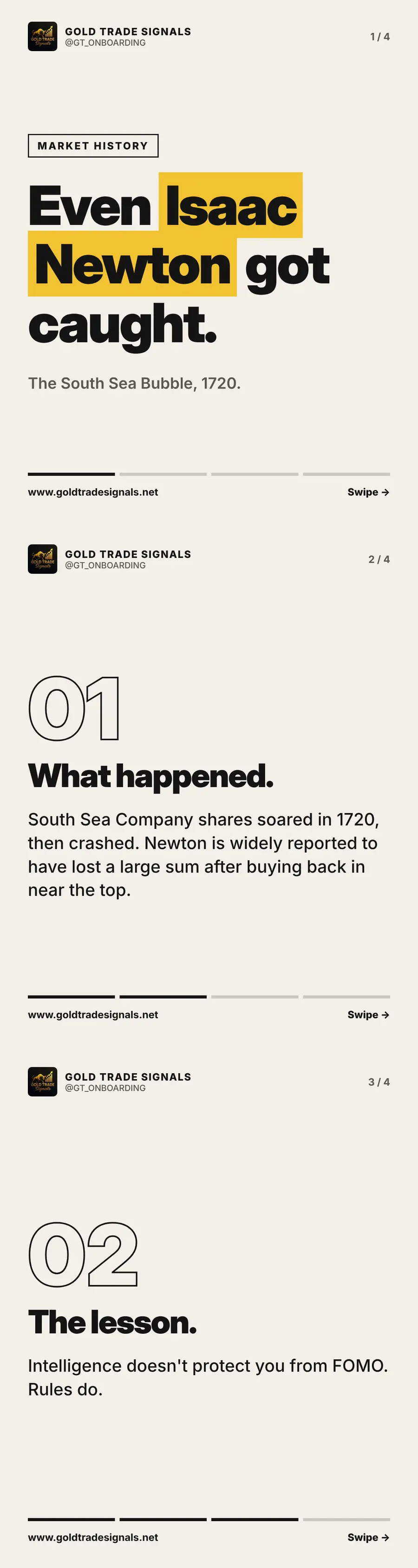
Isaac Newton and the South Sea Bubble of 1720
Even Isaac Newton lost money in a market bubble. Learn what happened with the South Sea Company in 1720 and why intelligence is no protection against FOMO.
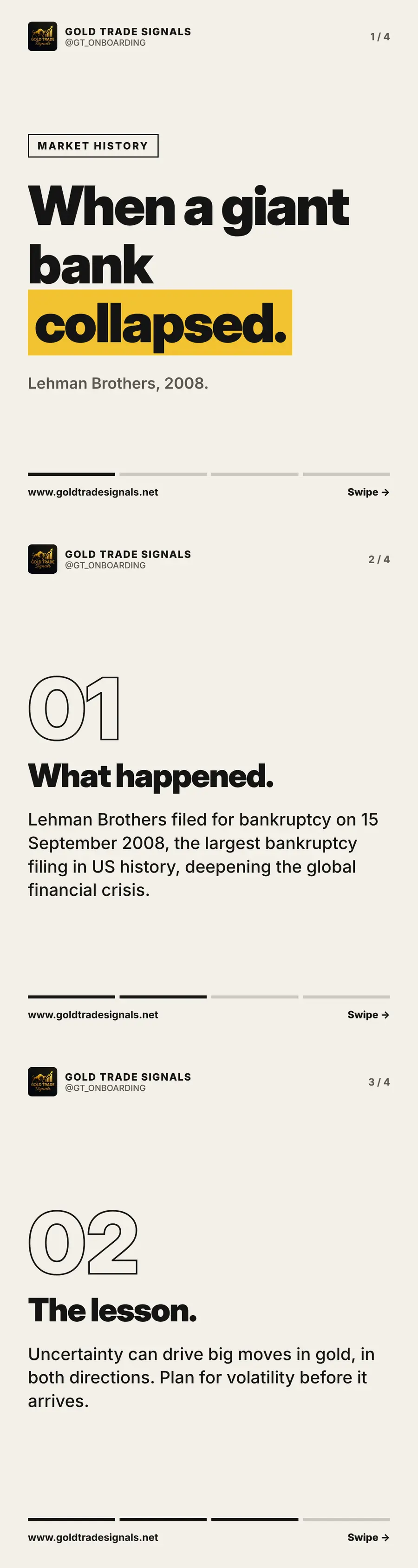
Lehman Brothers 2008: when a giant bank collapsed
On 15 September 2008 Lehman Brothers filed the largest bankruptcy in US history. What happened and why gold traders plan for volatility before it arrives.
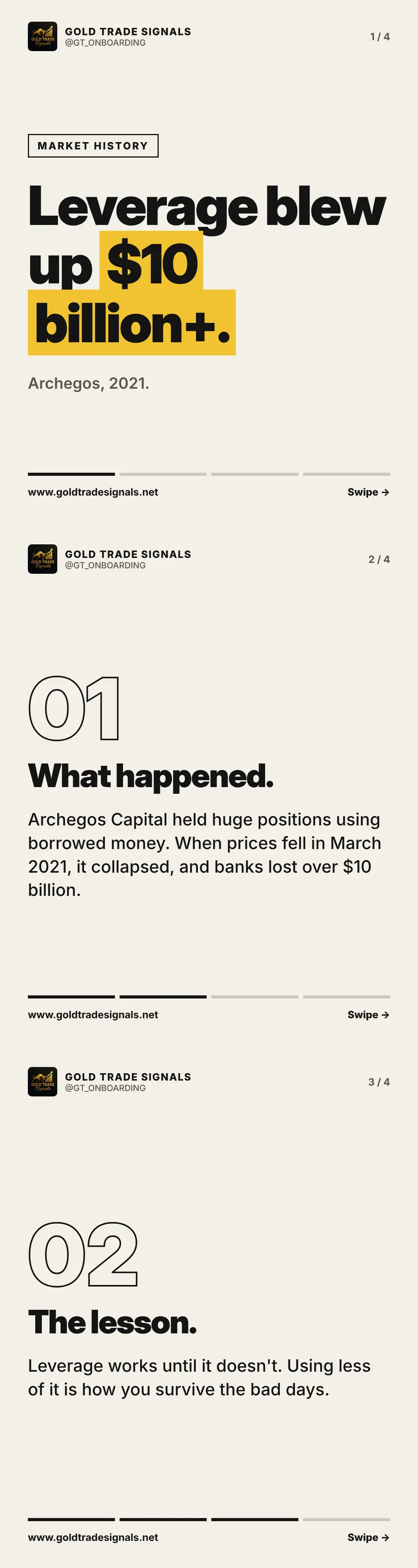
Archegos 2021: how extreme leverage blew up a family office
In March 2021 Archegos Capital collapsed after prices fell on its heavily leveraged positions, costing banks over $10 billion. The lesson for gold traders.
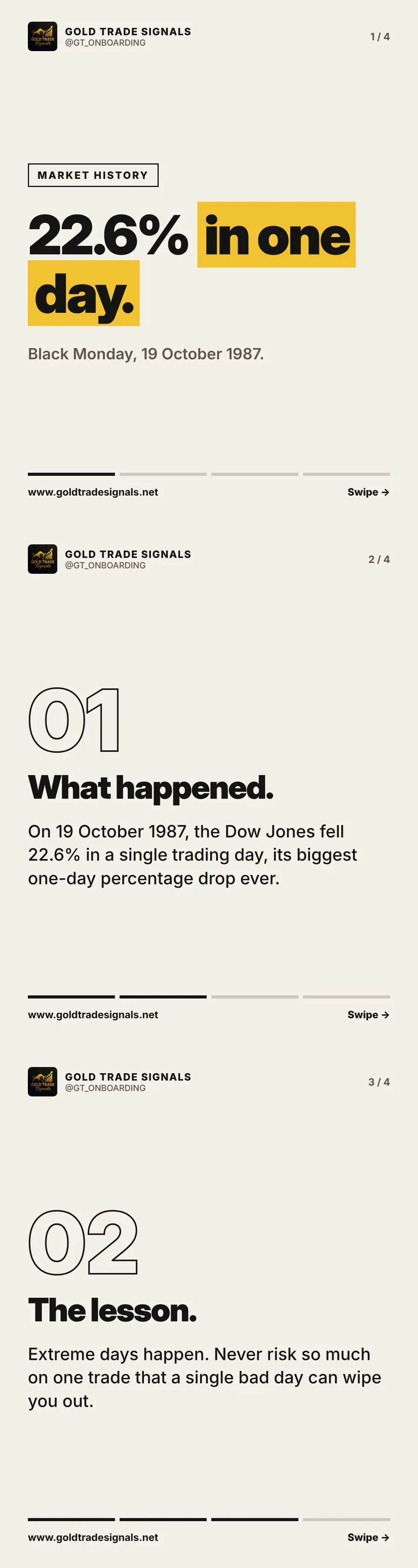
Black Monday 1987: the day the Dow fell 22.6% in one session
On 19 October 1987 the Dow Jones fell 22.6% in a single day. Learn what happened on Black Monday and the lesson it holds for anyone trading gold today.
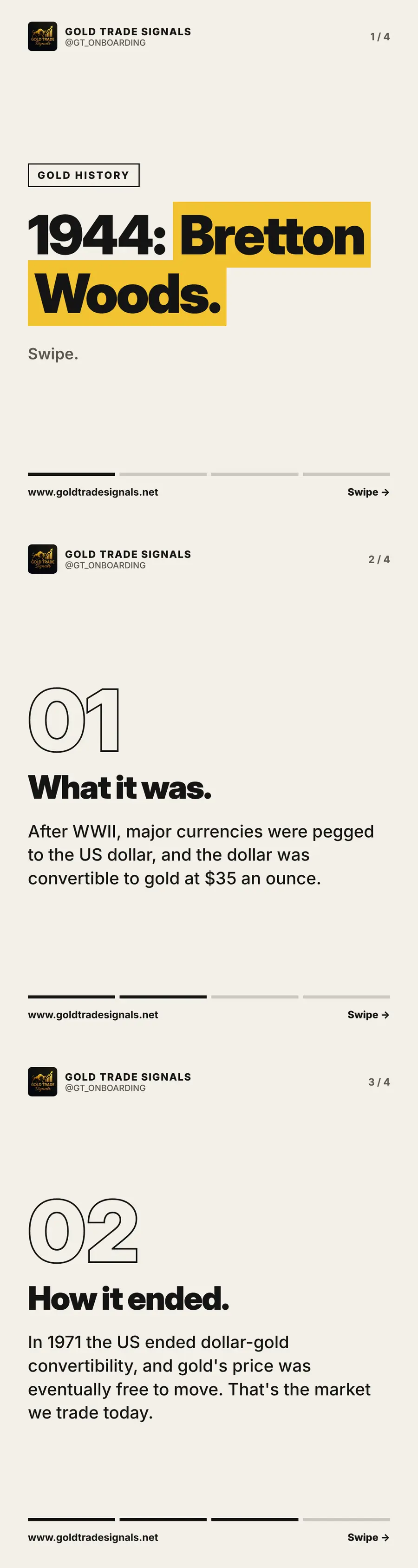
Bretton Woods 1944: when the world's money was tied to gold
In 1944 Bretton Woods pegged major currencies to the dollar and the dollar to gold at $35 an ounce. How it worked, how it ended and why it matters today.
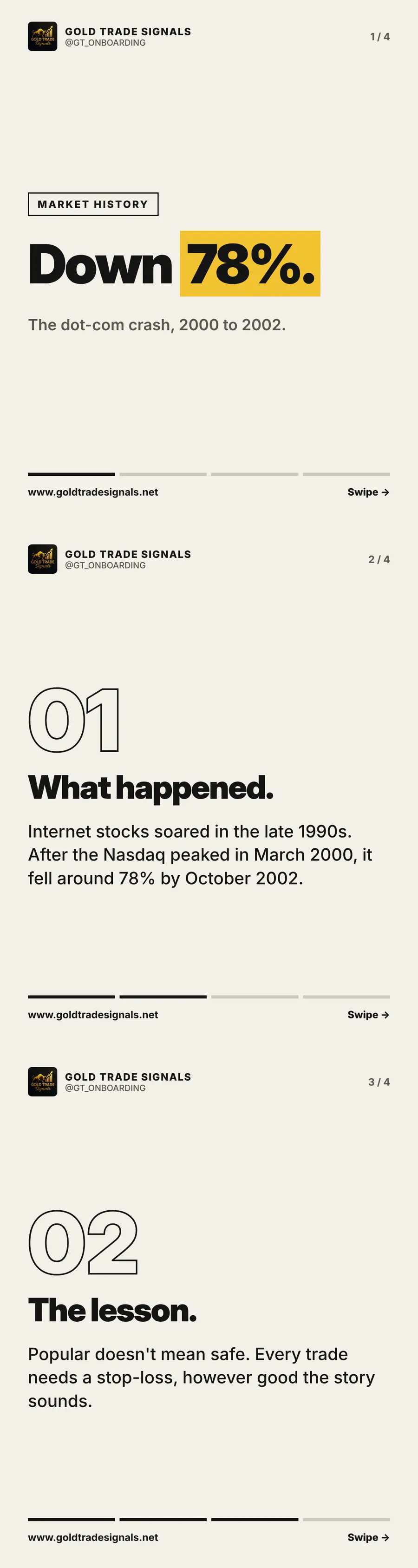
The dot-com crash: how the Nasdaq fell around 78% by 2002
After the Nasdaq peaked in March 2000 it fell around 78% by October 2002. Learn what happened in the dot-com crash and the lesson it holds for gold traders.
Risk warning: This article is educational content, not personal investment advice. Gold is a leveraged, volatile instrument and you can lose some or all of your capital. Gold Trade Signals is not FCA regulated. Read the full risk warning.