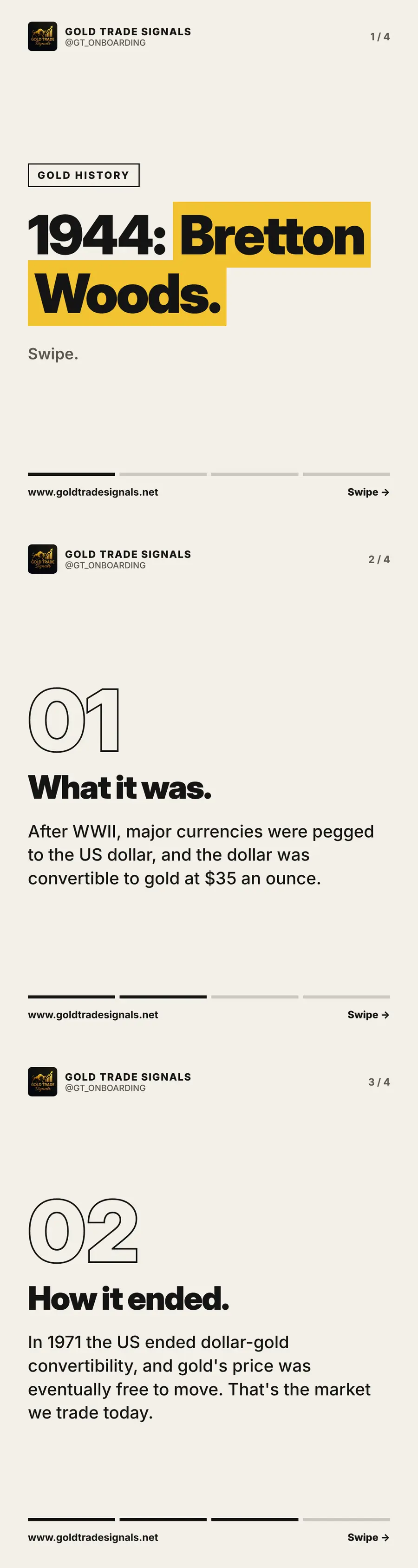
The gold market we trade today did not always exist. For most of the period after the Second World War, gold's price was fixed. That system was agreed in 1944 at a conference in Bretton Woods, New Hampshire, and its end in 1971 created the free-moving gold price you see on your chart.
What Bretton Woods was
In July 1944, with the war still being fought, delegates from the Allied nations met at Bretton Woods to design the post-war financial system. The agreement pegged major currencies to the US dollar at fixed exchange rates, and the US dollar in turn was convertible to gold at $35 an ounce. Gold sat at the centre, with the dollar as its stand-in.
The arrangement gave the world stable exchange rates for more than two decades, which helped trade and reconstruction. It also created the International Monetary Fund and what became the World Bank. But it relied on the United States holding enough gold to back the dollars in circulation, and over time that became harder to sustain.
How it ended, and what it means for traders
By the late 1960s, US spending and growing dollar reserves abroad put pressure on the $35 peg. In August 1971, President Nixon suspended the dollar's convertibility to gold. Within a couple of years, attempts to fix new rates had failed and major currencies floated freely. Gold's price was eventually free to move with supply, demand and sentiment.
That is the market we trade today. XAU/USD exists as a floating price because Bretton Woods ended. The lesson for a gold trader is that gold's relationship with the dollar is deep and historic, which is why dollar strength, interest rates and central bank policy still move it so much. Understanding that background makes the daily chart far easier to read.
Key takeaways
- Bretton Woods pegged currencies to the dollar and the dollar to gold at $35.
- In 1971 the US ended dollar-gold convertibility.
- Gold's floating price today exists because that system ended.
Common questions
What was the Bretton Woods system?
A post-war monetary system agreed in 1944 in which major currencies were pegged to the US dollar and the dollar was convertible to gold at $35 an ounce.
Why did the Bretton Woods system end?
Pressure on US gold reserves made the $35 peg unsustainable, and in 1971 the US suspended dollar-gold convertibility. Major currencies then floated.
Trade ideas with the levels already worked out
Join the free community and receive XAU/USD trade ideas with entry, stop-loss and take-profit, live training on Tuesdays and Thursdays, and support whenever you are stuck.
Join free on TelegramOpen the calculatorsRisk warning: This article is educational content, not personal investment advice. Gold is a leveraged, volatile instrument and you can lose some or all of your capital. Gold Trade Signals is not FCA regulated. Read the full risk warning.
More from Market History
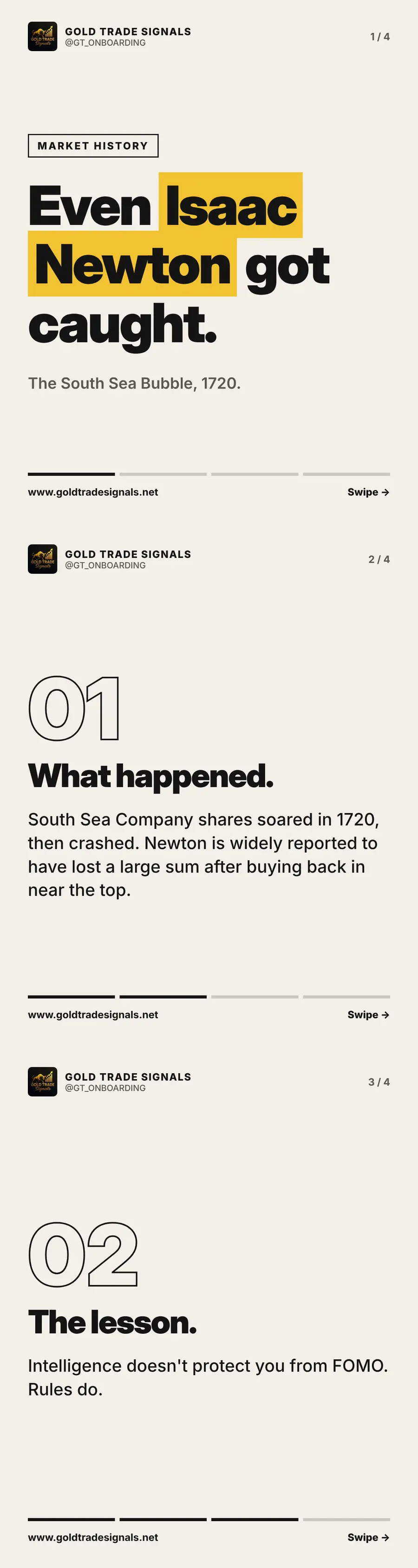
Isaac Newton and the South Sea Bubble of 1720
Even Isaac Newton lost money in a market bubble. Learn what happened with the South Sea Company in 1720 and why intelligence is no protection against FOMO.
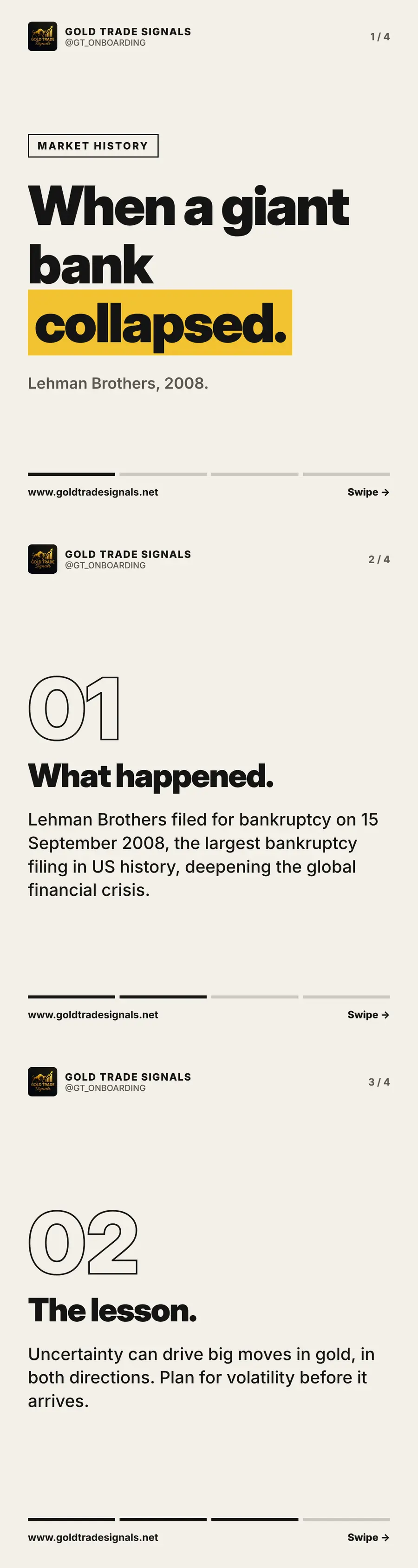
Lehman Brothers 2008: when a giant bank collapsed
On 15 September 2008 Lehman Brothers filed the largest bankruptcy in US history. What happened and why gold traders plan for volatility before it arrives.
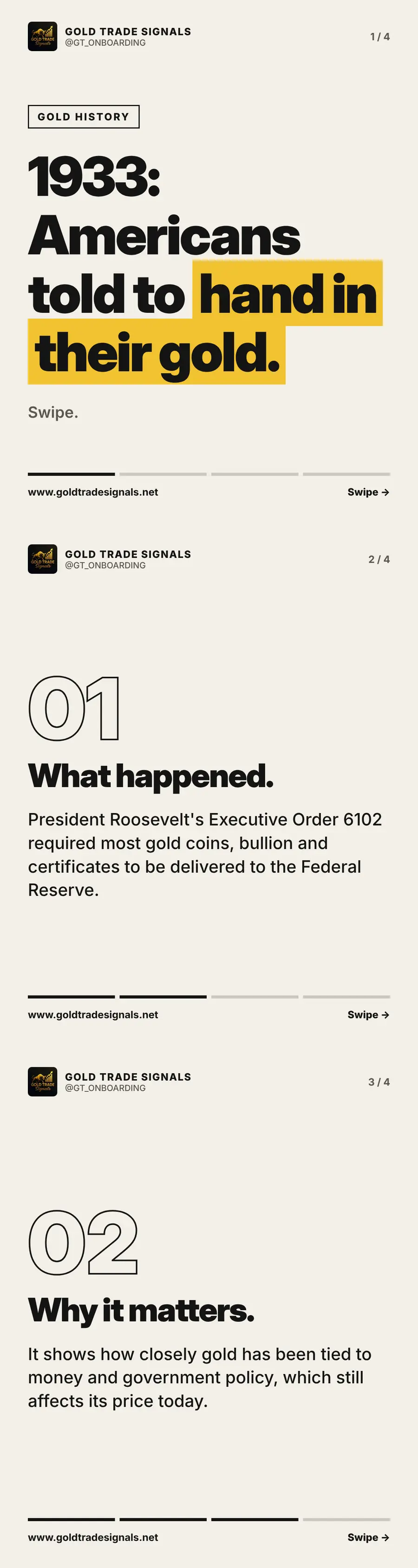
Executive Order 6102: when Americans had to hand in gold
In 1933 President Roosevelt ordered most privately held gold coins, bullion and certificates handed to the Federal Reserve. Why it still matters today.