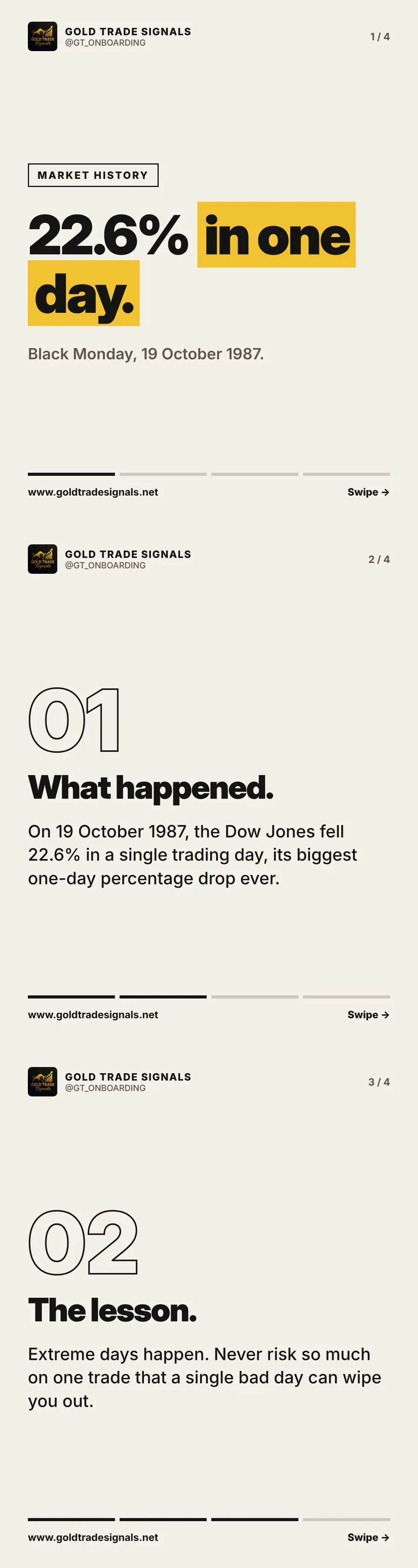
Some trading days are remembered for decades. 19 October 1987 is one of them. On that Monday, the Dow Jones Industrial Average fell 22.6% in a single session, still its largest one-day percentage drop on record. Here is what happened and why it matters to gold traders now.
What happened on Black Monday
Markets had risen strongly through the mid-1980s, and by autumn 1987 they had started to wobble. Selling that began in Asia spread to Europe and then to New York. When the US market opened on 19 October, the wave of sell orders overwhelmed the system. By the close, the Dow had lost 22.6% of its value in one day.
Several factors are usually blamed, including computer-driven programme trading and portfolio insurance strategies that automatically sold as prices fell, pushing them lower still. Whatever the exact mix of causes, the key point is that few people saw it coming and almost nobody was positioned for a drop of that size in a single day.
The lesson for gold traders
Extreme days happen. They are rare, but they are not impossible, and they arrive without an appointment. Gold has its own history of sharp moves around central bank announcements, geopolitical shocks and liquidity gaps. If your position size assumes a normal day, an extreme one can take you out of the game entirely.
The protection is boring and effective: a stop-loss on every trade, and a position size small enough that even a bad day leaves your account standing. Never risk so much on one trade that a single session can wipe you out. Planning for the bad day is something we work through in every live training, so you are ready before it arrives.
Key takeaways
- On 19 October 1987 the Dow fell 22.6% in one day.
- Extreme days are rare but they do happen.
- Size every trade so one bad day cannot wipe you out.
Common questions
What caused Black Monday in 1987?
A mix of factors, including a stretched market after years of gains and automated selling strategies that accelerated the fall. No single cause fully explains it.
How can traders protect against a market crash?
Use a stop-loss on every trade and keep position sizes small enough that even an extreme move leaves most of your account intact.
Trade ideas with the levels already worked out
Join the free community and receive XAU/USD trade ideas with entry, stop-loss and take-profit, live training on Tuesdays and Thursdays, and support whenever you are stuck.
Join free on TelegramOpen the calculatorsRisk warning: This article is educational content, not personal investment advice. Gold is a leveraged, volatile instrument and you can lose some or all of your capital. Gold Trade Signals is not FCA regulated. Read the full risk warning.
More from Market History
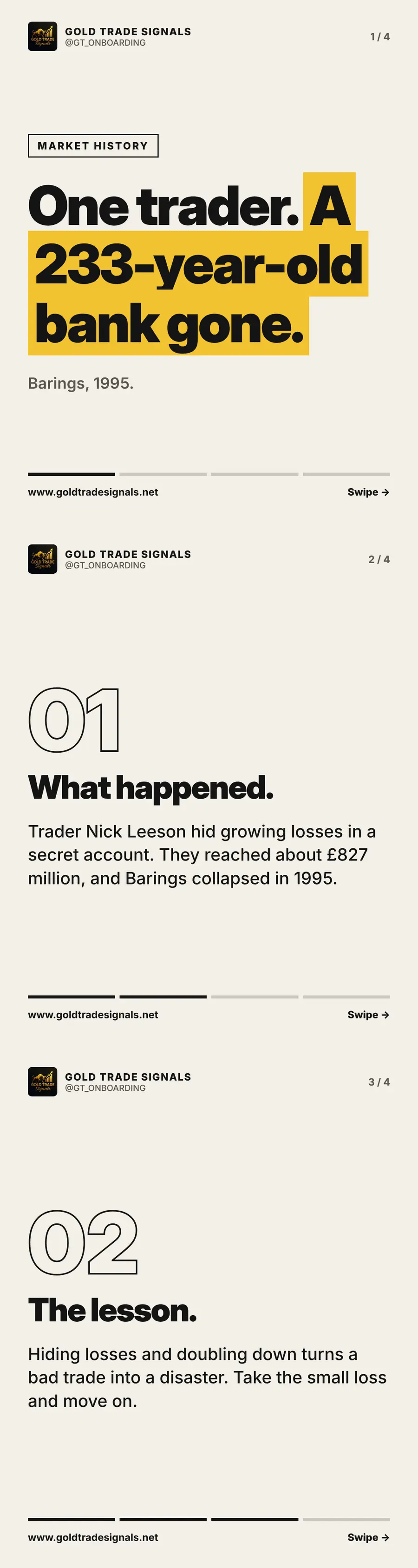
Barings Bank 1995: how one trader's hidden losses sank a bank
In 1995 Nick Leeson hid losses of around £827 million and brought down Barings, a 233-year-old bank. Learn what happened and the lesson for gold traders.
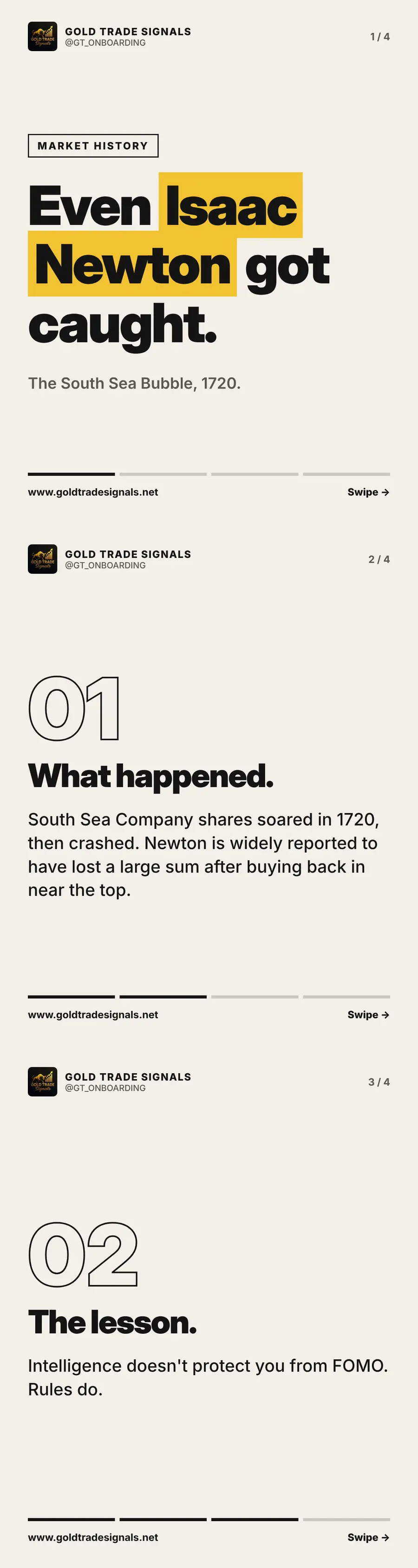
Isaac Newton and the South Sea Bubble of 1720
Even Isaac Newton lost money in a market bubble. Learn what happened with the South Sea Company in 1720 and why intelligence is no protection against FOMO.
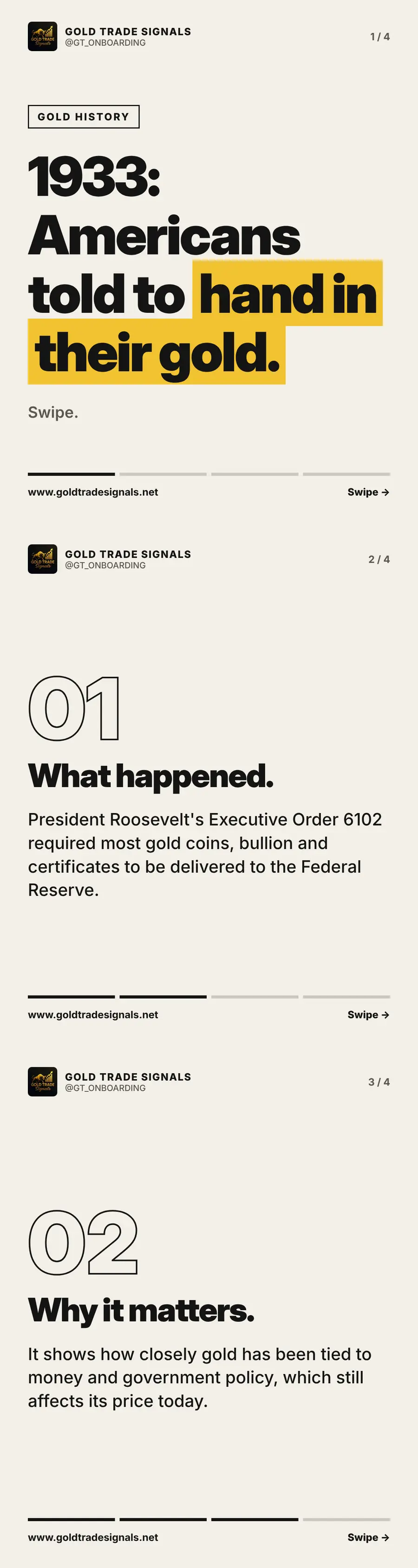
Executive Order 6102: when Americans had to hand in gold
In 1933 President Roosevelt ordered most privately held gold coins, bullion and certificates handed to the Federal Reserve. Why it still matters today.