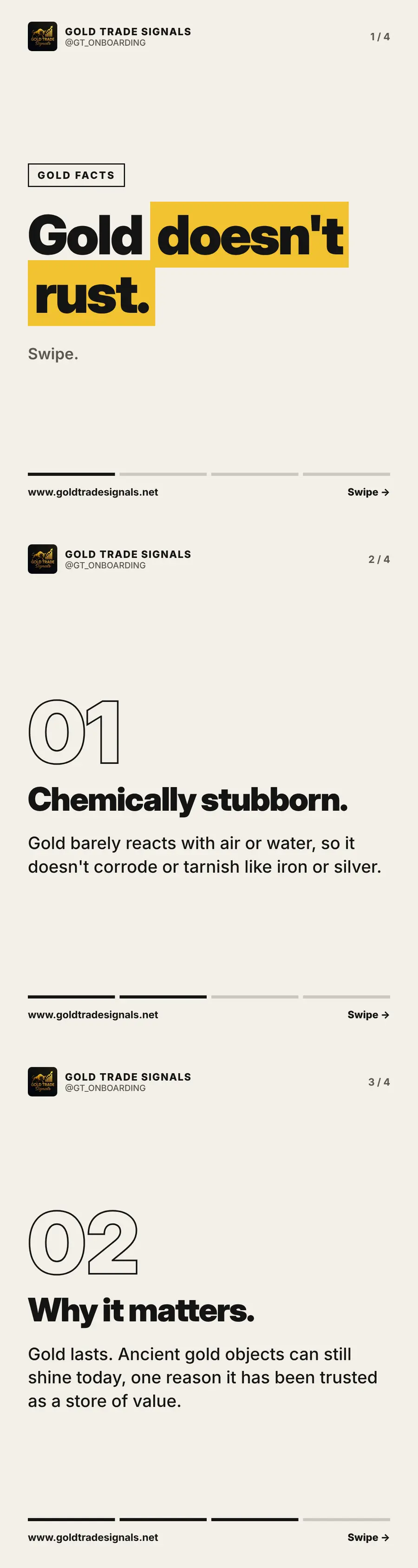
Dig up an iron tool from two thousand years ago and you will find rust and fragments. Dig up a gold coin from the same era and it can look like it was struck last week. That difference is chemistry, and it is one of the reasons gold has been trusted for thousands of years.
Chemically stubborn
Rust is what happens when iron reacts with oxygen and moisture. Silver tarnishes when it reacts with sulphur compounds in the air. Gold does almost none of this. It is one of the least reactive metals known, sitting at the bottom of the reactivity series, and it barely reacts with air or water at all.
That is why gold is called a noble metal. Ordinary acids do not dissolve it, salt water does not corrode it, and it does not tarnish in a drawer. It takes a specific mixture of strong acids to attack it. In everyday conditions, gold simply stays gold.
Why it matters
Gold lasts. Ancient gold objects from Egypt, Mesopotamia and South America can still shine today, often looking almost exactly as they did when they were made. A material that holds its form and its appearance across millennia is naturally suited to storing wealth across generations.
That durability is a big part of why gold has been trusted as a store of value for so long. Combine it with scarcity, the fact that it is easy to recognise and divide, and that it does not degrade in storage, and you have the reasons central banks still hold it in vaults today.
What this means for a gold trader
Understanding why gold is valued helps you understand how it behaves. When uncertainty rises, people reach for the asset that has never rusted, defaulted or disappeared, and that shows up on the chart. We cover the fundamentals of the gold market alongside the charts in our free community.
Key takeaways
- Gold barely reacts with air or water, so it never rusts or tarnishes.
- Ancient gold objects can still shine today.
- Durability is one reason gold became a store of value.
Common questions
Why does gold not rust or tarnish?
Gold is one of the least reactive metals. It does not combine with oxygen or moisture the way iron does, and it does not react with sulphur the way silver does, so it stays bright.
Why has gold been valued for thousands of years?
It is durable, scarce, easy to recognise and divide, and does not degrade in storage, which made it a natural store of value long before modern money.
Trade ideas with the levels already worked out
Join the free community and receive XAU/USD trade ideas with entry, stop-loss and take-profit, live training on Tuesdays and Thursdays, and support whenever you are stuck.
Join free on TelegramOpen the calculatorsRisk warning: This article is educational content, not personal investment advice. Gold is a leveraged, volatile instrument and you can lose some or all of your capital. Gold Trade Signals is not FCA regulated. Read the full risk warning.
More from Gold by Numbers
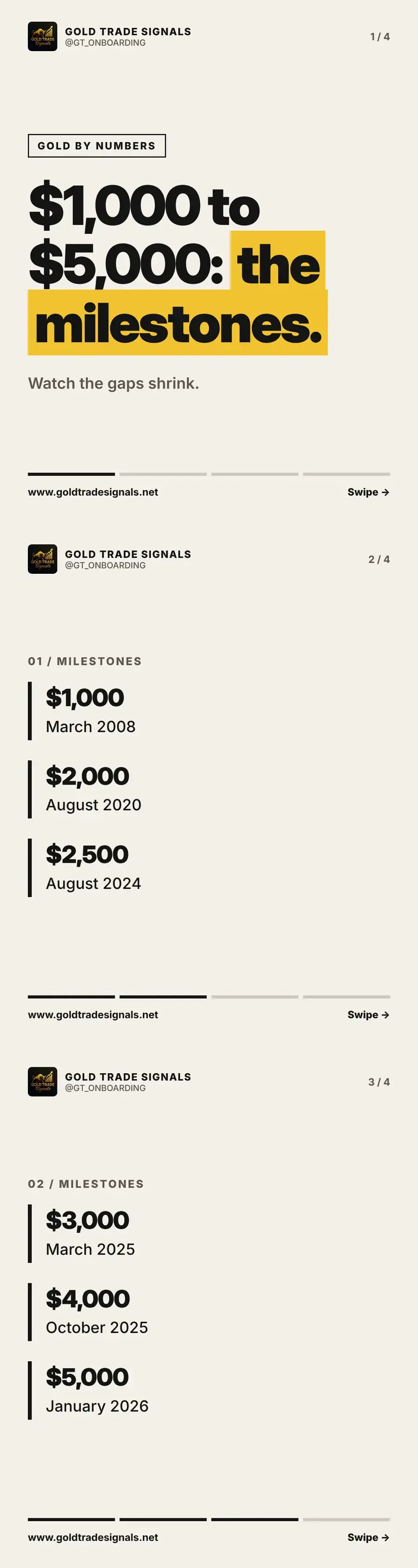
Gold price milestones: when gold crossed $1,000 to $5,000
From $1,000 in March 2008 to $5,000 in January 2026: the dates gold crossed each round-number milestone, and why the gaps between them kept shrinking.
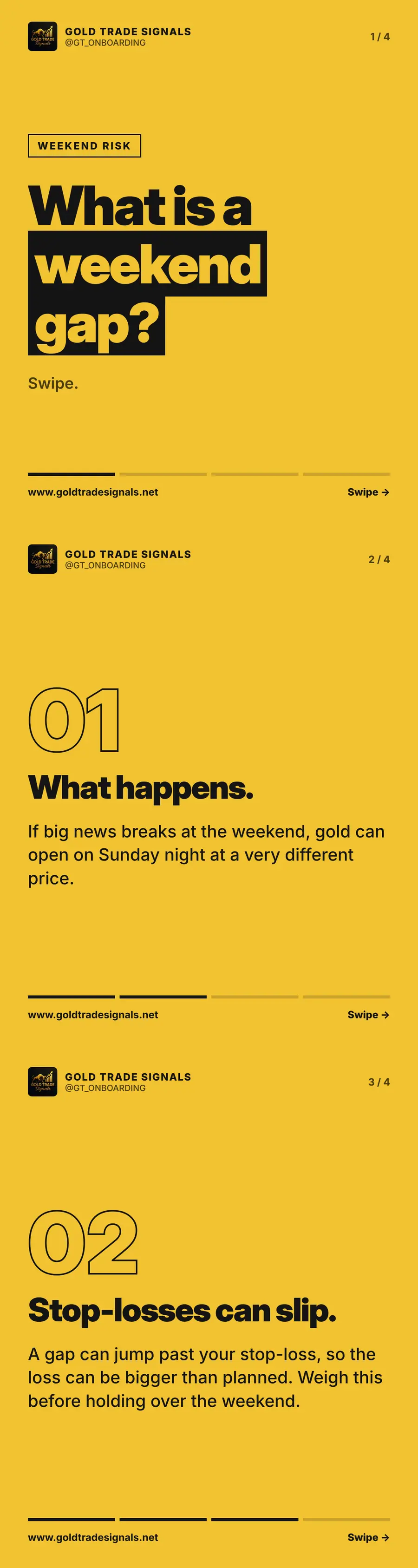
What is a weekend gap and why does it matter for gold?
Gold can open on Sunday night far from where it closed on Friday. Learn what a weekend gap is, why stop-losses can slip, and how to weigh the risk.
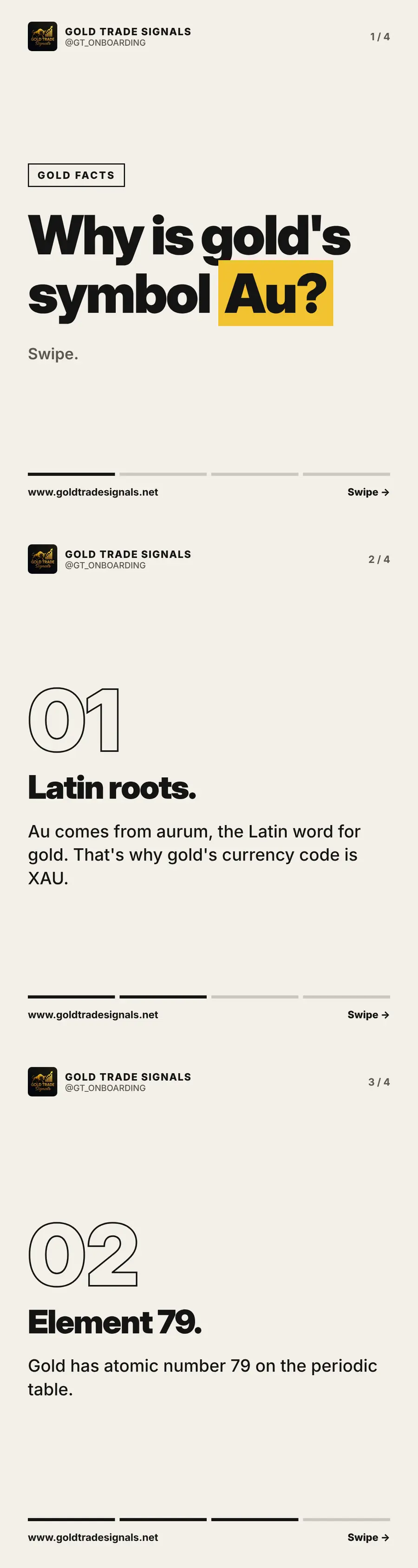
Why is gold's symbol Au? The Latin roots of XAU explained
Gold's chemical symbol is Au and its trading code is XAU. Learn where both come from, what element 79 means and why the name matters on your chart.