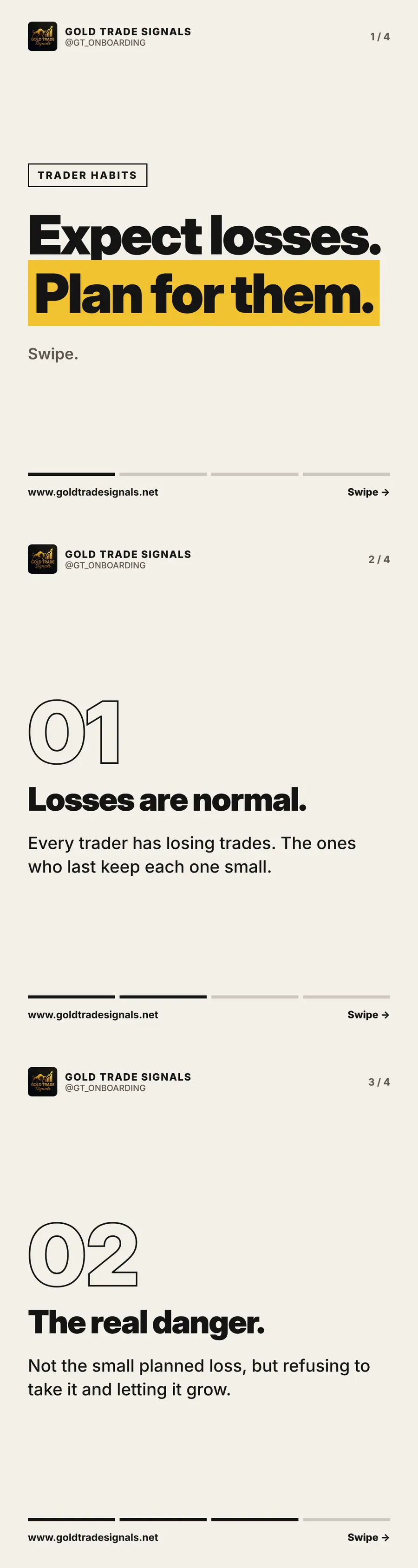
New traders often believe the goal is to avoid losing. Experienced traders know better. They expect losses, plan for them and treat each one as a normal cost of doing business. The difference between the two groups is not that one never loses. It is how they handle it when they do.
Losses are normal
Every trader has losing trades. Markets are uncertain, news arrives without warning, and even a well-planned setup can fail. No method, no indicator and no analyst removes that. What separates the traders who last from the ones who quit is that they keep each loss small and predictable, so no single trade can decide their future.
That is why a stop-loss is not a sign of weakness but part of the plan. Before you enter, you already know where you are wrong and how much that costs. A loss that lands exactly where you planned it is not a mistake. It is the trade working as designed, just not in your favour this time.
The real danger
The trades that destroy accounts are rarely the small planned losses. They are the ones where a trader refuses to accept being wrong. The stop gets moved further away, or removed altogether. A $20 loss becomes $200, then more, because closing it would mean admitting the mistake. Hope replaces the plan.
Learning to take the small loss quickly is a skill, and like any skill it improves with practice. Review your losing trades as carefully as your winners. Did the loss stay within your plan? If so, well done. If not, that is the habit to fix next. Our community talks about losing trades openly, because that is where the learning is.
Key takeaways
- Every trader loses; the ones who last keep losses small.
- A loss that hits your planned stop is not a mistake.
- Moving or removing your stop-loss is the real danger.
Common questions
Is it normal to lose trades as a beginner?
Yes. Every trader, beginner or professional, has losing trades. What matters is keeping each loss small and within your plan.
Why do traders move their stop-loss?
Usually to avoid admitting a trade is wrong. It feels better in the moment but it turns a small planned loss into a large unplanned one.
Trade ideas with the levels already worked out
Join the free community and receive XAU/USD trade ideas with entry, stop-loss and take-profit, live training on Tuesdays and Thursdays, and support whenever you are stuck.
Join free on TelegramOpen the calculatorsRisk warning: This article is educational content, not personal investment advice. Gold is a leveraged, volatile instrument and you can lose some or all of your capital. Gold Trade Signals is not FCA regulated. Read the full risk warning.
More from Trader Stories and Habits
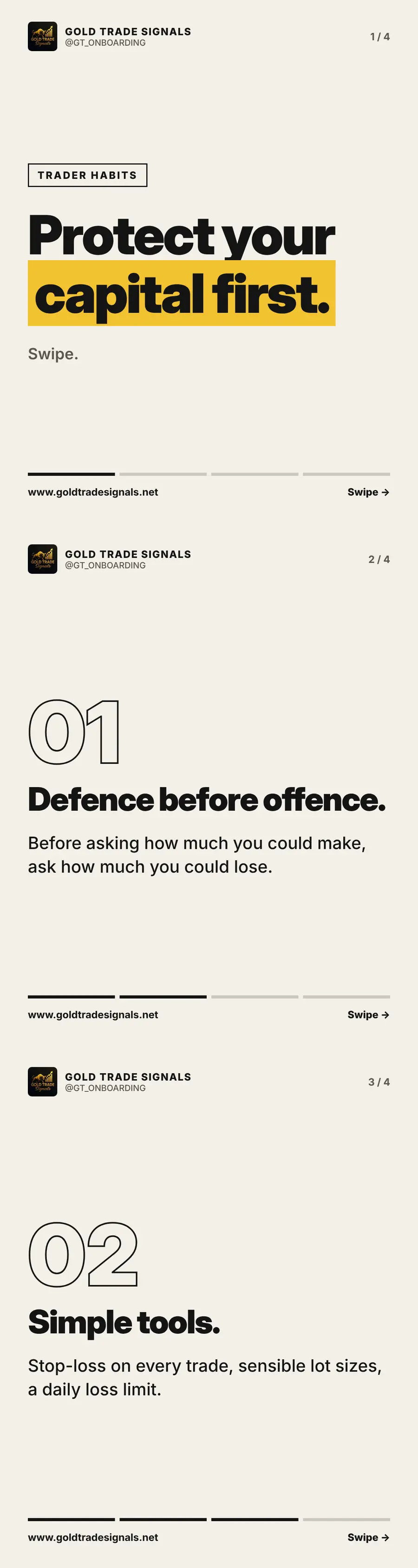
Why successful traders protect their capital first
You cannot trade tomorrow with an account you lost today. Learn the defence-first habit and the three simple tools that keep gold traders in the game.
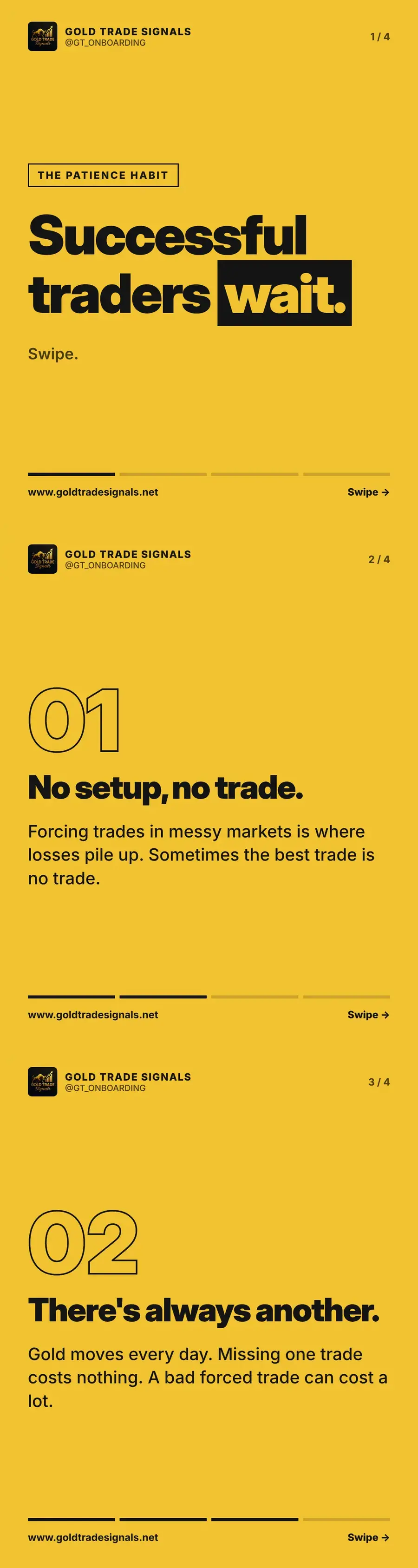
Patience in trading: no setup means no trade
Successful traders wait for the right trade. Forcing trades in messy markets is where losses pile up, and gold moves every day, so there is always another.

Bruce Kovner: from cab driver to legendary trader
Bruce Kovner drove a cab, made his first trade in 1977 with $3,000 borrowed on a credit card, and founded Caxton Associates. His lesson for gold traders.