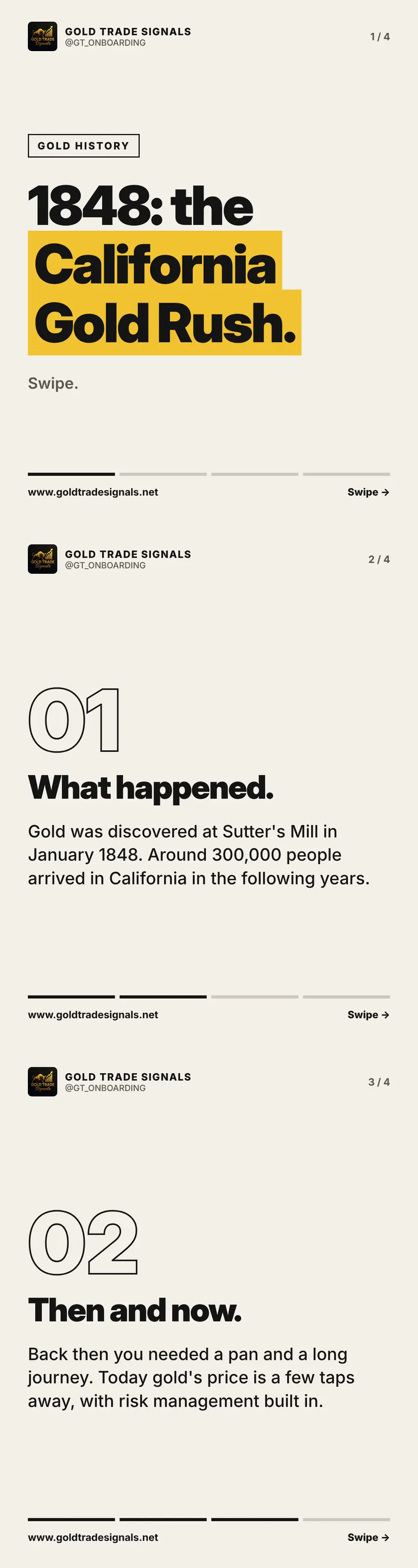
In January 1848, gold was discovered at Sutter's Mill in California. Word spread, and over the following years around 300,000 people made the journey in the hope of striking it rich. The California Gold Rush changed the region forever and still shapes how people think about gold.
What happened at Sutter's Mill
The discovery was made by James Marshall, who was building a sawmill for John Sutter on the American River when he noticed flakes of gold in the water. Attempts to keep it quiet failed. By 1849 people were arriving from across the United States and from overseas, which is why the newcomers became known as forty-niners.
Around 300,000 people arrived in the years that followed. San Francisco grew from a small settlement into a busy port, and California became a US state in 1850. A few early arrivals did very well. Many more spent everything on the journey and the equipment and went home with little, while the merchants who sold picks, pans and supplies often made the steadiest money.
Then and now
Back then, getting exposure to gold meant a pan, a long and dangerous journey and months of physical work with no guarantee of finding anything. There was no stop-loss on a claim that turned out to be empty. Risk management meant hoping your supplies lasted longer than your bad luck.
Today, gold's price is a few taps away on a regulated broker's platform. You can decide in advance exactly how much you are willing to risk on an idea, set a stop-loss, and know the outcome range before you commit. The lesson from 1848 holds, though: the people who did well were the ones who managed their resources carefully, not the ones who rushed in blind. We help new members learn that discipline from day one.
Key takeaways
- Gold was found at Sutter's Mill in January 1848.
- Around 300,000 people moved to California in the years after.
- Modern gold trading lets you define risk before you commit.
Common questions
When did the California Gold Rush start?
It began after gold was found at Sutter's Mill in January 1848, with the biggest wave of arrivals coming in 1849.
Did most people get rich in the Gold Rush?
No. A small number did very well, but most prospectors earned little, and many of the steadiest fortunes went to suppliers and merchants.
Trade ideas with the levels already worked out
Join the free community and receive XAU/USD trade ideas with entry, stop-loss and take-profit, live training on Tuesdays and Thursdays, and support whenever you are stuck.
Join free on TelegramOpen the calculatorsRisk warning: This article is educational content, not personal investment advice. Gold is a leveraged, volatile instrument and you can lose some or all of your capital. Gold Trade Signals is not FCA regulated. Read the full risk warning.
More from Gold by Numbers
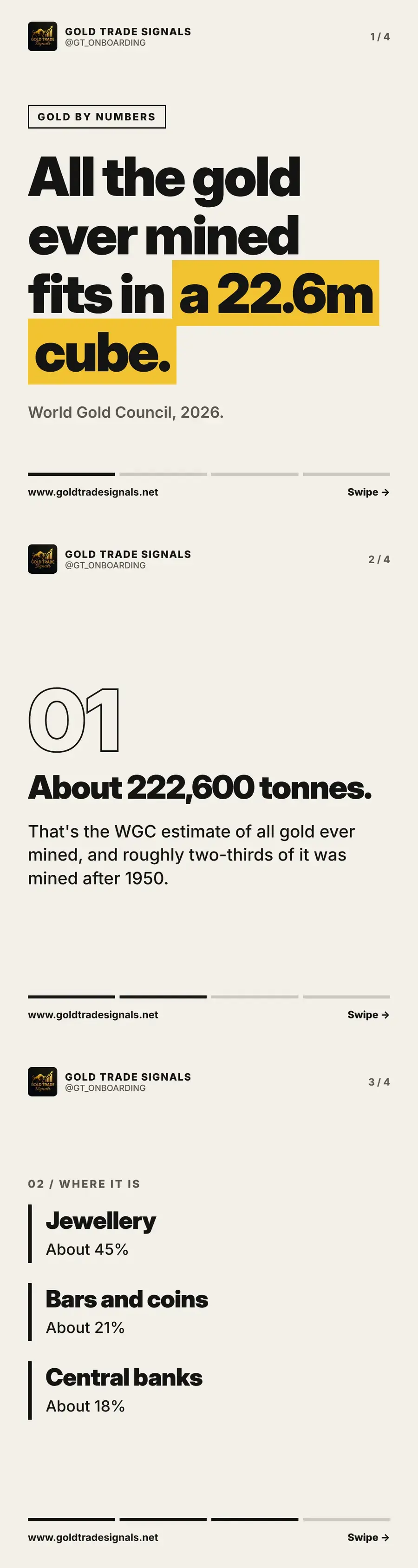
How much gold has ever been mined? About 222,600 tonnes
All the gold ever mined is about 222,600 tonnes, a cube about 22.6 metres wide. We break down where it is: jewellery, bars and coins, and central banks.
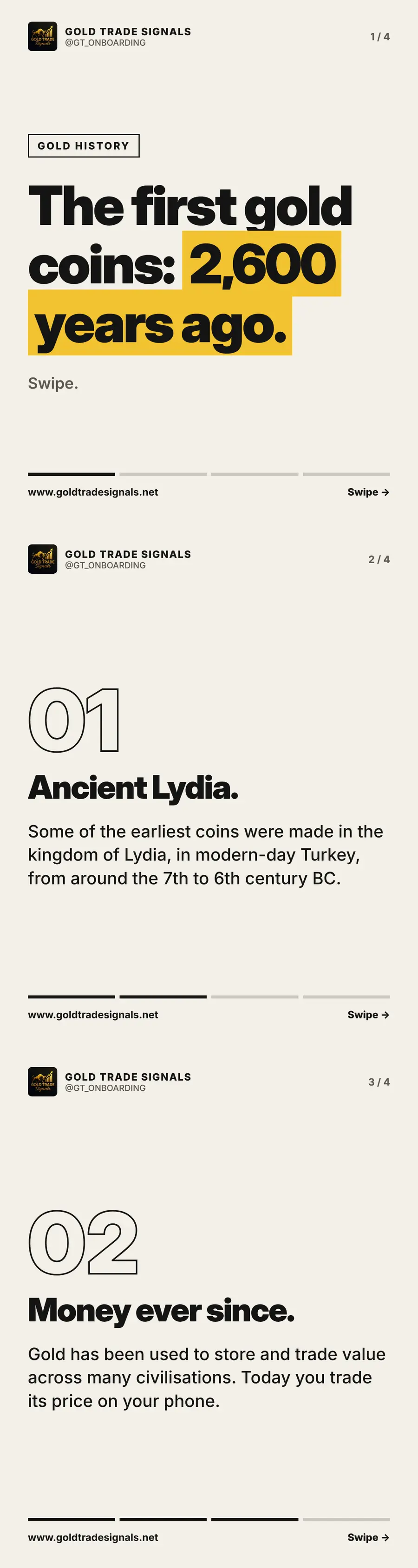
The first gold coins: ancient Lydia and the birth of money
Discover where the first gold coins were struck, why ancient Lydia matters to gold's story, and how that history connects to trading XAU/USD today.

The Klondike Gold Rush and its lesson for gold traders
Gold was found in the Yukon in 1896 and around 100,000 people set out to find it. Learn what happened to them and why planning still beats gold fever.