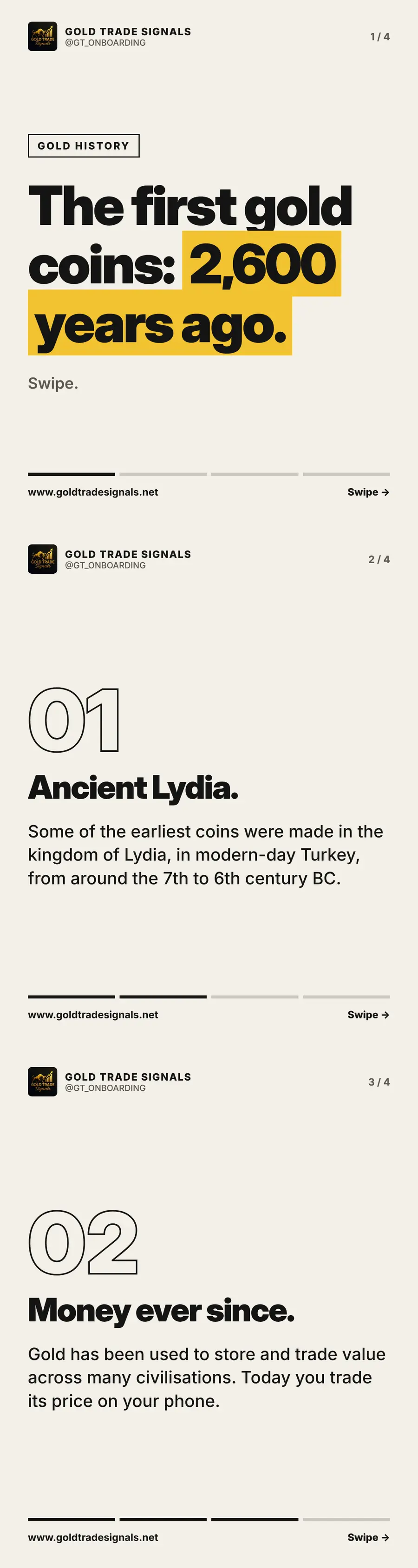
Gold was valued long before anyone traded it on a phone. Some of the earliest coins in the world were struck in the kingdom of Lydia, in what is now Turkey, around the 7th to 6th century BC. Here is why that moment matters and how it leads to the market we trade today.
Ancient Lydia and the first coins
Lydia was a wealthy kingdom in western Anatolia, in modern-day Turkey. Around the 7th to 6th century BC, Lydian rulers began striking small, stamped pieces of precious metal with a fixed weight. Early examples were made from electrum, a natural mix of gold and silver, and later coins were refined into purer gold and silver. The stamp told people the coin was trusted and standardised, which is what made it money rather than just metal.
Before coins, trade meant weighing lumps of metal or swapping goods directly. A stamped coin of known weight removed that friction. Merchants could count instead of weigh, and value could travel easily across borders. That simple idea spread quickly through the Greek world and beyond, and it is one reason gold became so closely tied to the idea of money.
Money ever since
Across many civilisations, from the Persians and Romans to medieval Europe and modern central banks, gold has been used to store and trade value. Empires rose and fell, currencies came and went, but gold kept its place as something people trusted when other forms of money failed. That long history is part of why gold still reacts to fear, inflation and currency moves today.
Today you no longer need a coin in your hand. The price of gold is quoted around the clock as XAU/USD, and you can trade it from your phone. Understanding where gold's reputation comes from helps you make sense of why it moves the way it does, which is exactly what we cover in our free community and live training.
Key takeaways
- Some of the earliest coins were struck in Lydia, modern-day Turkey.
- A stamped coin of fixed weight turned metal into trusted money.
- Gold's long history as money still shapes how its price moves.
Common questions
Where were the first gold coins made?
Some of the earliest coins were made in the kingdom of Lydia, in what is now western Turkey, around the 7th to 6th century BC.
Why is gold still used as a store of value?
Gold is scarce, durable and has been trusted across civilisations for thousands of years, so people still turn to it when confidence in currencies falls.
Trade ideas with the levels already worked out
Join the free community and receive XAU/USD trade ideas with entry, stop-loss and take-profit, live training on Tuesdays and Thursdays, and support whenever you are stuck.
Join free on TelegramOpen the calculatorsRisk warning: This article is educational content, not personal investment advice. Gold is a leveraged, volatile instrument and you can lose some or all of your capital. Gold Trade Signals is not FCA regulated. Read the full risk warning.
More from Gold by Numbers
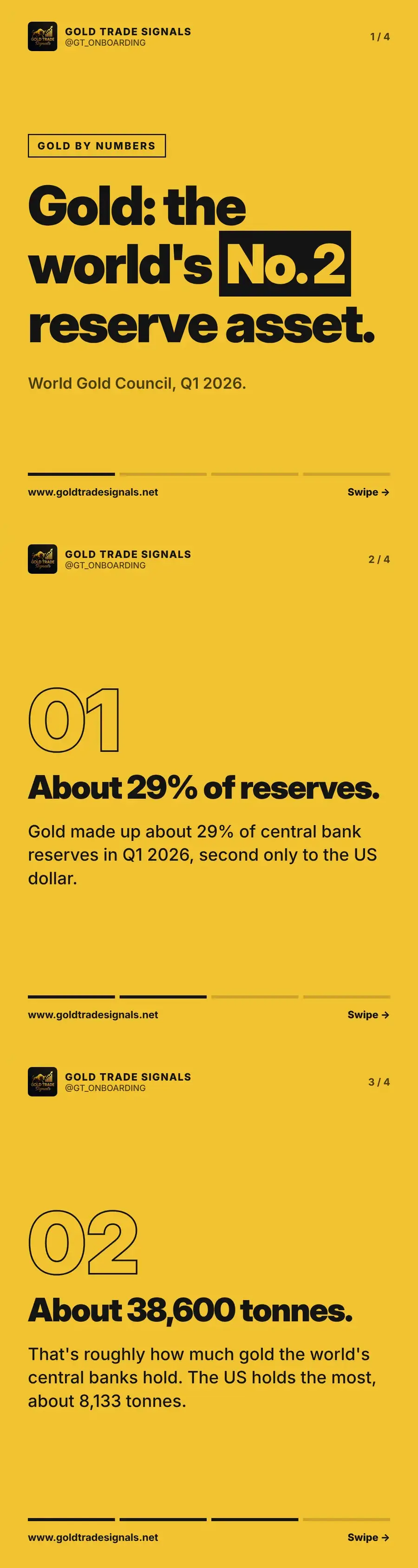
Gold is the world's second-largest reserve asset
Gold was about 29% of central bank reserves in Q1 2026, second only to the US dollar, with roughly 38,600 tonnes held worldwide. What it means for traders.
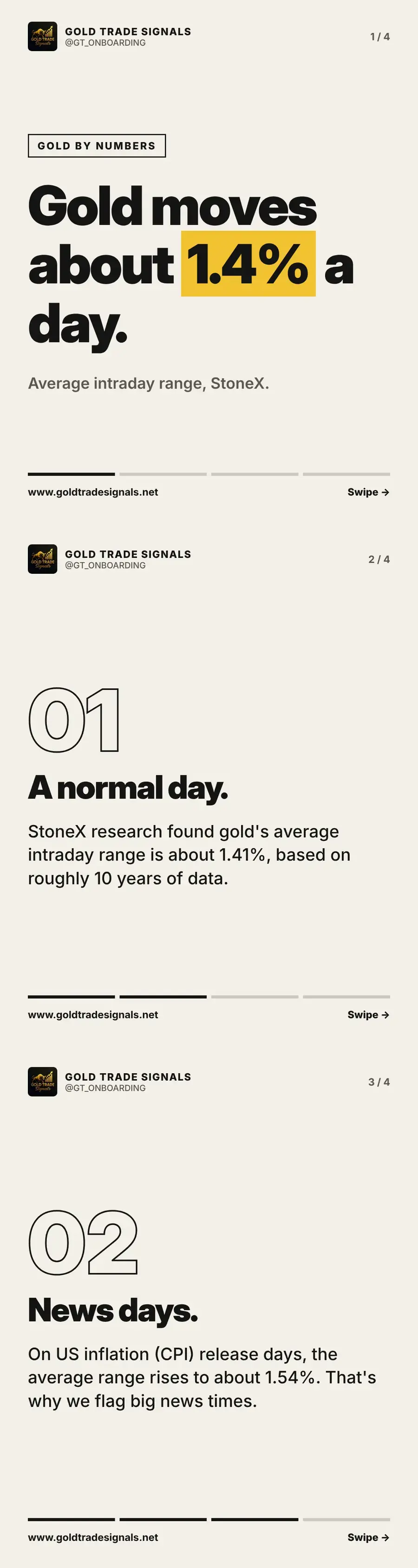
How much does gold move in a day? About 1.4% on average
StoneX research puts gold's average intraday range at about 1.41%, rising to about 1.54% on US inflation days. We explain what that means for your risk.
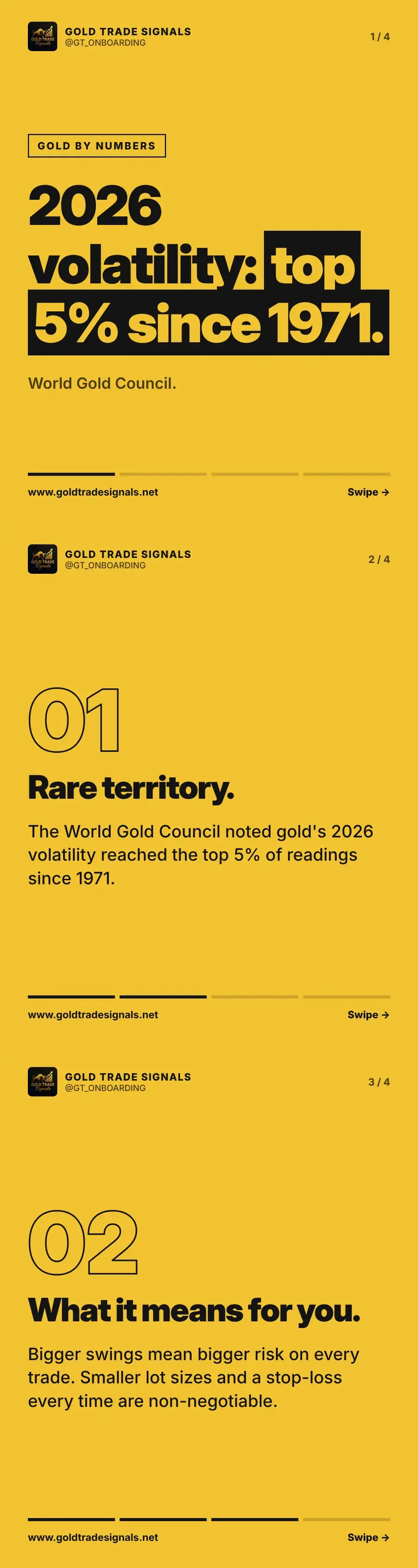
Gold volatility in 2026: top 5% of readings since 1971
The World Gold Council noted gold volatility in 2026 reached the top 5% of readings since 1971. What bigger swings mean for lot sizes and stop-losses.