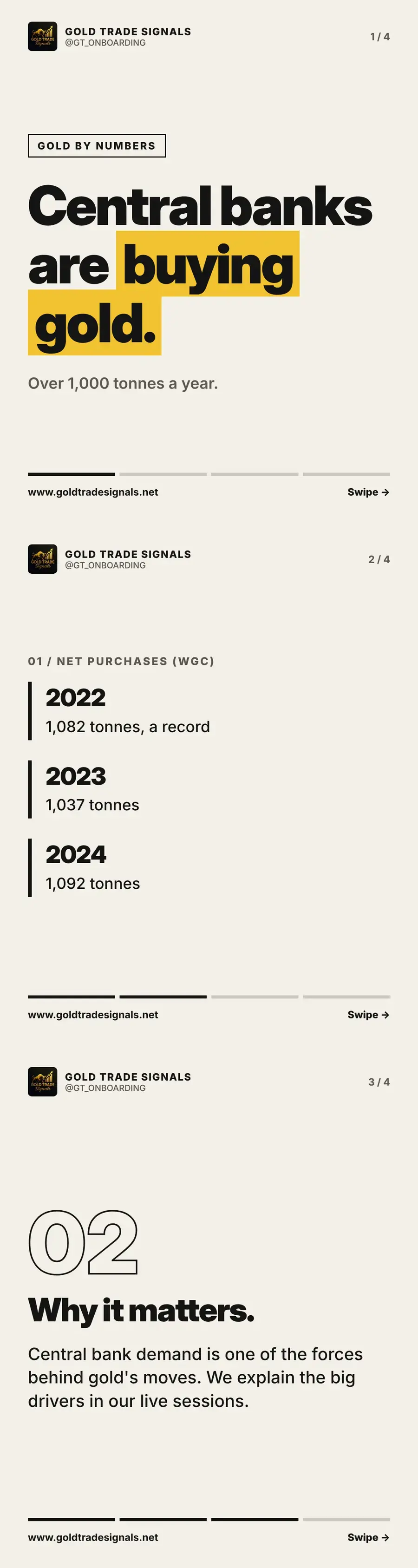
Central banks have been buying gold at a historic pace: more than 1,000 tonnes a year in 2022, 2023 and 2024. In this article we set out the World Gold Council figures for each year, explain why central bank demand is one of the big forces behind gold's price, and show how understanding the drivers helps you trade.
The numbers
According to World Gold Council data on net purchases, central banks bought 1,082 tonnes of gold in 2022, a record at the time. They followed that with 1,037 tonnes in 2023 and 1,092 tonnes in 2024. Three consecutive years above 1,000 tonnes is unusual, and it marks a sustained shift in how the world's official institutions are treating gold as a reserve asset.
Why it matters
Central bank demand is one of the forces behind gold's moves. When institutions of that size are consistent buyers, they absorb supply and provide a steady source of demand underneath the market. That does not make gold a one-way bet, and daily price action is still driven by interest rates, the US dollar and news. But it is part of the bigger picture that explains the longer-term trend.
Learning what moves gold
For a trader, knowing the big drivers turns a chart from a random squiggle into a story. Central bank buying, rate decisions, dollar strength and geopolitical events each leave their mark on price. We explain these drivers in our live sessions twice a week so that members understand why gold is moving, not just where. Learn what moves gold, and the trade ideas start to make much more sense.
Key takeaways
- Central banks bought 1,082 tonnes in 2022, a record
- 1,037 tonnes in 2023 and 1,092 tonnes in 2024 (WGC net purchases)
- Central bank demand is one force behind gold's longer-term moves
Common questions
How much gold did central banks buy in 2024?
About 1,092 tonnes in net purchases, according to the World Gold Council, the third consecutive year above 1,000 tonnes.
Why do central banks buy gold?
Gold is held as a reserve asset. Sustained official buying adds steady demand that supports the longer-term trend in the gold price.
Trade ideas with the levels already worked out
Join the free community and receive XAU/USD trade ideas with entry, stop-loss and take-profit, live training on Tuesdays and Thursdays, and support whenever you are stuck.
Join free on TelegramOpen the calculatorsRisk warning: This article is educational content, not personal investment advice. Gold is a leveraged, volatile instrument and you can lose some or all of your capital. Gold Trade Signals is not FCA regulated. Read the full risk warning.
More from Gold by Numbers
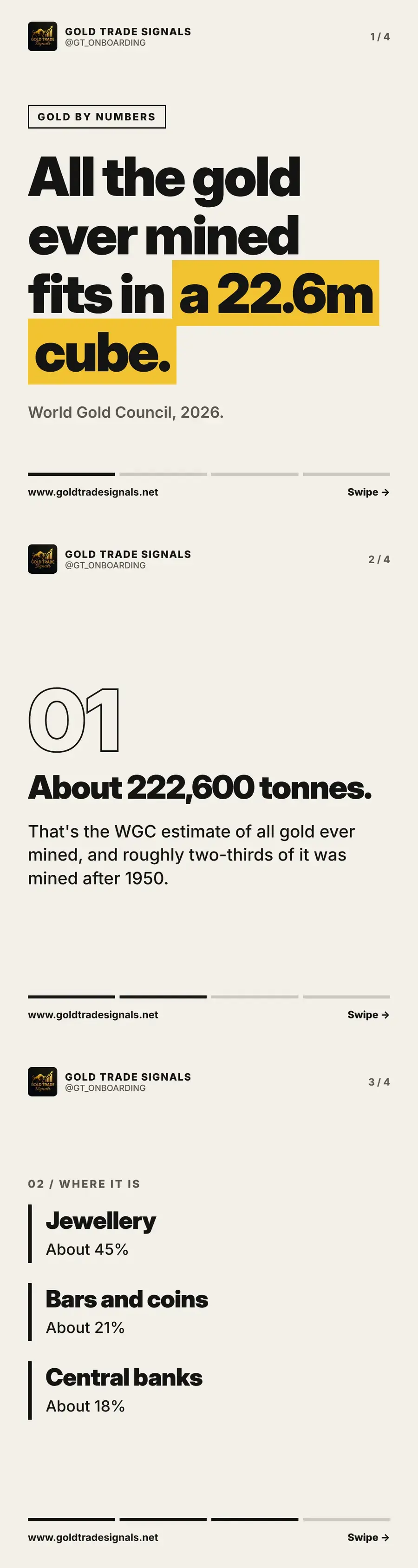
How much gold has ever been mined? About 222,600 tonnes
All the gold ever mined is about 222,600 tonnes, a cube about 22.6 metres wide. We break down where it is: jewellery, bars and coins, and central banks.
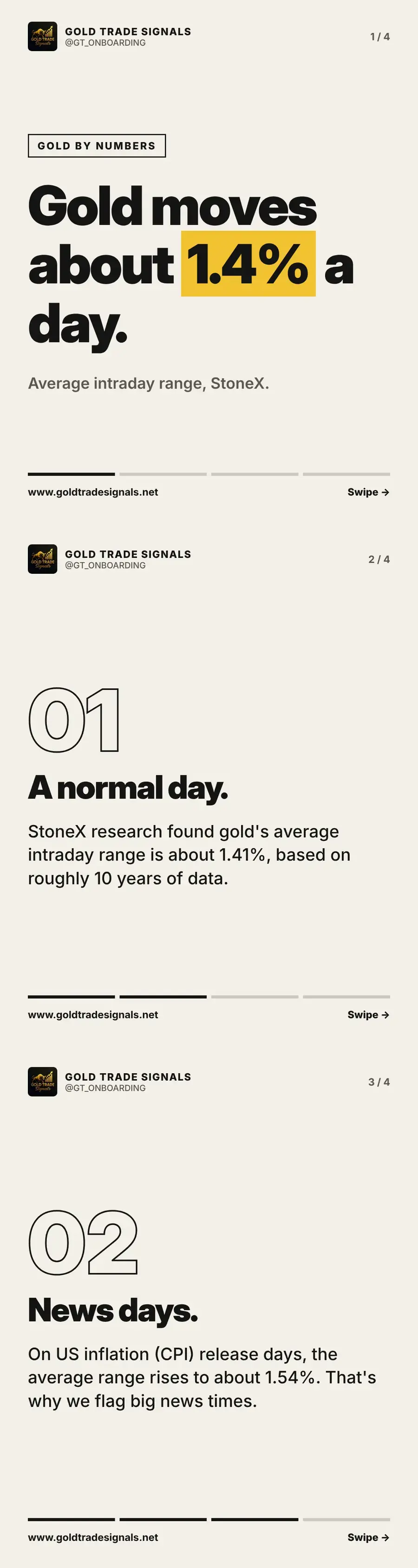
How much does gold move in a day? About 1.4% on average
StoneX research puts gold's average intraday range at about 1.41%, rising to about 1.54% on US inflation days. We explain what that means for your risk.
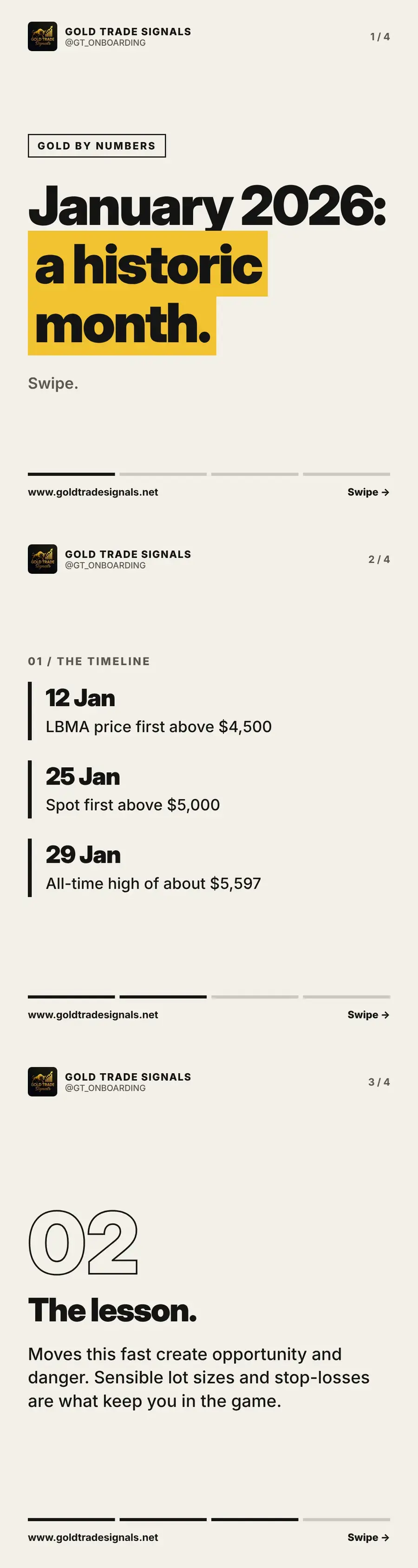
Gold's record January 2026: $4,500 to over $5,500 in two weeks
In January 2026 gold went from above $4,500 to a record of about $5,597 in about two weeks. We set out the timeline and the lesson for fast markets.