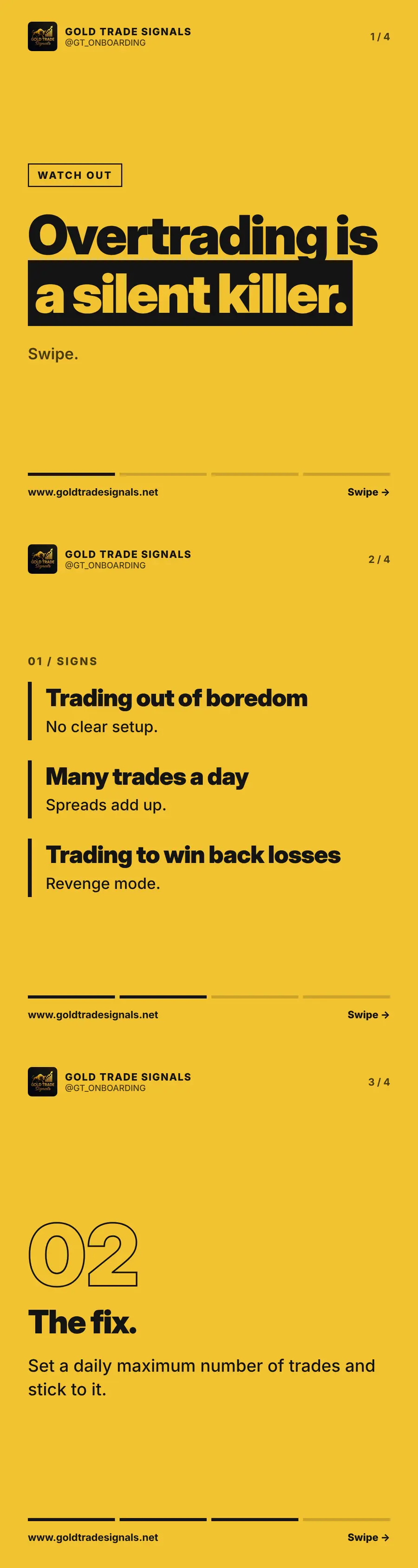
Overtrading rarely feels like a problem while it is happening. Each extra trade seems reasonable on its own. It is only when you look at the month that you see dozens of small spreads paid, a string of rushed entries and an account that is lower than it should be. Here is how to spot it and stop it.
Three signs of overtrading
Trading out of boredom. You open the chart with nothing planned, nothing happens for an hour, and you take a trade anyway because sitting still feels like wasted time. There is no clear setup, just a need to be doing something. These trades almost never appear in a plan, which is the giveaway.
Many trades a day. Every trade pays the spread, and on gold that cost is not trivial. Ten trades a day means ten spreads, before any swap fees. Even if your ideas are decent, the costs eat into the result. Then there is trading to win back losses, often called revenge mode. A loss triggers an immediate, larger, angrier trade. That is emotion, not analysis.
The fix
Set a daily maximum number of trades and stick to it. Two or three is plenty for most people. Once you reach the limit, you are done for the day, win or lose. This single rule removes boredom trades, caps your spread costs and makes revenge trading impossible, because you have no trades left to take.
Pair it with the other basics: a stop-loss on every trade, a fixed lot size and a daily loss limit. Together they turn trading from a constant stream of decisions into a short, structured routine. If you recognise yourself in the signs above, you are not alone. Building better habits is most of what we do in our community and live training.
Key takeaways
- Boredom trades, too many trades and revenge trades are the warning signs.
- Every extra trade pays the spread again.
- Set a daily maximum number of trades and stop when you reach it.
Common questions
What is overtrading?
Taking far more trades than your plan calls for, often out of boredom or to recover losses, which adds costs and rushed decisions.
How do I stop overtrading?
Set a daily maximum number of trades, a daily loss limit and a fixed lot size, and stop for the day as soon as you reach any of them.
Trade ideas with the levels already worked out
Join the free community and receive XAU/USD trade ideas with entry, stop-loss and take-profit, live training on Tuesdays and Thursdays, and support whenever you are stuck.
Join free on TelegramOpen the calculatorsRisk warning: This article is educational content, not personal investment advice. Gold is a leveraged, volatile instrument and you can lose some or all of your capital. Gold Trade Signals is not FCA regulated. Read the full risk warning.
More from Trading Basics
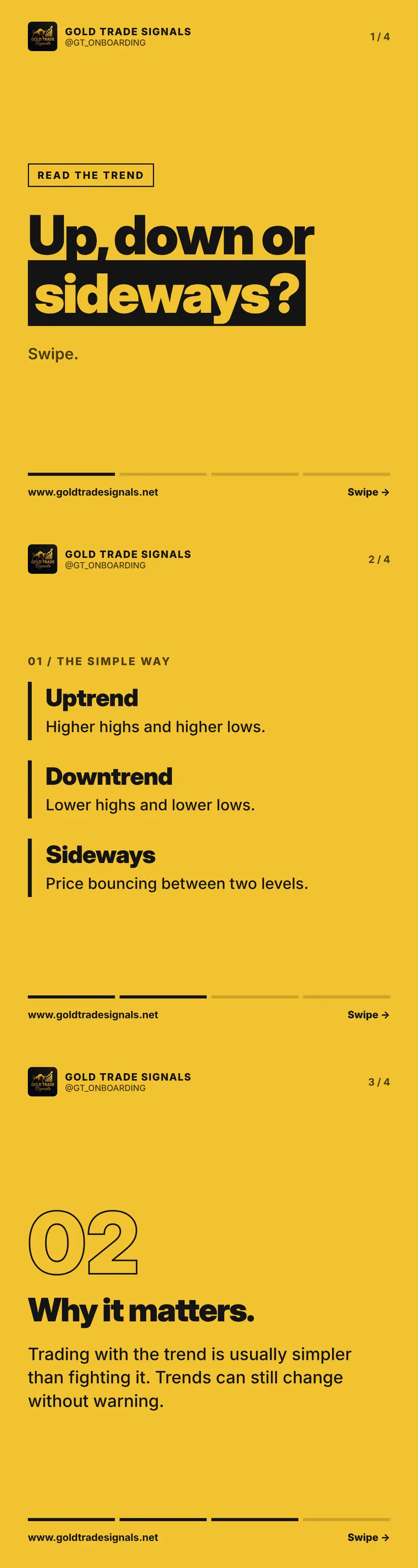
How to tell if gold is trending up, down or sideways
Learn the simple way to read a gold trend using highs and lows, why trading with the trend is usually easier, and why trends can change without warning.
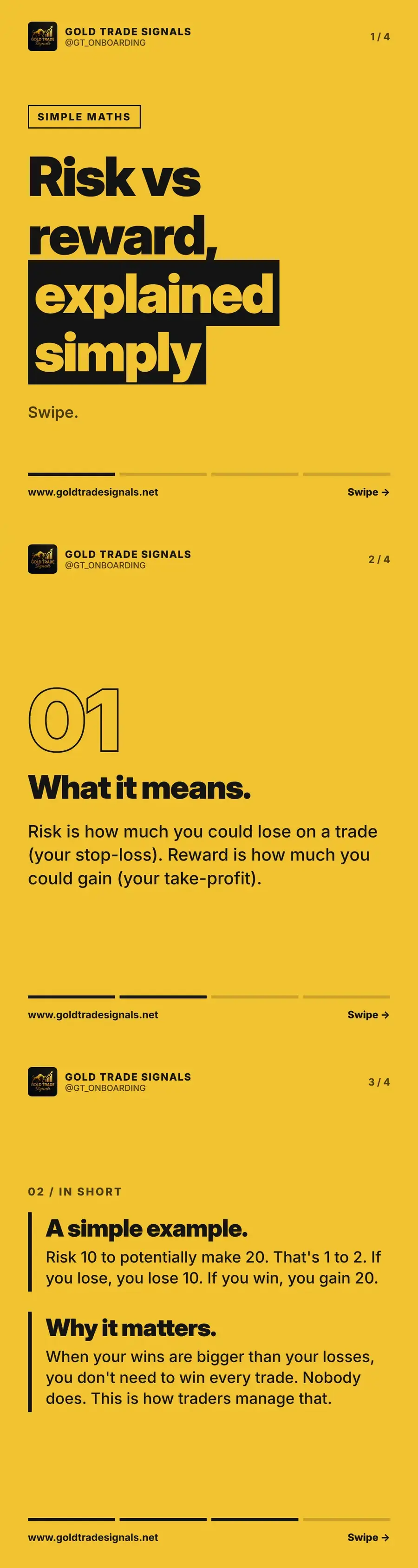
Risk to reward explained: why loss size beats win count
Risk to reward, explained with simple numbers. Learn what risk and reward mean on a gold trade and why bigger wins than losses change everything.
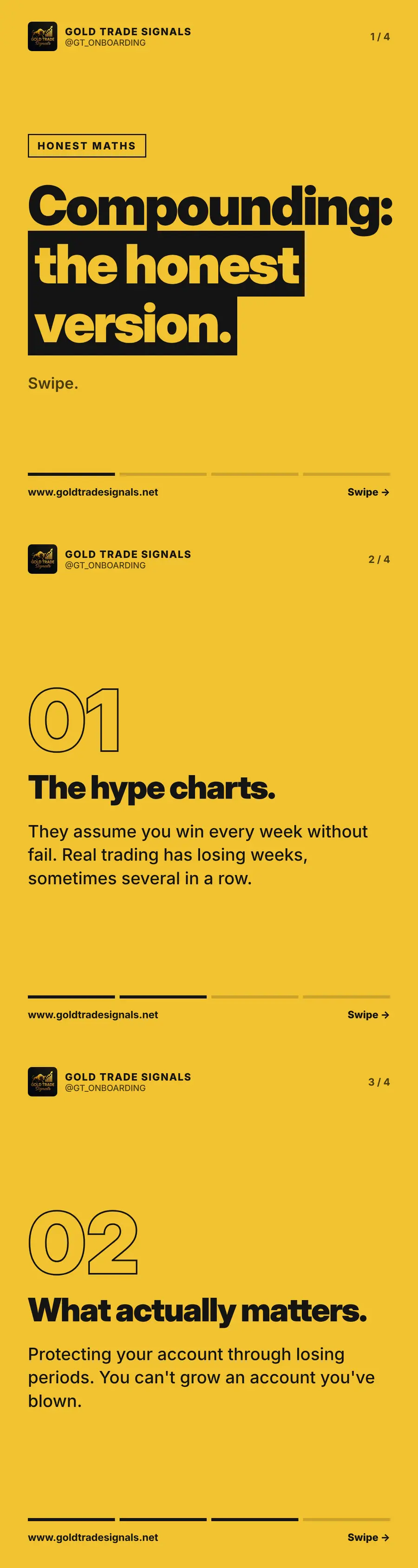
Compounding in trading: the honest version
Those charts turning $100 into $1 million assume you never lose. Learn what they leave out, why losing weeks are normal, and what really grows an account.